

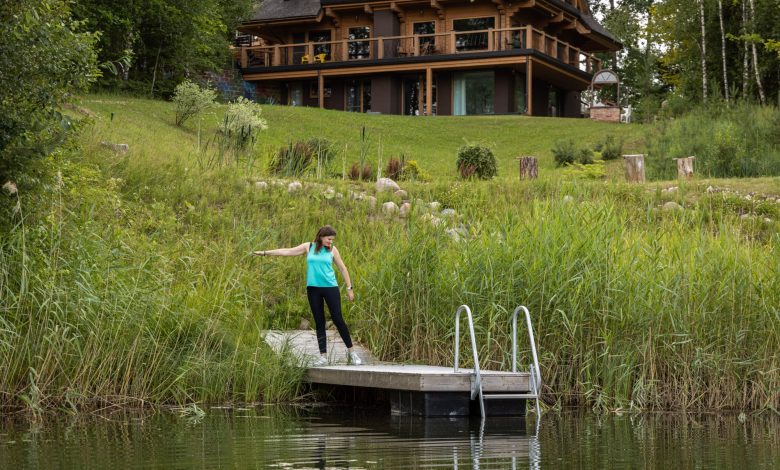
The choice of retreat house affects a retreat more than almost any other decision. The venue sets the rhythm of each day, decides how well participants rest between sessions and shapes the mood of the whole group. Polished photographs show little about whether a place will actually suit yoga, meditation, a creative workshop or a team offsite. Seven practical criteria help separate a venue that only looks good from one that supports the people inside it.
1. Location and Ease of Travel
Remoteness is part of a retreat’s appeal, but a draining journey works against the whole purpose. A good venue sits far enough from a city to feel quiet and close enough to an international airport for an easy transfer. A drive of about an hour is a comfortable benchmark. Guests arriving from different countries can land in the morning and join an evening opening circle without being exhausted. Ask the host about transfer options, public transport and road conditions in winter.
2. Capacity and Room Configuration
How the beds are arranged matters more than how many there are. Count private rooms, shared rooms and bathrooms, and compare them with what the group expects. A corporate team may need single occupancy, while a yoga community may be happy to share. A smaller house is often an advantage. Groups of ten to fifteen people tend to bond faster and get more of the facilitator’s attention than a crowd of forty.
3. A Dedicated Practice Space
The practice hall is the heart of any retreat. Check its size, flooring, ceiling height, natural light, heating and acoustics. A room of 40–50 m² comfortably holds a dozen mats with space between them. The hall should be used only for sessions. If it doubles as a dining room, furniture has to be moved twice a day and concentration suffers.
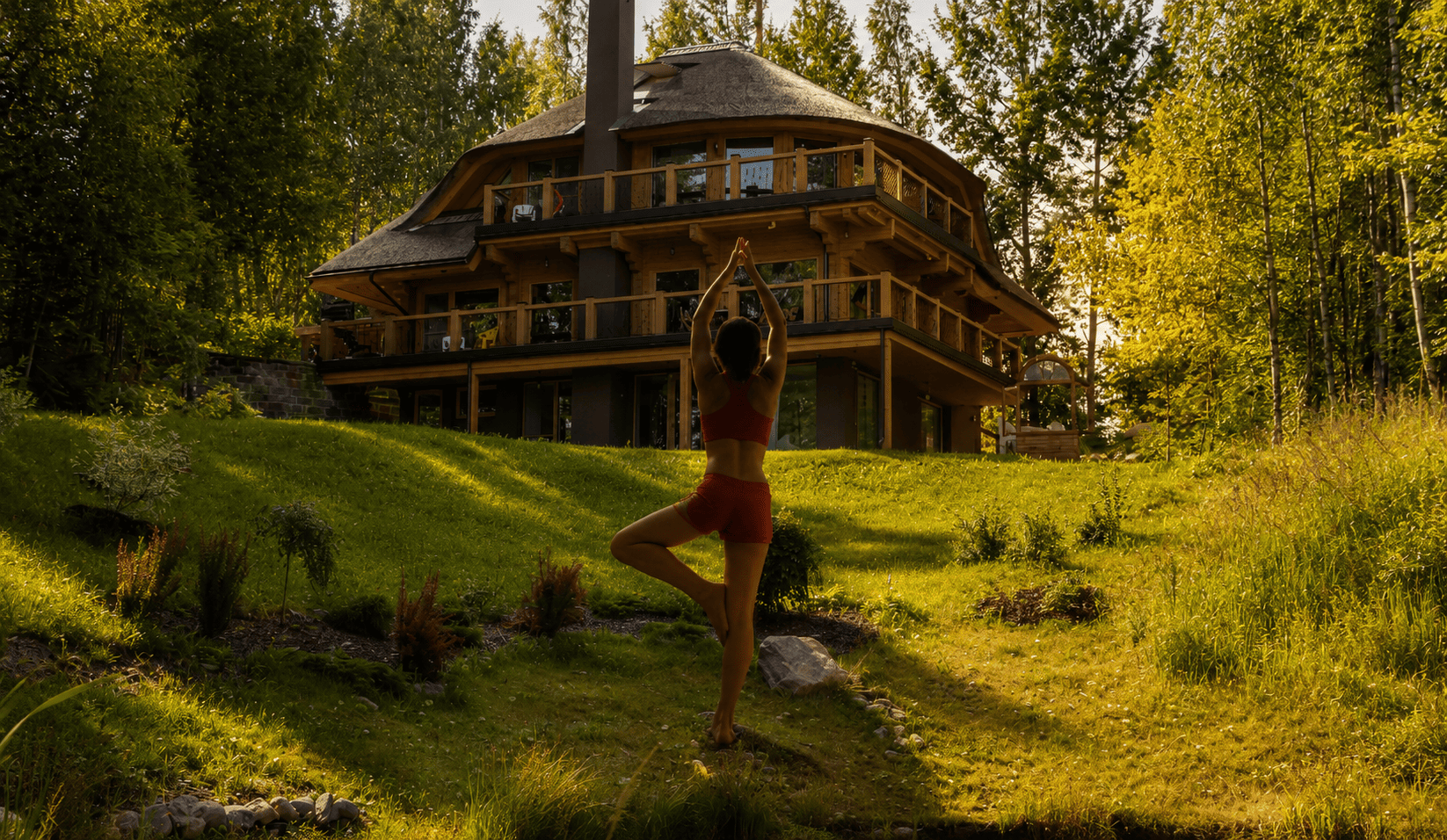
Narbuli Retreat House in Amatciems, Latvia, is a good example of the format. It has nine guest rooms, capacity for up to 12 participants and a 48 m² practice hall reserved for sessions. The house lies around 80 km from Riga, roughly a 50-minute transfer from Riga airport, so travel stays simple for guests flying in from across Europe and beyond.
4. Surroundings and Silence
Nature does part of the facilitator’s work. Forests, lakes or open countryside give participants somewhere to walk, reflect and switch off between sessions. Ask about neighbouring properties, nearby roads and seasonal noise. A summer festival or a building site a few hundred metres away can undo careful programme planning. Light pollution also matters if outdoor evening meditation or stargazing is part of the plan.
5. Food and Catering
Meals punctuate the retreat day and strongly affect how participants feel. Find out whether the venue provides a chef, works with local caterers or offers a kitchen for self-catering. Confirm that vegetarian, vegan, gluten-free and other dietary requirements can be met without fuss. Fresh, seasonal, locally sourced food is not a luxury on a retreat, because it supports the energy and focus that practice demands.
6. Privacy and Booking Format
Sharing a venue with strangers can dilute the atmosphere a group is trying to build. Booking the entire house gives organisers full control over the schedule, the common areas and noise levels. Flexibility also helps, since smaller groups or individual guests may prefer to reserve only some of the rooms. Narbuli offers both whole-house and room-by-room booking, which lets it suit retreats of different sizes and budgets.
7. The Host’s Flexibility and What the Price Includes
A responsive, experienced host is worth more than an extra amenity. Before signing, find out how quickly the team replies, whether arrival and departure times can be adjusted and who will be on site during the stay. Then compare quotes line by line. Linen, towels, cleaning, heating, use of the practice hall, equipment such as mats and bolsters, and transfers may be included in one offer and charged separately in another. The lowest headline price rarely makes the cheapest retreat.
Bringing the Criteria Together
One practical method is to score each shortlisted venue from one to five on all seven criteria, then weight the scores by the retreat’s priorities. A meditation retreat might weight silence and the practice hall most heavily, while a corporate offsite might put travel time and private rooms first. A visit in person or a video tour before committing settles most of the remaining questions.
The right retreat house fades into the background and lets participants focus entirely on the experience they came for.