

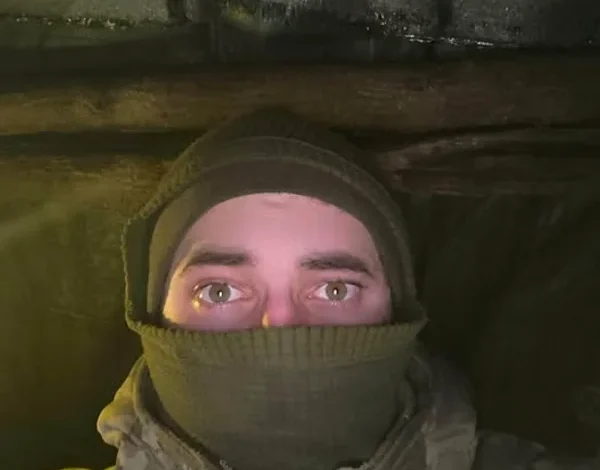
Border guard Serhii “Dobryi”, originally from Lviv region, has been defending Ukraine in the ranks of the State Border Guard Service for several years now. The toughest stage of his service was 174 days of continuous work on the front line in the Serebrianka Forest.
After leaving school, Serhii trained as an electric and gas welder at the Lviv Higher Vocational Polytechnic College. In April 2021, he joined the State Border Guard Service of Ukraine and has since served in the Shkval rapid response border commandant’s office.
The border guard received his callsign “Dobryi” (Kind) during his first combat deployment. At that time, the squad commander, who later died on that mission, called him kind and suggested the callsign, which has become a tribute to the commander for Serhii.
His first combat experience in the east brought him severe stress: adrenaline, confusion and fear, especially after the first enemy mine exploded nearby. Later, one of the hardest trials became the 174 days spent in positions in the Serebrianka Forest. There the soldier realised how resilient and patient he could be, something he had never suspected before.
The day that stayed with him the most was when their position came under almost continuous artillery and mortar fire, and was attacked by FPV drones and bomb drops. The breaks between the strikes lasted only a few minutes. At such moments, messages from his family kept him going. Owing to the unstable signal, Serhii reread the same lines many times over.
“I always told myself that I had to come back alive for the sake of my loved ones,” the border guard recalls.
Together with his unit, Serhii has been through Bakhmut, Vovchansk and the Serebrianka Forest. Each sector of the front became a separate stage of his service and brought a different kind of combat experience. He stresses that urban fighting, among streets and houses, is very different from operations in the forest, where positions are located among charred trees and the paths are constantly under enemy observation.
During his service, the border guard has suffered several concussions and gas poisoning. He speaks with the greatest warmth about the squad he has been fighting with since the beginning of the full-scale invasion. His comrades-in-arms, he says, have always supported one another and got through hardship together, and over this time they have become like real brothers to him.
At home, his loved ones are waiting for Serhii. Their support helps him endure the intense pace of service, and thoughts of the future give him strength. After the war ends, he dreams of a peaceful life and a family of his own. Serhii says the war has shown who is truly by your side and who genuinely cares about you, and it is for those people that he wants to come back home.
To those considering military service, the border guard advises choosing a role and unit in advance, rather than waiting for the decision to be made for them. He emphasises that today’s Defence Forces need specialists in many different fields, not only infantry.