

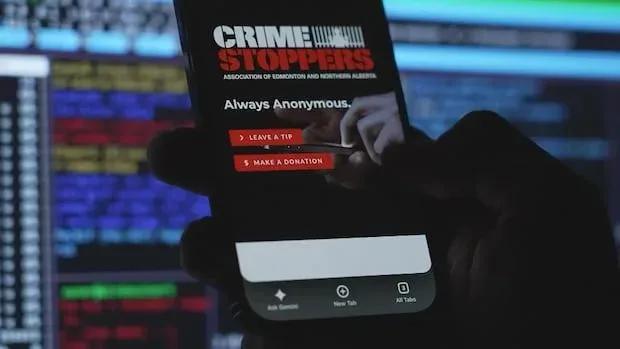
The Canadian Crime Stoppers Association (CCSA) has advised its local programmes to temporarily accept anonymous tips exclusively by phone, without using the online platform. This is stated in a notice from the organisation sent to CBC News.
The document notes that this “temporary phone approach” allows programmes to receive information without using the P3 platform, which is operated by the US company Navigate360. It was through this platform that a major data breach occurred in March. Members of the public are urged to submit anonymous tips by calling 222-TIPS. For those local programmes whose operations have been fully suspended, the resumption of telephone tip-taking will be announced separately.
CCSA president David J. Forster stressed that local programmes will keep new information under their own control and pass it on to law enforcement agencies in a secure manner. At the same time, he acknowledged that these steps cannot undo the data breach that has already taken place, and that the association will continue to demand explanations from Navigate360 and work to restore confidence in the programme.
Previously, the CCSA had recommended that local units, when questioned by the public, give assurances about the enhanced security of Navigate360 and state that the platform remained safe for continued use. The new statement effectively abandons that approach.
As revealed in a CBC investigation published last week, more than 1.5 million anonymous tips submitted to Crime Stoppers programmes in Canada over the past 25 years were compromised. Following this, more than 40 local Crime Stoppers units and police services in five provinces temporarily suspended the acceptance of anonymous tips or their cooperation with the programme. At least 13 programmes in Ontario and Saskatchewan have stated that they will no longer accept anonymous tips in any form. The most recent to join this list was the Brant-Brantford Crime Stoppers programme in Ontario, as reported on its Facebook page.
At the same time, three programmes — in the province of New Brunswick, and in the Thunder Bay and Sault Ste. Marie and Algoma areas — have confirmed that they continue to accept anonymous tips. The latter two, even before the new CCSA statement, had posted notices on their websites saying they could not accept tips intended for those local police services that had suspended their participation in the programme, but were prepared to pass information on to other law enforcement agencies in the region. CBC News has contacted these three units to ask whether they will reconsider their position in light of the new recommendations from the national association.
In parallel, CBC surveyed the country’s largest municipal police services, which had previously not commented on the incident, about any plans to suspend the use of anonymous tips as an operational tool. In total, at least 29 police units in Ontario, Manitoba, Nova Scotia and British Columbia reported that they had temporarily halted cooperation with the Crime Stoppers programme. Some services, including in Calgary and Charlottetown, said they continue to use Crime Stoppers and have not withdrawn from the programme.
The Ontario Provincial Police reported that it is “pausing promotion” of the programme; however, members of the public can still use it, and any information received will be processed “as required”. The Royal Canadian Mounted Police (RCMP) did not specify whether it continues to use anonymous Crime Stoppers tips in current investigations, stating only that it is aware of the suspension of tip-taking in a number of units and advises potential informants not to disclose any identifying information in their submissions.
Canada’s federal Privacy Commissioner has launched an investigation into the incident, focusing on Navigate360 and its security measures at the time of the March breach. Experts warn that the consequences for Crime Stoppers could be long-lasting. Randy Lippert, a professor of criminology at the University of Windsor in Ontario, believes that restoring previous levels of trust will be difficult, in part because of the programme’s close ties to law enforcement agencies and its reliance on their support — funding, office space and the participation of police officers as co-ordinators.
According to an internal memorandum dated 22 October obtained by CBC, David J. Forster had previously advised local programmes to refer all media enquiries to the national association. Among the key talking points at that time were “enhanced security” at Navigate360 and support for the “continued operation” of the platform. The current decision to switch to a phone-based format indicates a shift in the organisation’s position on the use of this software. CBC News has also contacted Navigate360 for comment on the CCSA’s new statement.