

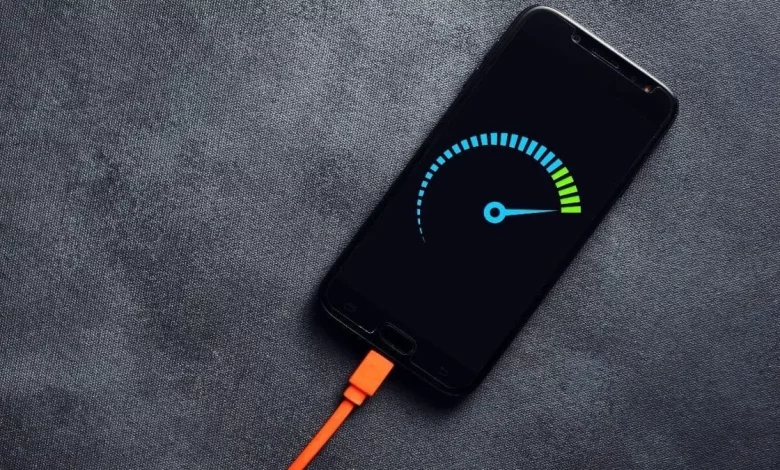
Every year, smartphones are equipped with increasingly powerful fast charging: while 30 W charging used to be considered very fast, today’s flagships support more than 100 W, and some models can reach around 50% charge in just a few minutes. This raises the question of whether such power is killing the battery and whether it is safe to use fast chargers.
Modern phones use lithium-ion batteries with two main layers — graphite and a lithium-cobalt compound. During discharge, lithium ions move through the electrolyte from one layer to the other, releasing electrons that power the device. During charging, this process happens in reverse. It is the release of energy that is accompanied by heat, which you feel on the smartphone’s casing, and in the long term excessive heating can accelerate battery wear.
Over time, any lithium-ion battery loses capacity due to natural ageing. Salts gradually crystallise in the electrolyte, hindering the free movement of ions, so the battery can no longer deliver as much energy as in the first months of use. If you supply more power to the cell than it is designed to accept, this can disrupt the internal balance and knock some of the lithium ions out of the structure. This process is irreversible, so part of the capacity is lost for good. Not only fast charging accelerates degradation, but any severe overheating, for example when a phone is left in a baking-hot car.
However, in recent years manufacturers have significantly improved battery protection. Modern models are fitted with heat shields, additional thermal layers and cooling pipes, and gaming smartphones may even feature built-in fans. Power management systems monitor the temperature and cut off the power supply as soon as the battery reaches 100%, so being constantly plugged in should not in itself lead to overheating.
Stepwise charging is also used: at the initial percentages the battery receives increased power, and after reaching a high level of charge the current is gradually reduced. Many manufacturers have introduced “adaptive” charging, which analyses the user’s habits and delays bringing the charge up to 100% until the moment when the phone is usually unplugged from the mains. Some brands add special sections in the settings for managing battery performance and charging modes.
iPhone users can check the condition of the battery in the settings menu under Battery / Battery Health, where maximum capacity, any replacement recommendation and, for newer models, the number of charge cycles are displayed. On Android smartphones, similar information depends on the manufacturer: some models show statistics in the system settings, while others require proprietary utilities or diagnostic apps.
Specialists note that fast charging does indeed put additional strain on the battery, especially if you frequently charge the phone from zero to 100% at maximum power. However, thanks to modern power management and cooling systems, the risk of sudden or dangerous battery damage has been significantly reduced. At the same time, there is still a lack of long-term data to definitively assess the impact of ultra-high-power charging standards on the service life of battery cells.
Experts advise following a few simple rules: do not overheat your smartphone, avoid constant full discharge and charging to 100% at high power where possible, and use original or certified chargers. Even under ideal conditions, any lithium-ion battery gradually loses capacity, so moderate wear is a normal part of use.