

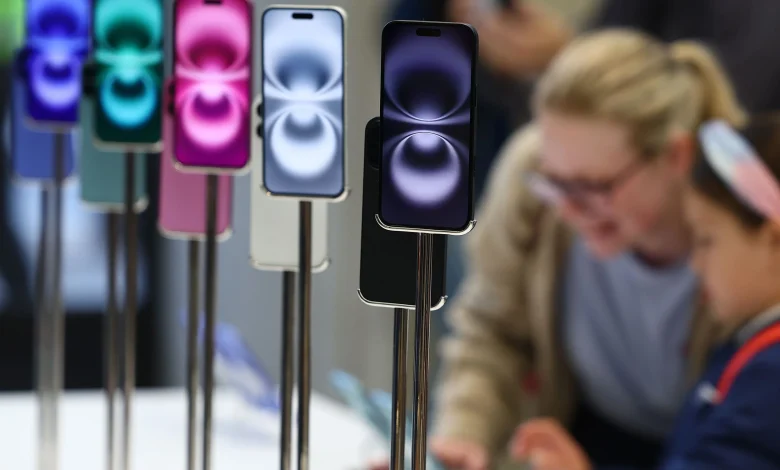
A formal proceeding has been opened in South Korea against Apple over the way it advertised Apple Intelligence features for the iPhone 16 range of smartphones. The country’s Fair Trade Commission announced the move, accusing the company of potentially misleading advertising that could result in injunctions and a financial penalty.
The case was triggered by a complaint from the civic organisation Seoul YMCA back in March 2025, shortly after Apple postponed the launch of a number of features that later became part of Siri AI. Representatives of the organisation stressed that the company continued to heavily promote the iPhone 16, despite knowing that some of the advertised artificial intelligence capabilities would not be available within the stated timeframe, and called for customers to be compensated.
Apple made Apple Intelligence a key selling point for upgrading to the iPhone 16: during the launch event and at the start of sales it ran a large-scale advertising campaign, including decorating its flagship Fifth Avenue store in New York in an Apple Intelligence style and releasing ads starring actress Bella Ramsey. It was these marketing moves that later attracted the attention of regulators in several countries.
Following the Seoul YMCA complaint, the Korean antitrust regulator conducted its own investigation into how Apple Intelligence features were presented to local consumers. Based on the review, a report with findings and recommendations has been prepared and submitted to the Commission; after formal deliberations it is to issue a final decision.
The Commission’s press release states that on the iPhone 16 website Apple advertised Apple Intelligence and a phased rollout schedule, but failed to provide a number of clarifications important to buyers. Investigators in particular believe the company did not properly explain that it would be difficult to launch some of the nine advertised features in US English by the end of 2024, and did not specify concrete deadlines for their actual arrival.
The documents stress that as of October 2024 some capabilities were still unavailable even in English, and that a Korean localisation launch by early April 2025 appeared unlikely, yet no clear updated schedule for users was published.
The regulator singled out four features which, in its assessment, were not delivered within the stated timeframes: Genmoji, Image Playground, Siri’s ability to understand a user’s personal context, and Siri’s ability to provide step-by-step instructions.
The personal context understanding feature in Siri is cited as the clearest example of the gap between promises and the actual launch. It was advertised as due to go live first in US English by the end of 2024, was described in October 2024 as already available in that language and was supposed to gain Korean support by early April 2025. In practice, however, according to the investigation, this capability did not appear in English until September 2026, with Korean support added roughly a month later, in October 2026, almost a year and a half later than originally promised.
In a response cited with reference to MacRumors, Apple said it had fully cooperated with investigators but disagreed with their conclusions. The company also highlighted the launch of Korean language support in Apple Intelligence last year and the subsequent rollout of Siri AI as evidence of its commitment to bringing these features to consumers.
Investigators estimated Apple’s revenue linked to the alleged violation at around 3.35 trillion South Korean won (about US$2.5 billion), but the Commission’s press release does not specify the exact amount of any fine. Local media have reported various indicative figures: one report mentions a possible fine of around US$48 million, another suggests a range of US$21 million to US$42 million.
Now that the report has been submitted, Apple has six weeks to file a written defence. Once this period ends, the Commission will hold a session to take a final decision on whether the company broke the law and, if so, the level of the fine.
This is not the first time Apple Intelligence advertising has come under regulatory scrutiny. In the United States, in April 2025 Apple removed the wording “available now” from the Apple Intelligence promo page after an intervention from the National Advertising Division. The body argued that this phrase created the impression that all listed features were already working, while the explanation of the phased rollout was confined to footnotes and was not sufficiently clear. Apple disagreed with the assessment but complied with the recommendation.
Separately, in May 2026 the company agreed to settle a US class action lawsuit for US$250 million. The plaintiffs alleged that when iPhone 16 sales began in September 2024, buyers were misled about the availability of Apple Intelligence and Siri’s capabilities. Similar questions over Apple’s advertising claims were also raised in Brazil, where the local consumer protection authority likewise examined the campaign around these features.