

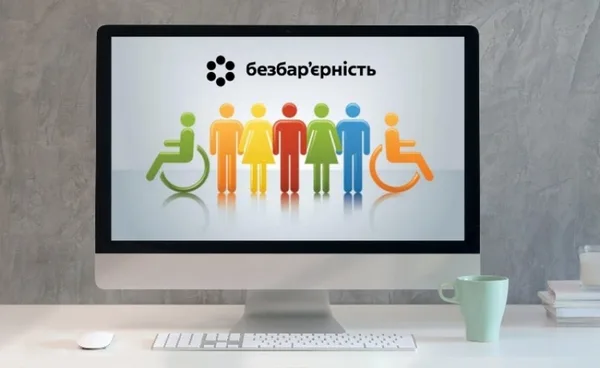
The Kulykivka community has completed another phase of its audit of infrastructure accessibility. The review was organised by the Kulykivka settlement council, and the commission was chaired by the first deputy settlement head Bohdan Stakhiv. Specialists inspected dozens of local institutions, administrative buildings, educational and medical facilities, as well as shelters, using the Ministry for Communities Development’s updated checklists.
The monitoring showed that only 22% of the surveyed sites are fully accessible. These are mainly refurbished buildings, including the Administrative Services Centre (TsNAP) premises and several other facilities where compliant ramps, convenient entrances, tactile elements and adapted sanitary rooms have been installed.
A further 33% of the buildings were found to be partially accessible. They have basic accessibility features such as call buttons for staff or handrails, but require additional refitting of interior spaces in line with current national construction standards.
The largest share — 45% of the inspected sites — are classed as inaccessible. The most challenging situation in terms of access was recorded in older administrative buildings, some civil protection structures and transport hubs. High thresholds, narrow doorways and the lack of ramps significantly complicate their use for people with limited mobility, parents with pushchairs, older residents and service personnel undergoing rehabilitation.
All the audit findings have been verified and added to the national Digital Accessibility Map, which operates on the lun.ua platform. Community residents can use it to check the current accessibility status of the institutions and locations they need.
The settlement council notes that the collected data will not be used merely as statistics. The urban planning and architecture department intends to rely on the monitoring results when drafting plans for major and routine repairs. Among the priorities is the phased creation of continuous “accessible routes” in Kulykiv, designed to link key social and medical facilities with convenient and safe pavements.
The community stresses that work to improve infrastructure accessibility will continue so that public spaces are comfortable and open to all categories of residents.