

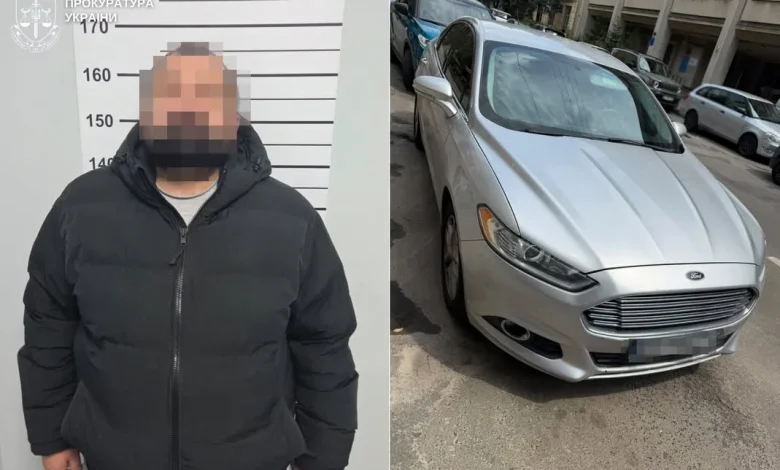
In Lviv, a 36-year-old local resident has been notified of suspicion of unlawfully taking possession of a car which he had previously borrowed from an acquaintance. This was reported under the procedural guidance of the Frankivsk District Prosecutor’s Office of the city of Lviv.
According to the investigation, at the end of April this year the man took a Ford Fusion car from an acquaintance on the condition that he would return it the next day. Despite repeated demands from the owner, he did not return the vehicle; instead, he invented false reasons and assured him that he would hand over the car later.
Investigators established that the suspect had no intention of returning the vehicle, but instead planned to sell it. To do this, he placed an advert on a specialised website and soon found a buyer. A few days later, the car was sold for 5,500 US dollars.
When the owner realised that his acquaintance did not intend to return the vehicle, he contacted law enforcement. Police tracked down the man involved in the unlawful taking of the vehicle and found that he had previously been held criminally liable. He had been convicted of trading in influence – for a monetary reward he promised to assist a man liable for military service in being removed from the wanted list and in obtaining fake medical certificates declaring him unfit for military service.
Currently, under the procedural guidance of the Frankivsk District Prosecutor’s Office, the man has been notified of suspicion of unlawful taking possession of a vehicle, where the object of the unlawful taking is a vehicle worth between one hundred and two hundred and fifty tax-exempt minimum incomes of citizens (Part 2 of Article 289 of the Criminal Code of Ukraine). The pre-trial investigation is being conducted by Lviv District Police Department No. 2 of the Main Directorate of the National Police in Lviv Region.
In accordance with Article 62 of the Constitution of Ukraine, a person is presumed innocent of committing a crime and may not be subjected to criminal punishment until his or her guilt has been proven in the manner prescribed by law and established by a guilty verdict of a court.