

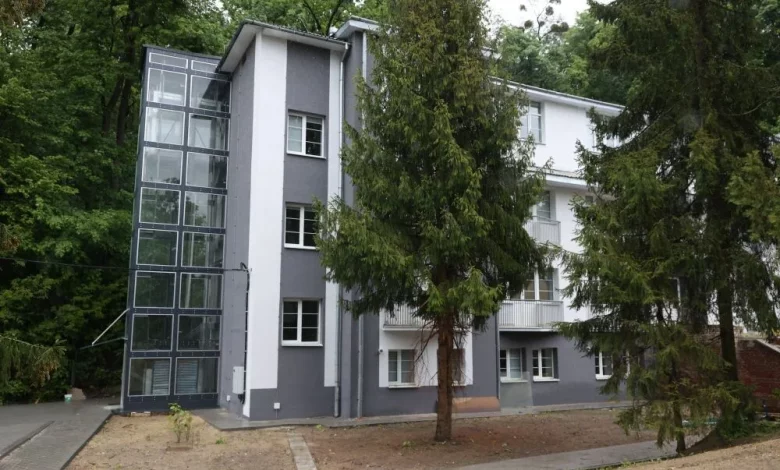
The Executive Committee of Lviv City Council has approved temporary accommodation for a further six internally displaced persons in the building at 274 Zamarsynivska Street (Block B-3) in Lviv. At present, 21 people live there, so after the new families move in the total number of residents will increase to 27.
Three new families will move into the building, including three children. They are displaced people from Luhansk and Sumy regions, as well as from the city of Mykolaiv. The housing has been created for people who have lost their homes because of the war and at the same time need special care and barrier-free living conditions.
At the same time, the Executive Committee has extended the period of stay for the 21 current residents. Both they and the six new residents are provided with the possibility of living there for six months, with the option of extension by decision of the city. The relevant agreements with the residents will be concluded by the Municipal Centre for Social Support for Persons from among Orphans and Children Deprived of Parental Care, and Internally Displaced Persons.
“For people who have lost their home because of the war and at the same time need special care, it is important to have accessible housing and support close at hand. This is exactly why this building was set up – so that they can live in comfortable conditions, have their own space and know there is someone they can turn to for help,” said the head of the Centre for Social Support, Volodymyr Holovaty.
Temporary housing on Zamarsynivska Street was arranged in the building of a former sanatorium in partnership with international organisations. In February 2026, 21 people were already living here – eight families who had moved from a modular town. Among the first residents there were five children and ten people with disabilities.
The building is designed for almost 70 people. It contains 17 living rooms, three kitchens – one on each floor – two children’s playrooms, accessible showers and a laundry room. For convenient movement between floors, a lift has been installed. Each family has a separate room, while the kitchens and bathrooms are shared and equipped with the necessary furniture and appliances.
The housing is intended for internally displaced persons with disabilities and members of their families who are registered as IDPs in the Lviv community and need temporary accommodation. Under the approved procedure, accommodation is free of charge, and the city covers the cost of utilities.
To obtain a place to live, applicants submit an application and the required documents through a CNAP service centre. Once the documents have been processed, the list of future residents is approved by the Executive Committee. Under the terms of the grant programme, this building must provide housing for forcibly displaced people for five years.