

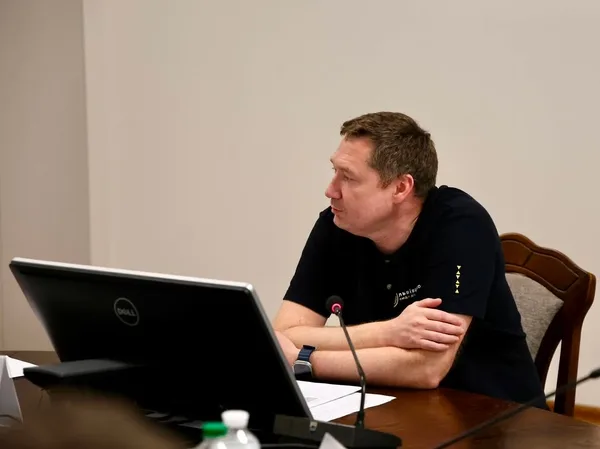
During the first half of 2026, communities in Lviv region allocated over UAH 2.3 billion for needs related to Russia’s armed aggression. This accounts for 10.8% of all local budget expenditure, excluding targeted transfers. These figures were released by the regional authorities.
Lviv region has begun work on the Regional Development Strategy for 2028–2034. This document will determine which projects the region will be able to implement after 2027, how it will attract state and international funding, and which decisions will become priorities for communities. Legislation requires that preparation of the strategy start in advance to ensure continuity in development planning.
The region’s education sector will receive additional support: Lviv region is to obtain UAH 138.6 million in state subvention to upgrade workshops, laboratories and classrooms in 13 colleges and vocational schools. The funds will be directed towards modernising the institutions’ material and technical base.
Last week, Russia carried out a missile attack on Lviv. On the morning of 30 July, cruise missiles struck the city: a 35-year-old man was killed under the rubble of a five-storey building, and another 38 people were injured at various locations. More than 20 residential buildings, a school, nurseries and cars were damaged, and search and rescue operations continued for more than a day.
In the “Na Valakh” square in Lviv, people paid tribute to the Defenders of Ukraine, both men and women, and civilians tortured in captivity. A memorial plaque bearing the inscription “Here should have sat the one who dreamed of returning home” was installed on the first bench, serving as a reminder of the need to bring all Ukrainians back from captivity.
Military units linked to Lviv region continue to demonstrate strong results. The 103rd Separate Territorial Defence Brigade of the Armed Forces of Ukraine named after Metropolitan Andrey Sheptytsky ranked fourth among all units of Ukraine’s Defence Forces for effectiveness in destroying enemy attack drones.
The 7th Carpathian Border Detachment marked its Unit Day. Its rapid response command “Shkval” carries out complex combat missions on the front line, working in reconnaissance, artillery, air defence, mortar and anti-tank units. The soldiers of this unit defended Kyiv region, Donetsk region, Luhansk region and Kharkiv region and now continue to fight in various sectors of the front. Under the Comprehensive Programme “Safe Lviv Region” for 2021–2026, more than UAH 64.1 million was allocated from the regional budget to meet the needs of the detachment in 2022–2026.
Servicemen and servicewomen of the Air Force of the Armed Forces of Ukraine were also recognised. Since the start of the full-scale invasion, the aviation of the Air Command “West” has carried out more than 16,000 combat sorties, destroying over 770 aerial and more than 1,100 ground targets of the enemy.
The 45th Separate Artillery Brigade of the Armed Forces of Ukraine named after General Myron Tarnavsky celebrated the tenth anniversary of its formation. Over this period, the unit has become one of the most powerful artillery forces within the Armed Forces of Ukraine and a source of pride for Lviv region.
The region marked the professional holiday of healthcare workers. The regional authorities thanked medical staff for their demanding and responsible work in wartime conditions.
The ranking of territorial communities in Lviv region has been updated. The top ten leaders and the key development indicators for each community have been published, which may be useful for local residents.
Communities across the region are drawing up resilience plans for the autumn-winter period. The Lviv City Territorial Community and the communities of Sambir district have already presented their proposals. During the meetings, they analyse measures already implemented, outstanding issues and the need for additional support. Particular attention is recommended for the physical protection of critical infrastructure, shelters, the autonomy of facilities and their preparedness for possible power cuts.
Lviv region is developing international partnerships. The region is deepening cooperation with the German federal state of Baden-Württemberg: this year the partnership is moving into a practical phase, in particular through visits by German doctors to establish direct contacts and exchange experience. The German side has taken an interest in Lviv region’s work in the field of civil protection and the organisation of healthcare facilities under high-threat conditions.
Another German federal state, Saarland, plans to provide healthcare institutions in Lviv region with modern rehabilitation equipment.
The region is considering the possibility of setting up one of the largest modular housing production facilities in Ukraine, using Swedish technologies. Johan Berglund, managing partner of Folkehemmet, said they plan to construct up to 1,500 houses a year. The housing will comply with European requirements for energy efficiency, quality and modern construction standards.
Lviv region is working on a unified approach to preserving monuments of sacred architecture. This concerns coordinating actions on the registration, restoration and protection of such sites.
The cultural sphere was also busy this week. The annual “TuStany!” festival brought together enthusiasts of Ukrainian mediaeval culture in Urych. This year, the event was dedicated to the memory of Andriy Parubiy, who made a significant contribution to the study, preservation and promotion of the historical and cultural heritage of Tustan.
The results of the International Children’s Creativity Forum “Golden Easel” have been summed up. The Grand Prix went to 12-year-old Sofiia Priadko from Kryvyi Rih, and the winner of the competition was 8-year-old Dmytro Ushakov from Kharkiv, who has been living in Drohobych since the start of the full-scale war. This year, more than 1,000 young artists from Ukraine, Hungary, France, Poland, Bulgaria, Croatia, Japan and other countries united by the International Art Forum “Unbreakable Golden Easel” took part in the forum.
Awareness-raising work with communities continues in the healthcare sector. The “Hear the Doctor” project has announced a new intake of health ambassadors. Applications are invited from medical students, interns, future psychologists and nurses, as well as practising doctors from across Ukraine. Participants will undergo intensive training from healthcare experts, gain practical skills in working with communities, and after delivering at least five lectures will receive a certificate confirming their status as a health ambassador.