

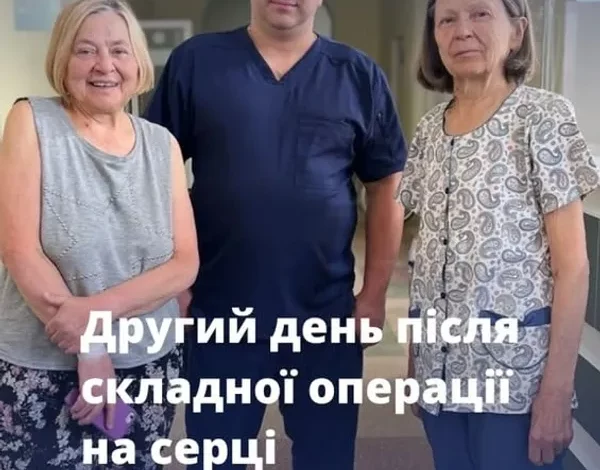
In Lviv, two female patients with severe aortic valve disease underwent minimally invasive heart surgery. Doctors replaced the valve through a puncture in a blood vessel in the leg, and as early as the next day after the procedure the women were able to walk independently and breathe freely.
Before the operation, 69-year-old Lviv resident Nadiia Myhal suffered from severe shortness of breath and could hardly move around. Two and a half years ago she underwent bypass surgery, but over time her aortic valve sustained critical damage, which significantly reduced her quality of life.
The other patient, 81-year-old Lviv resident Halyna Mukha, has been actively volunteering since the start of the full-scale war, knitting camouflage nets and vests for the military. Three years ago, due to feeling unwell, she sought medical help and was diagnosed with aortic valve stenosis, that is, a significant narrowing of the valve. At that time she was offered surgery, but declined because of her advanced age. This year her health deteriorated sharply, and the patient agreed to a minimally invasive procedure – transcatheter aortic valve implantation (TAVI), which for such patients is often the only chance of survival.
According to the head of the Heart and Vascular Clinic, Dmytro Besh, transcatheter implantation is a low-trauma and safe method of valve replacement. Through a puncture in a leg vessel about one centimetre in diameter, doctors guide an artificial valve to the heart. The operation is performed under local anaesthesia, which makes it more comfortable for elderly patients.
“Through a puncture in the leg of about 1 centimetre, we deliver an artificial valve to the heart via the vessel. It is comfortable for the patient, under local anaesthesia. And now both patients are walking absolutely calmly. In terms of their condition, how they feel, and on echocardiography there is a marked improvement,” said Dmytro Besh
Mrs Nadiia was discharged home on the second day after the operation, and Mrs Halyna on the third. Doctors note a marked improvement in their condition and the possibility of a rapid return to normal life.