

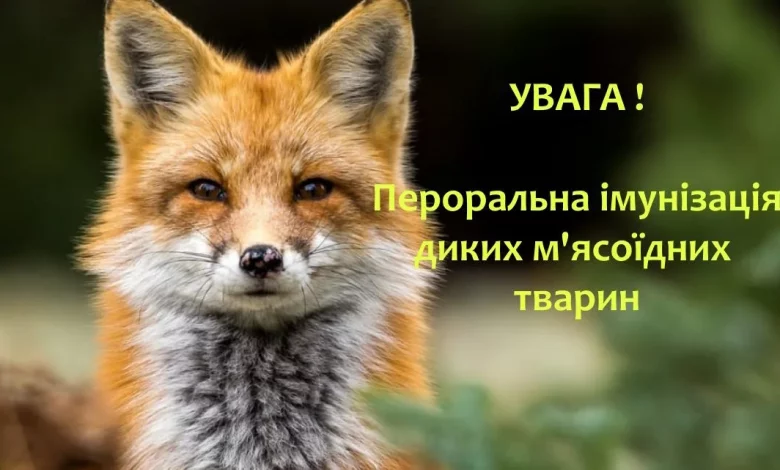
A large-scale campaign of oral vaccination of wild carnivorous animals against rabies began in Lviv region on 10 September 2026. The measure is being carried out to reduce the risk of the dangerous infection spreading among animals and, accordingly, to protect people.
Rabies remains one of the most dangerous infectious diseases in the world. Once the first clinical symptoms appear, the disease has a 100% fatality rate, and around 59,000 people die from it every year. The incubation period usually lasts from one to three months, so timely prevention is crucial.
The main sources of the pathogen are unvaccinated domestic animals and sick wild animals – foxes, squirrels, wolves, arctic foxes, raccoon dogs, rodents and others. The virus is transmitted mainly through a bite or when infected saliva gets onto damaged skin or mucous membranes. Possible signs that an animal may be ill include loss of fear of humans, the appearance of a wild animal in a populated area during the day, unusual aggression, attacks on people, profuse salivation and fear of water.
Doctors and veterinarians stress that in the event of any bite or scratch from a suspicious animal, the wound must be washed immediately with soap and water and medical attention sought as soon as possible. There is no specific treatment for clinical forms of rabies, so the only protection is timely vaccination with an anti-rabies vaccine.
Veterinary medicine specialists advise following these safety rules:
- do not have contact with stray, wild or sick animals;
- if rabies is suspected or in the event of the death of domestic animals, immediately contact a veterinary surgeon;
- if carcasses of domestic or wild animals are found in the area, also inform the veterinary service;
- if an animal bites, the wound should be washed with warm boiled water and soap, treated with a 70% alcohol-based iodine tincture and medical care sought at a healthcare facility to receive vaccination.
Veterinary services remind the public that annual rabies vaccination of pet dogs and cats in Ukraine is free of charge. Regular vaccination of pets, combined with vaccination of wild animals, creates a barrier to the spread of the infection.
As part of the current campaign in Lviv region, 243 working groups have been set up. They include representatives of the Main Department of the State Service of Ukraine on Food Safety and Consumer Protection in Lviv region, state veterinary hospitals, district military administrations, local self-government bodies, territorial units of the National Police, the Western Interregional Office of Forestry and Hunting, and hunting ground users.
In Drohobych district, vaccination of wild animals is scheduled to take place from 11 to 16 September 2026. Teams will manually distribute 346,000 doses of vaccine in forests and fields, outside populated areas, roads and bodies of water.
For bait, small briquettes made of meat-and-bone meal produced by LLC “Ukrvetprompostach” are used. They have a smell attractive to wild animals and contain a capsule with antigen inside. After eating such bait, the animal develops immunity to rabies within 21 days, which lasts for at least a year. The briquettes are safe for humans, domestic animals and the environment.
The Main Department of the State Service of Ukraine on Food Safety and Consumer Protection asks residents of the region to be vigilant: if they find food briquettes containing vaccine, they must not pick them up, move them or destroy them, so that they remain attractive to wild animals and can fulfil their preventive function.
For vaccination of domestic animals in Drohobych, residents can contact the Drohobych District Veterinary Hospital at: m. Drohobych, vul. Pylypa Orlyka, 15.