

At the Centre for Children’s Medicine, a 13-year-old girl who had been developing painful purulent lesions on her skin over several months was diagnosed with recurrent suppurative hidradenitis and prescribed modern treatment using biological therapy.
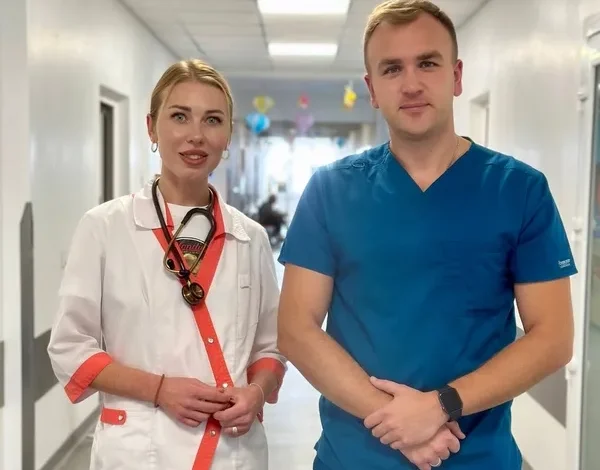
The patient came to the Specialised Surgery Clinic for another abscess drainage. Surgeon Svytozar Khalak noted that repeated suppuration could be a manifestation of a chronic dermatological disease rather than just isolated abscesses, and referred the child for an additional consultation.
The girl was examined by dermatologist and immunologist at the Paediatric Immunology and Rheumatology Clinic with an inpatient unit of specialised paediatrics, Solomiia Tymchyshyn. She confirmed the diagnosis of “recurrent suppurative hidradenitis” (acne inversa) — a chronic inflammatory skin disease that presents with painful nodules, abscesses and fistulas, most often in the armpits, groin and anogenital area. The disease can lead to scarring and restricted mobility, especially if treatment is started late.
Initially, the patient was prescribed a course of antibiotic therapy. The child’s condition improved, but it was not possible to completely halt the course of the disease — new fistulas and scars continued to appear, which were already affecting the mobility of her arm.
“If the disease is not controlled, it can progress: new fistulas will form, and recurrent suppuration and scarring will occur. In our patient, scarring was already affecting the mobility of her arm. That is why it is important not just to remove individual abscesses, but to treat the disease itself” — Solomiia Tymchyshyn
Given the course of the disease, the Centre for Children’s Medicine decided to move to biological therapy. Adalimumab was procured for the girl — a biological medicine used to treat suppurative hidradenitis when the relevant indications are present. This therapy is aimed at controlling the inflammatory process and reducing the risk of new flare-ups.
Doctors emphasise that if children develop recurrent painful nodules, abscesses or fistulas in the armpits, groin or anogenital area, it is important to consult a dermatologist or immunologist in good time to establish an accurate diagnosis and start appropriate treatment.