

Lviv is preparing a new comprehensive support system for teenagers who have experience of using psychoactive substances, and for their families. One of the key elements of this model is to be the city’s first municipal rehabilitation centre for children and teenagers.
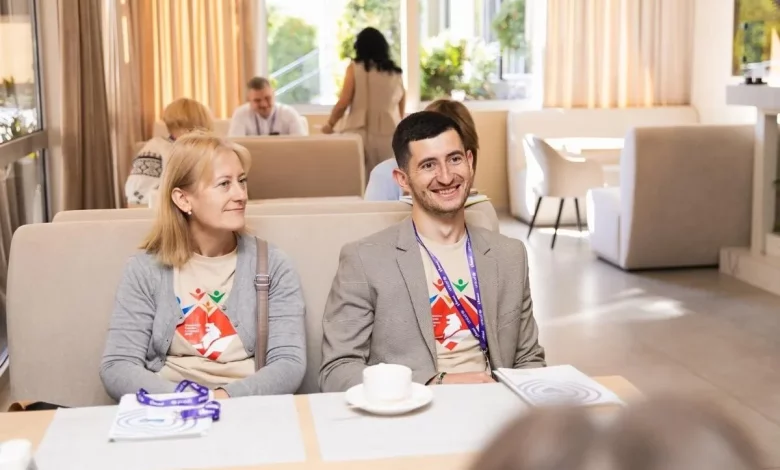
The approaches to such a system were discussed during the public dialogue “To See. To Understand. To Act”, which took place in Lviv. The discussion brought together representatives of Lviv City Council, state institutions, civil society organisations, international partners and UNICEF. The event was organised by the Children’s Services of Lviv City Council and the Ridni Charitable Foundation with the support of the Coordination Centre for the Development of Family-Based Care and Childcare, the Public Health Centre of the Ministry of Health of Ukraine and UNICEF.
Participants stressed that the current system often responds only when a teenager has already developed an addiction or is facing serious consequences of using psychoactive substances. In contrast, in Lviv they want to focus on early identification of risks, work with the family, the child’s mental health, their social environment and the factors that may push them towards substance use. They also highlighted the importance of tackling stigma and ensuring access to social and psychological support.
“It is very important to build this pathway of support and assistance for the child and to understand that there are people, partners, who stand by you. I am very pleased and value the fact that when you come to partners and say: there is a certain problem, a gap in the child support system, children need this kind of support, they listen, understand and support,” said Valentyna Bartoshyk, Head of the Humanitarian Policy Department of Lviv City Council.
According to participants in the dialogue, the city aims to move away from isolated response measures and to build a holistic system in which the child and their family can receive help from different specialists at different stages. The Children’s Services of Lviv City Council, specialists of the Municipal Institution “Centre for Social Support for Children and Families ‘Ridni’”, the Ridni Charitable Foundation, as well as state and international partners are jointly working on such a programme of socio-psychological rehabilitation for teenagers.
They also presented work done towards establishing a municipal rehabilitation centre for teenagers with experience of using psychoactive substances. It is planned that the centre will provide comprehensive socio-psychological support to children who need help. UNICEF representatives pointed out that Ukraine still has no centres where the rehabilitation of children is funded from the state or municipal budget.
The approach to the future centre in Lviv has already changed. Initially, it was considered as a facility outside the city, but this idea has been abandoned. The current focus is on ensuring that support is available in the city itself, primarily for teenagers who do not yet require inpatient treatment but are already at risk or need to work with a specialist. Participants in the dialogue spoke about the need to create an entire “ecosystem of support” – from prevention to rehabilitation.
The Ridni Charitable Foundation noted that the need for such a system became apparent, in particular, while processing the city’s requests for funding the rehabilitation of children in private centres. They stressed that this route is lengthy and costly, and that the community lacks its own rehabilitation infrastructure.
Experts also emphasised that the use of psychoactive substances cannot be considered separately from the environment in which the child lives. The situation is influenced by family relationships, the presence of support from adults, the teenager’s psychological state and how quickly adults notice changes in their behaviour. This issue is being considered as part of a broader reform of the child care and support system, where it is important to work not only with the consequences, but also with the causes and risks.
The public dialogue “To See. To Understand. To Act” was the final stage of the “City that Cares for Children” residency, organised by the Children’s Services team. The next steps are to further develop a comprehensive support programme and to establish the municipal rehabilitation centre. Ultimately, Lviv plans to build a system that will operate not only when the problem has already become critical, but also at early stages – to spot risks in time, support the teenager and their family, and prevent the addiction from deepening.