

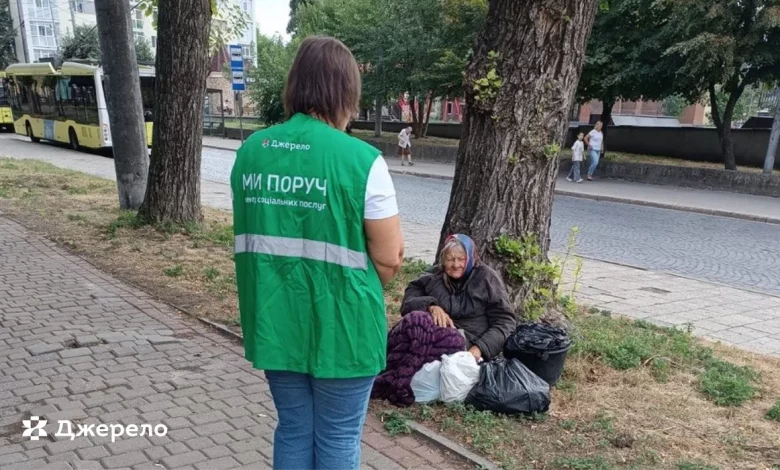
In Lviv, a social outreach patrol operates every day, including weekends, visiting people who have found themselves without a home. Since the beginning of the year, the patrol team has carried out 449 call-outs, during which they have identified 192 homeless people. This was reported by the branch for social work with homeless people of the Dzherelo Centre.
Social outreach in Lviv runs from Monday to Sunday, from 08:00 to 19:00. The patrol team includes a social worker, a medical worker and a driver, and a psychologist joins the call-outs when needed. Staff make scheduled visits three times a week to places where people without a home most often stay, and they also respond to requests from city residents.
Lviv residents can report a person who may be in need of help in several ways. Requests are received by the contact centre of the Dzherelo Centre, which operates on weekdays (Monday–Thursday from 08:00 to 17:00, Friday from 08:00 to 16:00). There is also a 24-hour short number 15-80, from which information is passed on to the social patrol. Separately, the branch for social work with homeless people accepts requests at any time of day or night.
The branch emphasises that you can get in touch even at night, but the patrol only goes out during working hours — from 08:00 to 19:00. After receiving a report, the team arrives at the specified address, meets the person, identifies their needs and offers options for support.
During a call-out, social workers can provide food and tea, basic first aid, and information about available social services. If the person agrees, they are taken to the shelter on Kyrylivska Street, where they can get a hot dinner, have a wash, use hygiene products, change into clean clothes and shoes, and have their own belongings laundered.
Specialists stress that they have no right to force a person to accept help or go to a shelter, so sometimes they have to return to the same person several times.
“Our work begins with making contact. If a person is not ready to accept help during the first meeting, we can come back again. Gradually we get to know each other, talk and build trust,” explain staff at the branch for social work with homeless people of the Dzherelo Centre.
If a person does agree to accept help, support is not limited to just an overnight stay at the shelter. A social worker can take them under social care: help restore documents, apply for disability status, reinstate social benefits and concessions, and also resolve other issues needed to return to a more stable life.
Residents of Lviv are urged not to remain indifferent to people living on the streets. If you see someone without a home, it is enough to report this to the city's social services — specialists will then take over from there.
Lviv has also recently launched a “Mobile Support Space” — a new format of outreach assistance for people living on the streets. In a specially equipped tent, people can receive social, medical and humanitarian aid, as well as consultations with specialists. The tent is planned to be set up weekly in different parts of the city.