

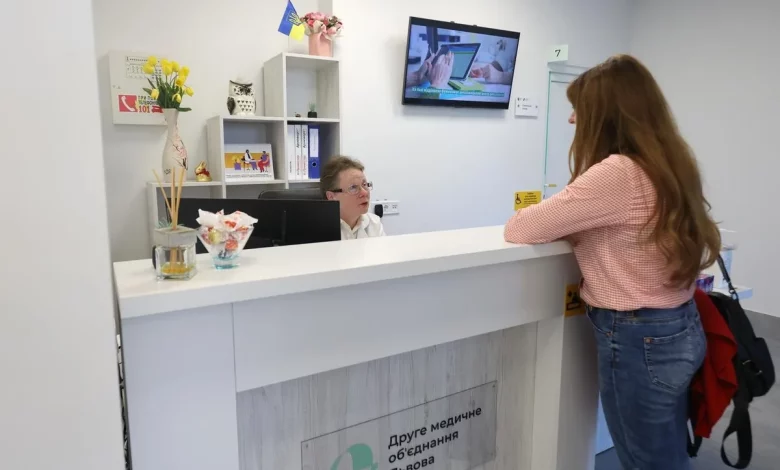
In Lviv, three hospitals of the Second Medical Association have been given new names. The former 4th City Hospital is now called Sofiia Okunevska Hospital, the 5th City Hospital — Yevhen Ozarkevych Hospital, and the Hospice Hospital has been renamed Mercy Hospital. Nothing changes for patients: the addresses, medical staff and range of services remain the same.
The Second Medical Association explains that it has abandoned numbering the hospitals as a legacy of the Soviet system, which reflected neither the specific profile of a facility nor its connection with the city. The new names combine a tribute to prominent figures in Ukrainian medicine with an emphasis on humanity and care in treatment.
“A number in a hospital name is a legacy of the Soviet management system, where facilities were designated purely administratively. Such names say nothing about the hospital and do not connect it with the city, so we have abandoned this numbering. The new concept is based on the idea that a hospital is, above all, a place of care, support and humanity,” — Vasyl Trunkvalter
Sofiia Okunevska Hospital provides care for adults and children from birth to the final days of life. Its structure includes family medicine outpatient clinics, a polyclinic department, a women’s health clinic, endocrinology and rheumatology departments, physiotherapy and medical rehabilitation, as well as a palliative care department.
The hospital’s units are located at: vul. Fredra, 2; vul. Stetska, 3; vul. Svientsitskoho, 3; vul. Snopkivska, 22; vul. Ternopilska, 9; vul. Rappaporta, 6; vul. Stepanivny, 35a; vul. Velychkovskoho, 30a; vul. Boi-Zhelinskoho, 14.
Yevhen Ozarkevych Hospital specialises in complex diseases that require in-depth diagnostics and treatment. It has departments of haematology, nephrology and dialysis, pulmonology, neurology with medical rehabilitation, gastroenterology, an anaesthesiology and operating department with intensive care beds, as well as a maternity department.
The hospital’s locations: vul. Konovaltsia, 26a, 24 and 20–22; vul. Henerala Chuprynky, 43, 48 and 61; vul. Rappaporta, 6 and 8; vul. Heroiv UPA, 35; vul. Rusovykh, 4.
Mercy Hospital provides palliative care to people for whom illness no longer leaves a chance of recovery. A multidisciplinary team works with patients: doctors, nurses and a chaplain. Medical care and pain relief are combined with psychological and spiritual support, as well as attention to the needs of the family. Care is provided both in the inpatient unit and at home through a mobile palliative service. The facility is located at vul. Kotliarevskoho, 53.
The Association explains that the new name “Mercy” is intended to move away from the associations with the “end of life” evoked by the word “hospice”. Palliative medicine focuses on relieving suffering, preserving human dignity and providing support during the most difficult periods. The word “mercy” is historically linked to traditions of medical and charitable assistance in Europe.
The two hospital names were chosen in honour of prominent figures in Ukrainian medicine. Sofiia Okunevska was the first woman doctor in Austria-Hungary. She taught herself Greek and Latin in order to sit the school-leaving examination, and obtained her medical education in Zurich, where she defended her doctoral thesis on blood anaemia. In Lviv she was only able to begin practising in 1903, when her diploma was recognised.
Okunevska became the first gynaecologist in Galicia with her own practice. She was the first in Galicia and Austria-Hungary to use radiation therapy against cancer, in particular treating cervical cancer with radium using the method of Maria Skłodowska-Curie. At the Narodna Lichnytsia (People’s Clinic) she organised the first school of obstetrics and gynaecology in Lviv, co-initiated the creation of the first doctors’ trade union and compiled a dictionary of Ukrainian medical terminology.
Yevhen Ozarkevych was a doctor and public figure, one of the founders of modern Ukrainian medicine. In 1903 he initiated the establishment of, and headed, the Narodna Lichnytsia in Lviv — the first Ukrainian charitable medical institution, which provided free care regardless of religion or nationality. Metropolitan Andrey Sheptytskyi donated his own house for the clinic and equipped it at his own expense.
Ozarkevych headed the Ruske Likarske Tovarystvo (Ruthenian Medical Society), the first professional association of Ukrainian doctors. He founded and edited Likarskyi Zbirnyk, the first scientific medical publication in Ukrainian, as well as the public health and education journal Zdorovlie. In 1914 he was awarded the title of Senior Sanitary Councillor — the highest recognition in the health care system of Austria-Hungary. After 1939, the Soviet authorities included him on a list of “nationalist figures”, and any mention of his name was banned.
Interestingly, Sofiia Okunevska and Yevhen Ozarkevych were first cousins. They grew up in the same family and shared the conviction that Ukrainians had the right to their own medicine, education and culture in their native language. After the opening of the Narodna Lichnytsia in 1903, Okunevska, with difficulty, nevertheless obtained a position there. Together they organised the first courses in western Ukraine for nurses and midwives. Now two hospitals bearing their names operate within a single medical association.
The Second Medical Association emphasises that nothing changes for patients: the addresses, doctors and range of medical services remain the same. Appointments with specialists can still be made via the Helsi electronic service or by calling the contact centre.
The Second Medical Association of Lviv is one of the largest outpatient medical institutions in Ukraine. Its structure includes Prince Lev Hospital, Sofiia Okunevska Hospital, Yevhen Ozarkevych Hospital, Mercy Hospital, the Levandivka and Vyhovskoho treatment and diagnostic centres, and 19 family medicine outpatient clinics. In total, more than 800 doctors work across 42 locations in all districts of the city.