

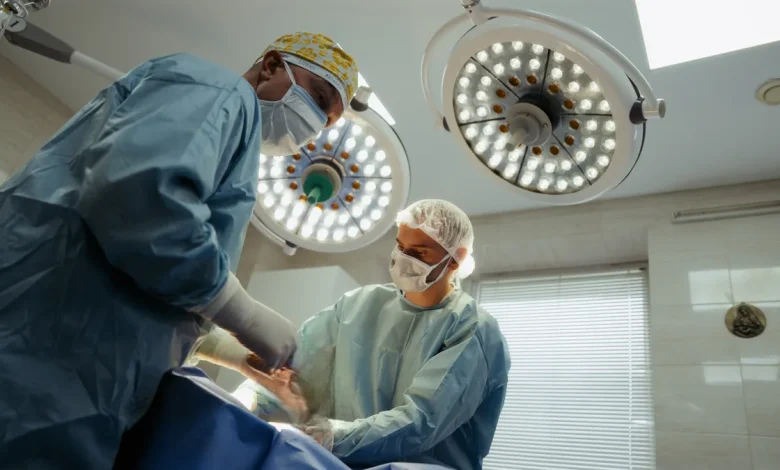
In Lviv, at the Centre for Thermal Injury and Plastic Surgery of St Luke’s Hospital, medics are treating serviceman Andrii, who sustained severe burns and injuries after being hit by a Russian FPV drone. Doctors are applying to his wounds a modern biological material made from the skin of Atlantic cod.
Andrii volunteered to go to the front. As he was withdrawing from combat positions, he was struck by an enemy drone, suffering multiple injuries and burns. His comrades dragged him into cover, where, despite his critical condition, he continued to command the unit: he asked them to apply a tourniquet and gave instructions on camouflaging vehicles and moving them under cover.
After being wounded, Andrii was treated first in Dnipro, then in Vinnytsia. Later, as he is originally from Lviv region, he was transferred closer to home — to the burns unit of St Luke’s Hospital in Lviv, which is the largest in western Ukraine.
Doctors note that blast injuries are often combined with burns, which makes treatment much more complicated. Andrii was diagnosed with a mosaic pattern of burns, where areas of different depths of damage alternate on the body. During surgery, surgeons remove deeply damaged tissue, and some of the wounds are covered with biomaterial made from Atlantic cod skin, which forms a protective layer and promotes the skin’s natural regeneration.
According to the medics, fish skin contains omega fatty acids, adheres closely to the wound surface, and helps reduce pain and the risk of infection. Ivan Ryk, head of the Centre for Thermal Injury and Plastic Surgery at St Luke’s Hospital, stresses that one of the main advantages of this method is the significant relief of the pain syndrome that accompanies burn injuries.
«The pain factor is reduced, the wound is closed, and epithelialisation takes place under the fish skin,» says Ivan Ryk.
At the same time, biomaterial made from cod skin is expensive, so doctors carefully select the patients for whom its use will be most appropriate. The Centre emphasises that burn surgery involves working with some of the most severely ill patients, so every innovative technology that can be introduced is important for improving treatment outcomes.
Andrii himself says that he felt significant relief after the very first operation in Lviv: his high temperature and severe pain subsided. His wife Sofia has been by his side throughout his treatment, accompanying him in hospitals in Dnipro and Vinnytsia and now supporting him in Lviv. Being transferred closer to his home region has become an important stage in the soldier’s recovery.
A multidisciplinary team is involved in Andrii’s treatment: six burns surgeons, nurses and healthcare assistants, a physical therapist, as well as anaesthetists and intensive care specialists. They provide a full continuum of care — from emergency interventions to rehabilitation.
The development of modern methods of burn treatment and support for such teams is one of the areas of the Burn Care Alliance (BCA) initiative of the Christian Medical Association of Ukraine, implemented in partnership with strategic partner Direct Relief.
Within the First Medical Association of Lviv, which includes St Luke’s Hospital, a full range of modern medical care is provided — from diagnostics and surgical interventions to rehabilitation and prosthetics, including for patients with severe injuries and wounds.