

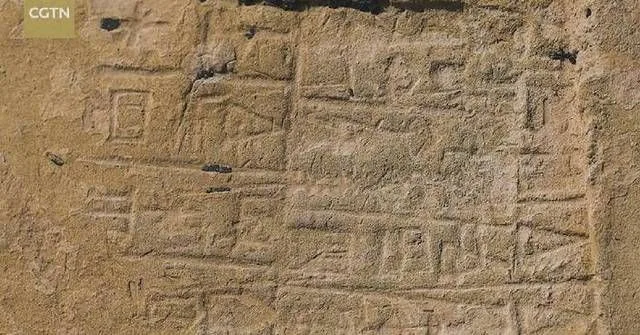
Thousands of cuneiform clay tablets found in the ancient city of Uruk, on the territory of modern Iraq, give scholars a detailed picture of the early social, political and economic life of Mesopotamia. They show how systematic record-keeping became one of the driving forces behind the emergence of the first large urban societies.
Uruk, located in southern Mesopotamia near the present-day city of Samawah, is regarded as the principal city of Sumer — the earliest known civilisation in this region. The settlement arose around 5000 BC and reached its peak in the 3rd millennium BC, when, according to researchers’ estimates, its population ran into the tens of thousands.
It was in this period that the earliest known writing system — cuneiform — took shape. Scribes and priests pressed wedge-shaped marks into wet clay tablets, recording economic transactions and the distribution of resources. Large-scale excavations at Uruk, begun by German archaeologists as early as 1912, uncovered thousands of such tablets.
It was the Greeks who called the region Mesopotamia, the “land between the rivers” — the Tigris and the Euphrates. On this fertile plain, which broadly corresponds to the territory of modern Iraq and parts of Syria and Turkey, arose some of the earliest complex societies in history — the Sumerian, Akkadian, Babylonian and Assyrian civilisations.
In the late Uruk period, tablets recorded stocks of grain, beverages, dried fruits and other foodstuffs. These documents, roughly 5,000 years old, are compared by researchers to an early prototype of modern spreadsheets: they are registers of ration allocations, the movement of goods and other transactions.
Professor Wang Xianhua of the Institute for Global Civilisation Studies at the Shanghai University of Finance and Economics is studying such tablets in detail and, in particular, is analysing one document designated as No. 107 in the first volume of the MSVO series. According to him, approximately 90 per cent of the cuneiform finds are administrative documents, a large proportion of which relate to the economy. The tablet he examines is a kind of schedule listing dry rations, a drink (probably beer) and dried fruits.
In the researcher’s view, such records make it possible to trace economic activity and the accumulation of wealth in southern Mesopotamia. Their emergence reflects a practical need — the necessity of recording economic transactions, resource volumes and obligations between parties.
The introduction of writing reduced the uncertainty inherent in oral agreements: deals no longer relied solely on memory and trust but were backed up by material evidence in the form of clay tablets. Accurate record-keeping made economic transactions more transparent and open to verification in the event of disputes.
Researchers believe that it was precisely this system of data recording that helped expand trade in Mesopotamia. The growth and concentration of exchange operations, in turn, accelerated the development of cities, and the ancient clay tablets became one of the tools that transformed humanity’s approach to managing the economy and organising large societies.