

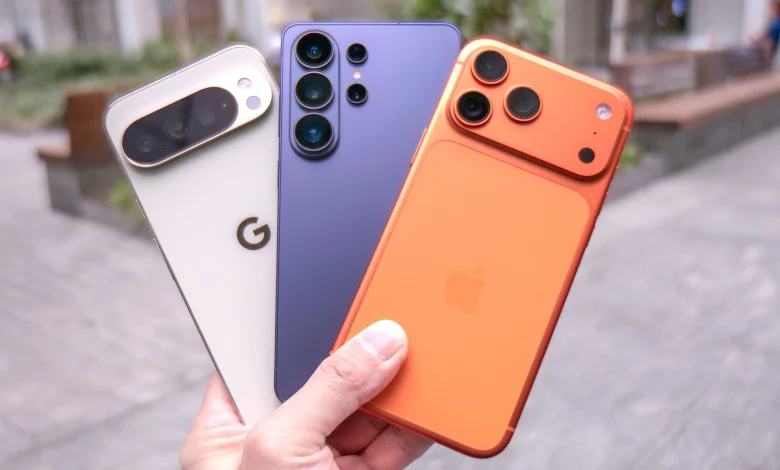
Tom’s Guide has updated its ranking of the best smartphones of 2026, which includes both premium flagships and more affordable models. The selection is based on dozens of tested devices across different price brackets, with scoring focused on performance, battery life, and the quality of the display and cameras.
The editors named the iPhone 17 Pro Max the best smartphone overall. The model features a 6.9-inch OLED display with a 1–120 Hz refresh rate, an A19 Pro processor, up to 2 TB of built-in storage and a triple rear camera with three 48-megapixel modules (wide, ultra-wide and telephoto). The smartphone delivered record-breaking battery life for an iPhone — around 17 hours 54 minutes in the publication’s own web browsing test — and supports wired charging at up to 35 W. Its advantages include the refreshed design, a bright, less reflective screen and strong performance, while the downsides are its high price (from 1,199 US dollars) and the lack of any “wow” AI features at launch.
The title of best camera phone went to the Samsung Galaxy S26 Ultra. The smartphone is equipped with a 6.9-inch OLED display (3120×1440, 1–120 Hz), a Snapdragon 8 Elite Gen 5 chipset, up to 16 GB of RAM and a main camera array with a 200 MP primary sensor, a 50 MP ultra-wide and two telephoto lenses at 50 MP (5x) and 10 MP (3x). Its zoom and video stabilisation capabilities are particularly highlighted, including the Horizon Lock feature. Battery life in testing came in at 16 hours 10 minutes. Standout features include the “Privacy Display”, which makes it harder for others to peek at the screen, as well as expanded AI features, though reviewers note the enlarged camera bump and slightly lower display brightness due to the protective technologies. The starting price is from 1,299 US dollars.
In the “best smartphone under 500 dollars” category, first place went to the Google Pixel 10a. Priced at 499 US dollars, the device offers a 6.3-inch OLED display (up to 120 Hz), a Tensor G4 chip, 8 GB of RAM, a 48 MP main camera and a 13 MP ultra-wide module. The smartphone delivered more than 15 hours of battery life in testing, and comes with IP68 protection and Corning Gorilla Glass 7i. The camera module is now flush with the body, while software additions include Camera Coach and Auto Best Take tools. At the same time, the device retains the previous processor and has not received any major hardware camera upgrades, but thanks to its combination of price, battery life and AI support, it is described as the best-value budget option.
The editors consider the Samsung Galaxy Z Fold 8 Ultra the best foldable smartphone. The device has an internal 8-inch AMOLED display (2184×1968, 1–120 Hz) and an external 6.5-inch screen, runs on the Snapdragon 8 Elite Gen 5 for Galaxy, and is equipped with a 200 MP main camera, a 50 MP ultra-wide and a 10 MP telephoto lens (3x). In the battery test, the Fold 8 Ultra lasted 14 hours 43 minutes, and regained up to 76% charge after half an hour of fast charging. Reviewers note the almost imperceptible crease on the screen, high performance and convenience for multitasking, but criticise the quality of the telephoto lens, the lack of S Pen support and yet another price increase to 2,099 US dollars.
In the “best affordable iPhone” category, the winner was the iPhone 17. The smartphone has a 6.1-inch OLED display with a 120 Hz refresh rate, an A19 chip, 256 or 512 GB of storage, a 48 MP main camera and a 48 MP ultra-wide module. Battery life in testing was 12 hours 47 minutes. With a starting price of 799 US dollars, the model is positioned as better value than the more expensive iPhone 17 Pro and Pro Max, as it inherits some of their capabilities, including support for Apple Intelligence, but loses out due to the lack of a dedicated telephoto lens.
The smartphone singled out for best battery life is the Asus ROG Phone 9 Pro. This gaming handset with a 6.78-inch AMOLED display (2400×1080), a Snapdragon 8 Elite chip, up to 24 GB of RAM and a 5,800 mAh battery achieved almost 20 hours 34 minutes of operation in testing — one of the best results among the phones reviewed. The device supports 65 W fast charging, has an X Mode for gaming and a range of gamer-focused features. At the same time, reviewers point to its high price (around 1,100 US dollars at launch), limited software update support and middling photo quality.
As the best flagship in terms of features for the money, Tom’s Guide names the Google Pixel 10. The smartphone, with a 6.3-inch OLED display (up to 120 Hz), a Tensor G5 chip, 12 GB of RAM and a triple camera (48 MP main, 13 MP ultra-wide, 10.8 MP telephoto with 5x optical zoom), is priced from 799 US dollars. In the battery test it lasted 13 hours 13 minutes. The model comes with an expanded set of AI tools (Magic Cue, Voice Translation, Ask Photos and more) and, in the editors’ view, sets a high bar for smartphones in its price segment, despite the fact that the Tensor G5 lags behind some rivals in raw benchmark scores.
In its final comparison table, Tom’s Guide lists the measured display brightness and battery life results. For example, the Pixel 10 delivers peak brightness of over 2,300 nits, the Galaxy S26 Ultra over 1,800 nits, and the iPhone 17 Pro Max around 1,900 nits. In terms of battery life, the Asus ROG Phone 9 Pro leads (over 20 hours), followed by the iPhone 17 Pro Max (17:54), Galaxy S26 Ultra (16:10), Pixel 10a (15:16) and other models.
The editors also explain their testing methodology: smartphones undergo synthetic benchmarks such as Geekbench and 3DMark, video transcoding trials, measurements of display brightness and colour gamut, as well as the publication’s own battery test with continuous web browsing until full discharge. The quality of photos and video in different lighting conditions is assessed separately.
Based on the review, Tom’s Guide recommends the iPhone 17 Pro Max as the best all-round smartphone, the Samsung Galaxy S26 Ultra as the strongest Android flagship and camera phone, the Google Pixel 10a as the best-value budget option, and the Galaxy Z Fold 8 Ultra as the best foldable device for users willing to pay for an innovative form factor.