

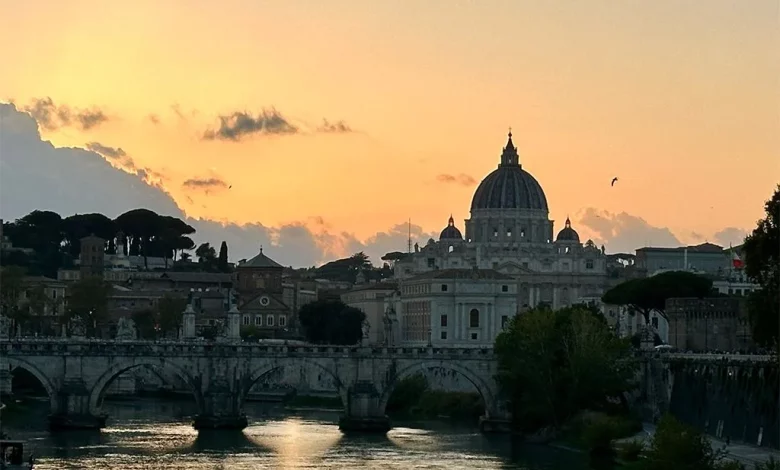
The Vatican remains one of the most visited places in Rome, so when planning your trip it is worth thinking in advance about when to come, what exactly to see and how to organise your route so as not to waste extra time in queues.
The main sights to visit in the Vatican are St Peter’s Basilica, St Peter’s Square and the Vatican Museums with the Sistine Chapel. It is realistic to see both the churches and the museums in a single day, but professional guides advise against planning any other major sights, such as the Colosseum or large archaeological complexes, for the same day, as a visit to the Vatican is usually very exhausting.
Do remember the dress code: visitors with bare knees, shoulders or midriff are not admitted to St Peter’s Basilica or the Sistine Chapel. Jeans and sandals are allowed, but security staff may interpret shorts and knee-length skirts differently, so it is worth carrying a scarf or pareo to cover your legs or shoulders if needed.
The busiest days are considered to be weekends, particularly Saturday, when many tourists arrive in Rome for short breaks. The Vatican Museums are closed on Sundays, except for the last Sunday of the month, when entrance is free and opening hours are limited — this creates extremely long queues, so this date is recommended only if absolutely necessary.
On Wednesdays a general papal audience is usually held. In the warmer months it takes place in St Peter’s Square; in winter or in rainy weather — in an indoor hall to the left of the basilica. On audience days the square and surrounding area are very crowded, and the basilica itself is closed until the end of the audience, roughly until midday. Those who do not plan to take part in the audience are advised to come to the Vatican on that day only after lunch.
As for the time of day, in the first half of the day there are far more organised groups, school trips and early-entry tours in the Vatican Museums, so the galleries can be overly crowded. It is usually a little calmer in the afternoon — roughly 1.5–2 hours before the last possible entry. The situation with St Peter’s Basilica is similar: queues are longest in the middle of the day, while those who come for opening time, around 7:00, get through the security check the quickest.
In the low winter season (November, part of December, January and February) there are fewer tourists, but the days around 8 December, as well as the period from Christmas to Epiphany on 6 January, remain very busy. At this time the number of visitors to the Vatican can be comparable to the summer peak.
Among the must-see locations in St Peter’s Basilica itself, Michelangelo’s dome is particularly popular. There are 231 steps up to the first level, and there is a lift. From there to the upper part of the dome there are a further 320 or so steps, with no lift, along narrow passages and under a sloping ceiling. Because of this, people with pronounced claustrophobia or dizziness are advised to think carefully about their abilities. In return, the summit offers panoramic views over the basilica and Rome.
Inside the church, one of the most famous works is Michelangelo’s sculpture “Pietà” to the right of the entrance. Following a previous act of vandalism, it is protected by glass but still clearly visible. Beneath the basilica lie the
A separate, pre-booked tour is the visit to the necropolis under the basilica, where, according to tradition, the Apostle Peter is buried. Numbers are limited to about 250 people a day in small groups, and photography is prohibited. At the end of the tour visitors emerge inside St Peter’s Basilica.
The Vatican Museums occupy several interconnected buildings and hold one of the largest private art collections in the world. Even a quick visit takes at least 2 hours. The Sistine Chapel is located at the end of the main route, so it is not possible to see it alone without going through the main part of the collections. Other important rooms include the Raphael Rooms, the Gallery of Maps, the tapestry galleries, ancient artefacts and the papal apartments.
To cut waiting times at the entrance to the museums, it is recommended to buy tickets in advance on the official website or through ticket resellers, who may charge a small surcharge but often have availability when the official site is sold out. In any case, all visitors pass through security, so it is impossible to avoid queues completely, but the line for those who already have a booking is significantly shorter.
Another way to reduce waiting time is to purchase a city tourist pass that includes entrance to the museums, or to join a group tour. In that case, the entrance ticket is already included in the tour price, and groups enter through special turnstiles, bypassing the ticket offices.
A common question is whether it is possible to use the so-called “short cut” from the Sistine Chapel directly to St Peter’s Basilica. According to current guidance, this option is only provided for visitors who are part of an organised tour that officially includes entrance to the basilica. Independent visitors and holders of standard museum tickets must leave through the main exit and then walk to St Peter’s Square (approximately 15–20 minutes on foot).
A visit to the basilica itself takes from one to two hours, not counting time spent queuing for security checks before entering the square. Entrance to the church is free; tickets are not sold. The most effective tips for shortening the queue are: arrive right at opening time, plan your visit for the shoulder season, or enter the church via internal routes after previously booked special tours or services.
In St Peter’s Square, besides the view of the basilica, you can see the Swiss Guard in their historic uniforms, the remains of the 9th-century defensive walls, as well as the Vatican post office, which tourists often use to send postcards. The square itself is the only part of the Vatican accessible without a ticket and without entering any buildings, so for those who are very short of time, it is sometimes the only part they see.
When planning several special visits — a papal audience, the Vatican Museums, the necropolis beneath the basilica, the dome, the Vatican Gardens — it is advisable to spread them over at least two or three days. Combining