

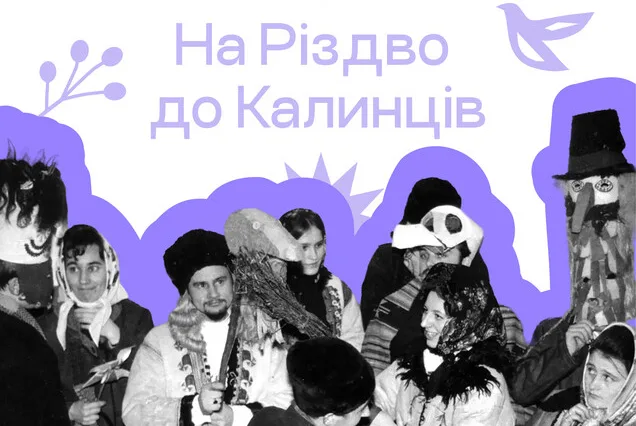
On Thursday, 3 December, an exhibition project entitled “Christmas with the Kalynets Family” will open in Lviv. It is dedicated to the generation of Ukrainian Sixtiers and to the life, creative work and civic activity of Iryna and Ihor Kalynets. Throughout December, the project will feature four themed displays in different cultural venues across the city, and a commemorative plaque will be unveiled on Rodyny Kalyntsiv Street.
The core of the displays is the Kalynets family archive, provided by the couple’s daughter, Zvenyslava Mamchur-Kalynets. Among the materials are documents, photographs, correspondence, manuscripts, works of art and personal belongings that make it possible to trace the history of the Ukrainian Sixtiers and the dissident movement through the lives of two of its key figures.
Iryna and Ihor Kalynets were part of the Lviv milieu of young Ukrainian intellectuals in the 1960s: they worked to revive national culture, circulated samizdat, organised literary and artistic gatherings, and spoke out against political repression. In 1972, both were arrested and sentenced to six years in prison and three years in exile. After returning to Lviv, the couple continued their active civic engagement and joined the processes of national revival.
An important part of the archive is the Kalynets family’s correspondence. It reflects the wide network of contacts among the Ukrainian intelligentsia over several decades, particularly during periods of persecution, imprisonment and exile. A separate layer of materials is a collection of greeting cards, some of which were created by Ukrainian artists.
The organisers emphasise that turning to the history of the Kalynets family specifically at Christmas time is symbolic. For the Sixtiers, the revival and preservation of Ukrainian Christmas traditions was an important component of their cultural work. Under the Soviet regime’s anti-religious policy, carol singing, nativity plays and the creation of Christmas cards also became a form of civic resistance. Christmas was an opportunity to meet, communicate and maintain friendships, which is reflected in the photographs, letters and memoirs presented in the project.
“In this project, we explore the legacy of the Lviv Sixtiers as a significant part of the struggle for Ukraine’s Independence. At the centre of the exhibition are Christmas and the stories of key figures who were friends of the Kalynets family. During this special festive season, we speak about traditions and customs, as well as the meanings embodied by Christmas – a symbol of resistance to the Soviet system,” says Olha Honchar, director of the “Territory of Terror” museum.
The first event will be the unveiling of a commemorative plaque on Rodyny Kalyntsiv Street. In this way, the organisers link the exhibition programme with the commemoration of Iryna and Ihor Kalynets in Lviv’s urban space.
That same day, 3 December at 14:40, the National Memorial Museum of Victims of Occupation Regimes “Prison on Lontskoho” will open a banner exhibition entitled “The Road to Eternity Beneath the Stars of the Centuries”, dedicated to the life of Iryna Kalynets, and will also screen a film about the Kalynets family.
The main exhibition of the project will open on 10 December in Barrack No. 2 of the “Territory of Terror” museum. It will cover different stages in the couple’s life – from their youth and the founding of their family to the period of imprisonment, exile, return to Lviv and civic activity in independent Ukraine. The concept is built around the image of the Kalynets family home: the central element will be a large table at which visitors will be able to view archival materials collected in albums arranged by specific periods in the family’s life.
The exhibition will also recreate the sideboard from the Kalynets’ flat, which is mentioned in documents related to the search of their home. During the search it was sealed, which became one of the pieces of evidence of how political persecution intruded into the everyday life and private space of families.
A separate display at the Homin Centre at 30 Yaroslavenka Street will be devoted to the Kalynets family’s civic activity and their contacts with the Ukrainian diaspora. It will feature postcards and other materials that illustrate the couple’s involvement in civic initiatives, their links with Ukrainians abroad and their work during the period of Ukraine’s renewed independence.
At the Bandinelli Palace (2 Rynok Square), as part of the Christmas Post, a selection of postcards from the Kalynets family archive, created by various Ukrainian artists, will be presented. The exhibition will consider the postcard as a distinct genre of graphic art and as part of the history of communication between artists, writers and public figures. Particular emphasis will be placed on original artistic solutions, Ukrainian Christmas symbolism and the tradition of exchanging festive greetings.
Another part of the project will be hosted by the Voskresinnia Theatre (5 Henerala Hryhorenka Square). Here, visitors will be able to see theatre posters, photographs and other materials related to the theatrical milieu and Christmas traditions, revealing another creative facet of the Kalynets family’s biography.
The project “Christmas with the Kalynets Family” brings together several institutions working with Ukrainian cultural heritage. Their joint work with the family archive has made it possible to create several independent yet complementary displays that tell the story of the Kalynets family and their generation from different perspectives.
Opening schedule:
- 3 December, 14:00 – unveiling of the commemorative plaque on Rodyny Kalyntsiv Street (formerly Iryny Kalynets Street);
- 3 December, 14:40 – opening of the banner exhibition “The Road to Eternity Beneath the Stars of the Centuries” at the “Prison on Lontskoho” museum (1 Stepana Bandery Street);
- 3 December, 16:30 – opening of the display at the Homin Centre (30 Ya. Yaroslavenka Street);
- 6 December – launch of the display at the Christmas Post (2 Rynok Sq.);
- 10 December, 16:00 – opening of the main exhibition at the “Territory of Terror” museum (45H Viacheslava Chornovola Avenue, Barrack No. 2);
- 17 December, 16:30 – opening of the display at the Voskresinnia Theatre (5 Henerala Hryhorenka Sq.).