

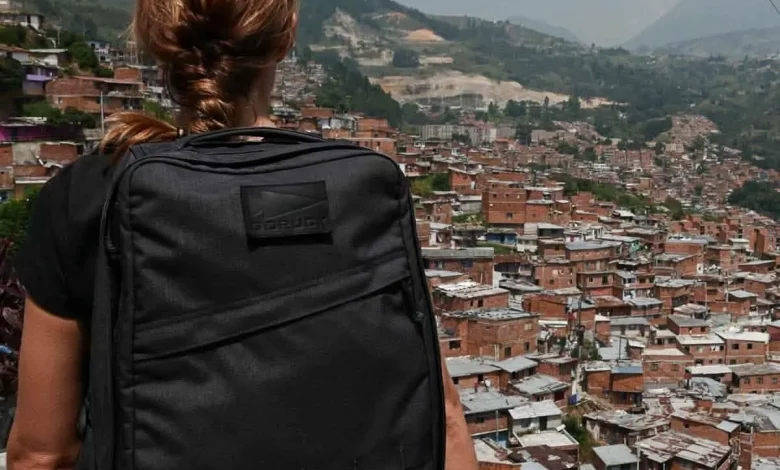
Long flights are exhausting, especially when you also need to pack economically into hand luggage. The author shares her own travel experience, including times she had to lug a suitcase up to the fourth floor without a lift, and explains how to pack clothes and running gear compactly without sacrificing comfort on the journey.
First of all, it is worth planning a “survival kit” for the aircraft cabin, which should be in a rucksack or bag within easy reach. Among the essentials is a reusable water bottle, so you are not dependent on the drinks service and can sip small amounts throughout the flight. Before landing, it is helpful to add electrolytes to your water to make it easier to cope with changing time zones.
It is also better to plan your food in advance. In addition to the in-flight meals, it is worth taking snacks that do not need refrigeration and do not feel too heavy: bars, nuts, trail mix, jerky, a little chocolate, mints or ginger sweets to settle the stomach. You should avoid foods that are hard to digest, as well as fruit and vegetables you will not manage to eat before landing in your destination country.
A minimal cabin wash bag is enough: a toothbrush, a small tube of toothpaste, eye drops, a facial cleanser. It is best to take all of these in travel sizes to save space and get through security more quickly. Medicines such as vitamins or antihistamines are convenient to sort into a small pill organiser instead of taking full-size packs.
To get at least some sleep on the plane, an eye mask, earplugs, a warm jumper or large scarf that can double as a blanket or pillow, and thick socks will all help. Footwear is best if it is comfortable and easy to slip on and off, but it is not a good idea to walk around the cabin in just socks because of the dirty floor. Some travellers use mild sleep aids, such as melatonin, to help them nod off without feeling excessively drowsy after landing.
For entertainment en route, the built-in screens with films are useful, but it is worth having your own plan as well: a book or magazine, headphones, a notebook and pen for jotting down ideas, plus a charger and cable for your phone. Not all aircraft have sockets by the seats, so it is better to be prepared.
A separate set of tips concerns how best to pack things into a cabin suitcase. It is recommended to start by filling the “grooves” created by the telescopic handles with small items such as underwear, socks and swimwear. Next comes a layer of light clothing: T-shirts, shorts, thin leggings, with jumpers, jackets and trousers on top, alternating the direction of the waistbands to distribute the bulk evenly. Any gaps around the edges are conveniently filled with rolled-up T-shirts, hats, massage rollers or cables.
The author suggests combining two packing methods: for summer items, tight rolling works best, while for winter clothes it is better to lay them in layers and then “compress” them, filling in any empty spaces. Fragile items such as a camera or shaker should be tucked into the centre of the suitcase between layers of clothing for extra protection.
Another important point is footwear. It makes sense to wear the bulkiest pair (trainers or boots) for the journey and put only one additional pair in the suitcase, for example something smarter. To avoid soiling your clothes, it is best to pack shoes in a separate bag or compartment. This way you can keep your things clean and avoid exceeding the weight limit.
Overall, the contents of your hand luggage may vary depending on the purpose of the trip — from a holiday to taking part in a race — but the basic principles remain the same: drink enough water, have light snacks, carry a minimal set of hygiene products, bring a few sleep aids, and use a well-thought-out packing system that allows you to manage with just a cabin suitcase even on a long journey.