

The US Congress has unveiled a bipartisan bill, the UNPLUGGED Schools Grant Act, designed to encourage states to limit pupils’ use of mobile phones during the school day. The bill provides for the creation of a federal grant programme for those states that adopt policies prohibiting pupils from having and using personal electronic devices at school.
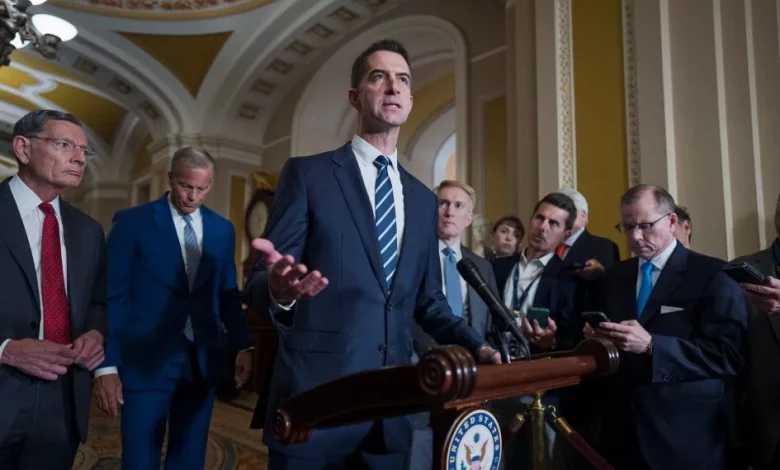
The bill was introduced by Senators Mark Kelly (Democrat from Arizona) and Tom Cotton (Republican from Arkansas). Under their proposal, the allocated funds would enable states and schools to impose restrictions on phones, including purchasing secure storage systems for devices. The senators stress that reducing the presence of phones in the classroom will allow pupils to focus more on their learning.
According to an analysis by Education Week, most US states already restrict mobile phone use in schools to some extent. At least 39 states and the District of Columbia require schools to introduce such restrictions, while 29 states (including Arizona and Arkansas) and the federal district mandate a complete ban on phone use from the first to the last bell.
Similar rules are increasingly being adopted at national level in other countries as well. According to the UNESCO Global Education Monitoring report, in 2023 fewer than a quarter of countries worldwide had nationwide phone bans in schools. However, the subsequent report, published in March 2026, notes that 58% of countries have now introduced national restrictions on pupils’ use of mobile phones.
Scientific research into the effectiveness of such bans in the United States has so far produced mixed results. One study by the National Bureau of Economic Research did not find any short-term improvement in attainment, pupil attention or school attendance solely as a result of restricting phone use during lessons. By contrast, another study, conducted at the University of Southern California, focused on teenagers’ views and showed that full “bell-to-bell” bans (from bell to bell) are more effective than more lenient policies: fewer teenagers use their phones in core classes and, over time, they are less likely to revert to old habits. At the same time, pupils report that compliance with school phone rules weakens during the first year they are in force, while attitudes towards the policy gradually shift from negative to neutral.
This is not the first such initiative at federal level. Earlier, Congress considered the Focus on Learning Act, which would instruct the US Department of Health and Human Services to study the use of mobile devices in K–12 schools and require the Department of Education to create a pilot grant programme for purchasing phone storage systems. However, that bill has so far not progressed beyond the committee stage.
The UNPLUGGED Schools Grant Act has gained support from part of the expert community. Vidi James, senior director for K‑12 education policy at the Center for American Progress think tank, believes the bill is a step in the right direction, as it provides states with financial resources to develop and implement school policies for phone-free learning.
At the same time, the bill’s prospects in Congress remain uncertain. Kenneth Wong, professor emeritus of education policy at Brown University and professor of public policy at the University of Hong Kong, notes that nationwide decisions are difficult to take because of the United States’ decentralised education system, but this bill may stand a chance of success, as it is not a “top-down” measure and instead creates financial incentives for states rather than imposing strict requirements.
The proposed grant programme has sparked varied reactions among school administrators. Some headteachers see it as an opportunity to fund essential infrastructure for monitoring phones. At P.S. duPont Middle School in Wilmington, Delaware, where a mandatory policy restricting phone use during lessons is already in place, pupils receive special Yondr pouches at the entrance, in which they lock their phones. Teachers of the first lesson check that all devices are sealed, and pupils only unlock the pouches on their way out of school at special stations. According to the administration, this system has reduced the number of conflicts linked to social media, increased engagement in lessons and cut disciplinary violations, but it requires ongoing spending on equipment maintenance.
Other education leaders doubt whether federal grants are necessary. At Streator Township High School in the town of Streator, Illinois, pupils are only allowed to use personal devices during lunch, and the administration says that after two years of the policy being in place most pupils comply with the rules without additional material costs. Representatives of the school believe that instead of funding phone restrictions, the money should be directed to other educational needs, such as school meal programmes, support for pupils from low-income families and initiatives to improve reading.
Further consideration of the UNPLUGGED Schools Grant Act in Congress will show whether the issue of restricting mobile phones in schools will become the focus of a dedicated federal support programme.