

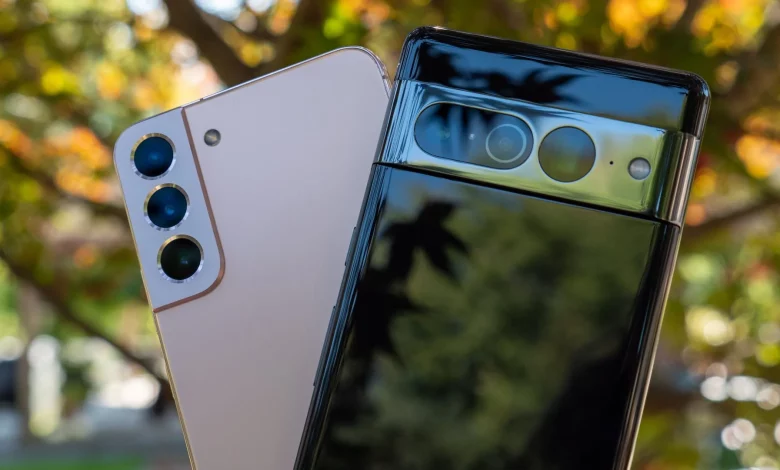
More and more users are changing their smartphones not every two years, but once every three to four years or even less often. Operators are offering 36–48‑month contracts, so it is important to choose a phone from the outset that will remain up to date and reliable over a long period.
Below are seven key criteria to consider before buying a smartphone “for the long haul”.
1. Long-term update policy
First of all, you should check how many years of software updates the manufacturer promises. This applies both to major operating system upgrades and to monthly or quarterly security patches.
Flagship models from Google, Samsung and HONOR currently offer up to seven years of OS and security updates. Some other manufacturers, including Xiaomi and OnePlus, typically guarantee around four major Android updates and up to six years of security patches. By contrast, cheaper Motorola smartphones often receive only two OS updates and roughly three years of security updates.
If you plan to use an inexpensive phone for five years, you need to understand that somewhere in the middle of that period it may stop receiving updates, and therefore new features and up-to-date protection against vulnerabilities.
2. Long-term battery health
Smartphone batteries lose capacity over time. After a certain number of charging cycles, a battery usually loses around 20% of its original capacity, which means the phone holds charge significantly worse than in the first year.
Different manufacturers declare different lifespans. Some models are designed for roughly 800 charging cycles, whereas Google and Apple smartphones are rated for 1,000 cycles. Samsung flagships have a stated lifespan of up to 2,000 cycles before losing that same 20% capacity, i.e. more than four years of intensive use.
Before buying, it is worth finding out how many cycles the battery of a specific model is rated for. This information is often available in the official specifications, and for the EU market it can also be found in the EPREL database.
3. High battery capacity
Apart from lifespan, the initial battery capacity is also important. If it is low, then even with slow degradation the energy reserve may quickly become insufficient.
Ideally, choose a smartphone with a battery of 5,000 mAh or more. In that case, a loss of around 20% capacity after a few years will turn a “large” battery into an “average” one, rather than an obviously weak one. In addition, a phone with a large battery needs charging less often, so it accumulates charging cycles more slowly.
At the same time, even a high-capacity battery will noticeably lose stamina after five to six years, so it is important to combine a large capacity with a good lifespan.
4. Sufficient storage or microSD
Over several years of use, thousands of photos and videos, documents, downloaded podcasts, offline music, messenger backups and so on accumulate on a smartphone. To avoid constantly running out of space, it is worth choosing a model with more storage from the outset.
In 2026 it makes sense to aim for at least 256 GB of built-in storage. 128 GB fills up quickly, especially if you shoot a lot of video and store content offline. Many current flagships from Apple, Samsung and Chinese brands already offer 256 GB in the base version, whereas many mid-range models and some Pixels still start at 128 GB.
An alternative is a smartphone with a microSD card slot, which allows you to expand the storage. This option is more common in budget Android devices and some Sony Xperia models.
5. Performance headroom
Over the years, smartphones can start to run more slowly, especially after several major OS updates and the installation of new apps. That is why it is important that the device has sufficient performance headroom straight out of the box.
If a phone is sluggish in the first year, things will only get worse after four to five years. By contrast, a powerful processor and enough RAM (8 GB or more) will help maintain acceptable performance for longer. The battery can be replaced, but the processor cannot.
For long-term use, you should look at models with chips such as the Snapdragon 8 series, current Snapdragon 7, MediaTek Dimensity 8000/9000, the Exynos 2×00 line or Google Tensor. Some brands, such as OnePlus or vivo, claim that their smartphones remain smooth for up to five years, but in any case it is better to focus on the device’s actual hardware performance rather than marketing promises alone.
6. Durability and body protection
If you plan to use your phone for several years, it is important that it withstands drops and everyday wear and tear. First of all, pay attention to the type of protective glass on the display.
The most common solution is Gorilla Glass, but there are different generations of it. In inexpensive models you can still find older versions such as Gorilla Glass 3. For better protection, look for devices with Gorilla Glass Victus, Gorilla Glass 7i or ceramic coatings such as Gorilla Glass Ceramic, HONOR NanoCrystal Shield or Gorilla Armor, which are more resistant to scratches.
If the back panel is also glass, it is desirable that it, too, has protective glass. Separately, you should check the degree of dust and water protection according to the IP standard. For example, IP53 means basic protection against dust and splashes, whereas IP67 and above indicate complete dust resistance and the ability to withstand brief immersion in water.
Some models do not have an official IP rating but are marketed as “water-repellent”. In such cases this usually means protection only against rain, not full immersion.
7. Repairability and availability of spare parts
Another important aspect for long-term use is repairability. You should make sure that there are official or authorised service centres for the brand you choose in your country.
If you are not afraid of repairing things yourself, it is useful to find out how easy a particular model is to take apart. Platforms such as iFixit publish repairability reviews with rating scales, and popular YouTube channels produce detailed teardowns. Some manufacturers, such as Fairphone or HMD, specifically release modular, easily repairable smartphones.
Even if you are not going to repair the phone yourself, it is important that spare parts are available. Some brands sell components — screens, batteries, connectors — through their own websites or partners. For example, Google and Samsung sell spare parts on the US market, and Google states that components will be available for seven years, which matches the update period for their smartphones.
If spare parts can be freely purchased, you can go either to an official service centre or to an independent repair shop, bringing the necessary components with you. This significantly increases the chances that your smartphone will serve you reliably for several years.