
The northern part, until 1951 Moshkiv, was larger in number of households than the southern part, which was called Shmytkiv. Elderly villagers still use the old names.
These villages were mentioned in the 17th century by the German researcher Sakhen. The first mention of Moshkiv in historical materials collected by local historian Yaroslav Knysh dates back to 1449, while the village of Shmytkiv is even older, with its first mention dating to 1423. This can be read in Teofil Kostruba’s book “Belz and the Belz Land”. According to oral traditions, the village of Moshkiv was so named because its first settler was a peasant named Moshko, while another legend says that this was a marshy area with many gnats.
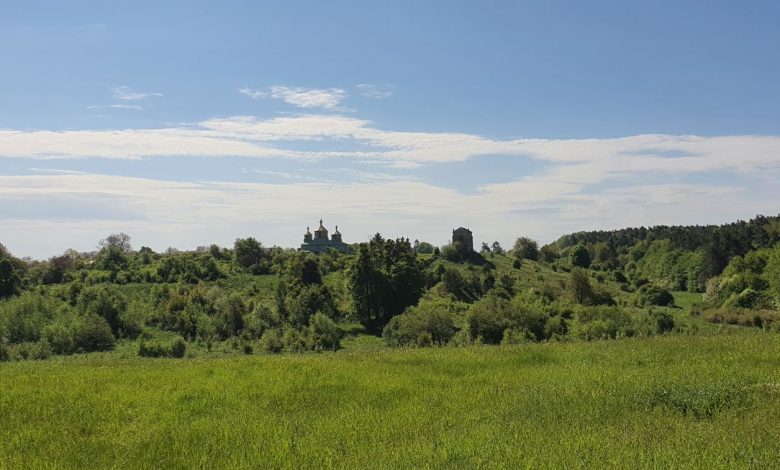
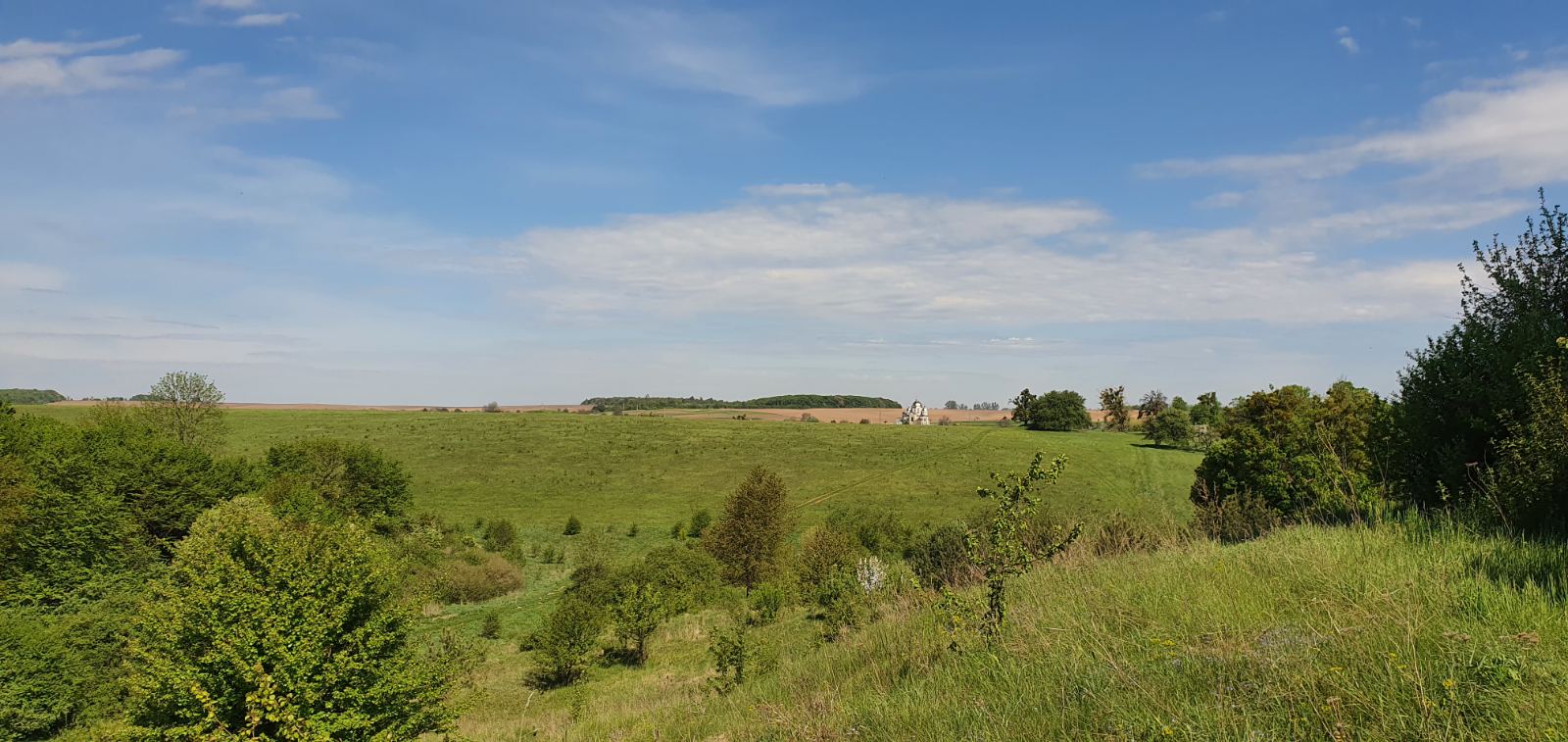
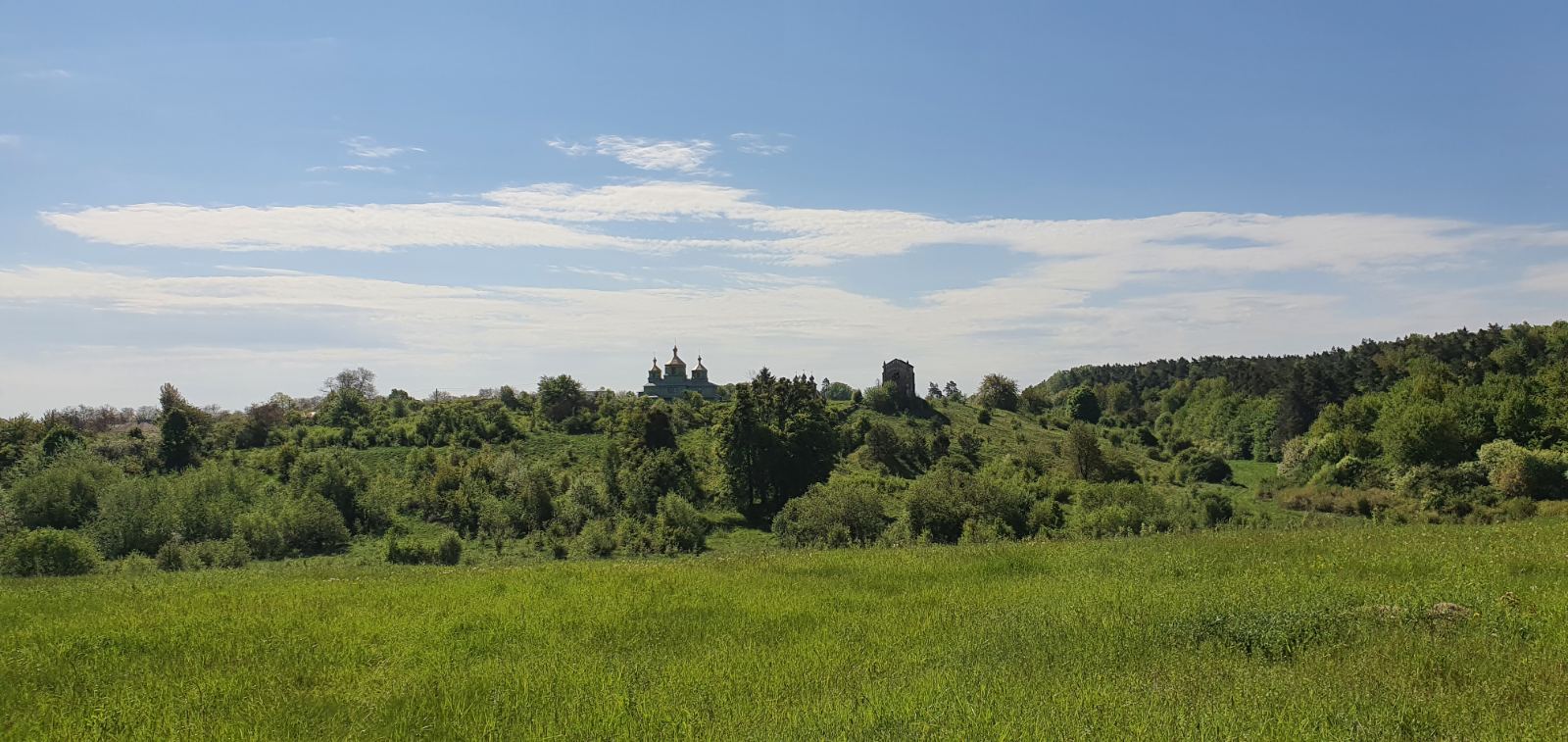
However, today only two hamlets remain from the past — Shmytkiv and the Domyky hamlet. Local residents call this area little Paris because it is scattered over small hills, from which a beautiful view opens up:
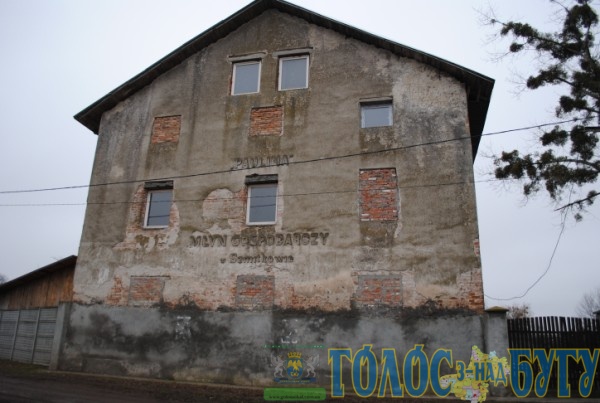
Below, between Shmytkiv and Savchyn, there is a chain of ponds. Ancient spreading trees of valuable species and an old two-story mill rise majestically above them. It was built in the 19th century by Count Sieberg Plater from Lithuania. Much time has passed since then. But the former builders were farsighted and left the completion date on the building. It can be seen above the second-floor window on the pond side. From the road, on the wall, you can read in large letters: “PAULINA. MLYN GOSPODARCZY w Szmitkowie”. This building (pictured below) was divided as property of the former collective farm, and today a family lives in it. The windows have been replaced with plastic ones, and some have been bricked up. The area in front of the entrance has been fenced off. Little now recalls the old mill…
From archival sources collected by former school director Olha Stasevych, we learn that in 1649 peasants attacked the estate of Mr. Polianovskyi, demanding higher wages and proper working conditions. Unfortunately, very few documents from those ancient times have survived. In 1748, Mrs. Roza, of the Lipski family, organized the construction of a church on her parents’ estate in Shmytkiv.
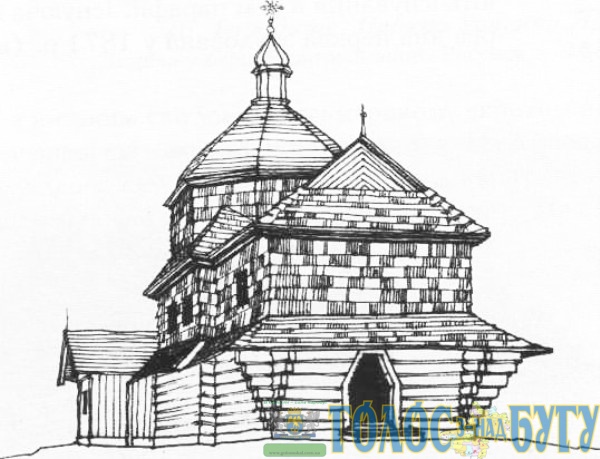
In 1882, the Shmytkiv church (pictured above) was restored, and the restoration was carried out by masters Vasyl Toporivskyi (a Pole), Wojciech Miller (a German), Semen Oliinyk, Semen Vavruk and Semen Chaus (Ukrainians). At that time, Yosyf Hurak was the cantor. A distinctive feature of the church in Shmytkiv was that the high octagonal section of its nave was crowned with a helmet-shaped dome with a lantern and a small cupola. In 1901, the church was renovated and re-roofed at the expense of priest Mosiievych, Mr. Stanislav and Mrs. Zinoviia Polianovski, and village residents Fedir Kokhalskyi, Roman Oliinyk, Stepan Vavruk and Panas Vodonos. At that time, the church owned 28 morgs of fields. The village of Moshkiv had 595 morgs of fields, 70 morgs of meadows and gardens, and 36 morgs of pastures.
In 1897, “Prosvita” was organized in Shmytkiv, with the “Silskyi Hospodar” society operating under it, as well as a “benefit” fund (aid fund), which held 1,670 zlotys. Later, “Prosvita” branches were founded in Savchyn and Moshkiv. In the latter, the “Luh” society functioned. These were nationally conscious villages.
The history of these settlements is closely intertwined with the life of Count Polianskyi’s family. On a hill above the ponds stands the guardhouse of the former manor palace, the only witness from the century before last. Memories of those times have been preserved by old-timers, recorded and kindly shared by Halyna Hofryk, head of the people’s house in the village of Huta. In particular, old-timer Kateryna Diachyshyn (now deceased) told Mrs. Halyna: “Even before Soviet rule, there was a family crypt near the cemetery. In front of the cemetery stood a cross erected at his own expense by Mr. Herus, who was the village headman at the time. Near the cross, on the Green Holidays, before the procession around the fields, the priest always celebrated the Divine Liturgy.” The cross was restored only 50 years later. Near the pond, an ancient well has survived where the Divine Liturgy was celebrated three times a year: on the Green Holidays, on Jordan, and once more in summer. A great many people gathered for the last one, wearing embroidered shirts and singing Ukrainian songs. After the service by the well, everyone went to the figure of the Mother of God, where the priest also celebrated the Divine Liturgy.
Near the pond stood another figure, erected by one of the owners of Huta and named Jan. Not long ago, local residents restored it.
According to Mrs. Kateryna, Moshkiv and Shmytkiv belonged to Mr. Polianovskyi
Once he fell seriously ill. At that time, a poor girl was working at the village nursery in Moshkiv. Mr. Polianovskyi took a liking to her and said that if she nursed him back to health, he would marry her. The lord recovered and took the girl into his chambers. Soon the estate passed to the count: the peasants called him the grabie.
The count had three brothers and a sister. One lived on the estate in Savchyn, another in Ostriv. The lord’s sister lived near him because she was unmarried. When the lord and lady died, they were buried in the same crypt as the Polianovski family. The master of the manor became the lord’s son Jan, or, as he was called in the village, Yasio. Yasio had four children — two sons and two daughters. He was very kind and devout. When the Poles carried out an action against the Ukrainian population, Mr. Yasio did not let them into the village. He said that in his village all the people were honest and hardworking, and he did not allow them to be abused. With the lord’s permission, the peasants held so-called tea evenings, where after hard work young and old gathered to sing Ukrainian songs, dance, or simply talk. The lord also came to these evenings because, although he was Polish, he loved Ukrainian song and music very much.
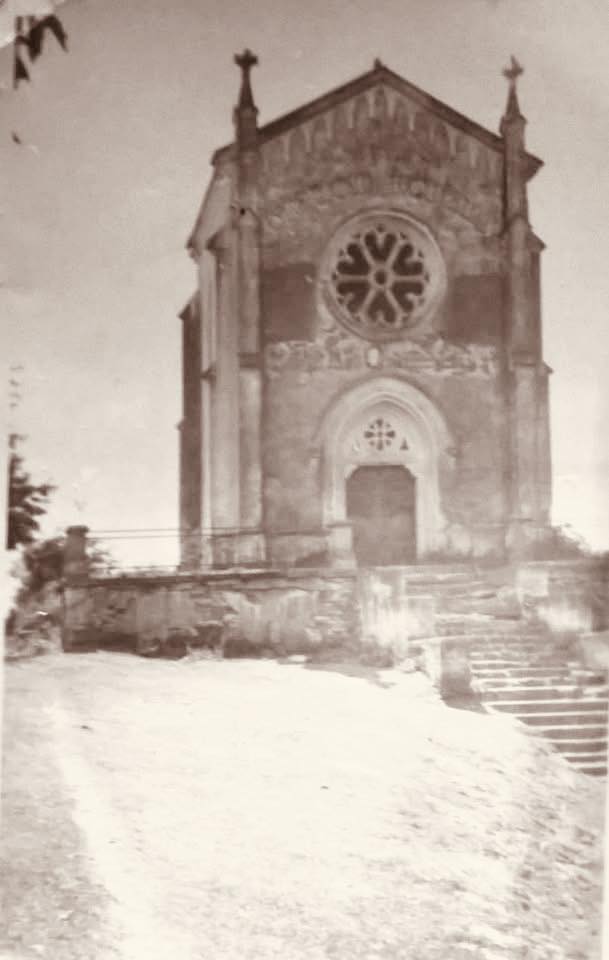
Photograph from the second half of the 20th century. From the private collection of Yurii Koren.
Mr. Yasio was kind, and so was his wife, whom he had brought from Russia. Kateryna Diachyshyn recalled one incident: when her father quarreled with the lord, Mr. Yasio himself came to their home to apologize to him. That is the kind of lord he was. The old-timer recalled that when the old count, Yasio’s father, died, the whole village went to the parastas. Later they traveled to Sokal for the Divine Liturgy at the monastery, where the organ played beautifully.
A resident of the village, Hanna Kokhalska (now deceased), recalling the past, said that where the forge now stands, there used to be a chapel. Peasants came here for services. The lord provided materials for the construction of the choir loft, where singers were to perform.
Also, as the old-timer said, there used to be a nursery in Huta (something like a modern medical station). Sisters worked there, treating the sick from across the village with herbs only. The nursery existed at the lord’s expense. The sisters were also assisted by the monastery, which at that time had a hospital. That hospital was the center, and its branches operated in the villages as nurseries. In the village of Shmytkiv, two mills operated: Semeniv and Popivskyi. The old woman also said that under Poland, in the house where the Pasternak family now lives, there was a police station, then called a police post. Its duty was to guard the lord and find out whether anyone was plotting anything against him or the authorities. Basements have survived in this house to this day, where people who were guilty of something were tortured. Young people especially often ended up there.
A resident of the village, Stefaniia Oliinyk (now deceased), said that once beyond Huta there was a small hamlet. It was called Semeny. There were two or three houses there and a solid manor water mill. “My grandmother lived to be ninety-eight and told me that the lord wanted a peasant from every household to work for him three days a week. The lord paid well, but those who did not want to work were punished. Serfdom was not so easy for the peasants. Once the people cut down an oak, planted it with its crown in the ground, made a cross above on the root, and said that if the oak took root, serfdom would disappear. And that is what happened. The oak took root, and some time later serfdom was abolished,” the old woman told Halyna Hofryk.
In Shmytkiv and Moshkiv, crosses were erected to mark the abolition of serfdom on May 3, 1848 (Old Style). This is evidenced by the inscriptions on them.
Stefaniia Oliinyk also remembered Mr. Polianskyi, who built a chapel-tomb in the village. People did not really want that chapel because the lord was Polish. They feared he would want to build a Roman Catholic church.
The manor chambers stood where the threshing floor is now. A beautiful orchard grew there, surrounded by a fence, and around it was a green hedge. Near the palace were greenhouses where flowers bloomed all year round. Sometime in 1916, when Austria was at war with Russia, the Muscovites came to the village and destroyed all the manor estates. In 1917, the Poles returned again, and the lords began rebuilding their house.
Mr. Plater, who owned the village at that time, spent seven years restoring the destroyed estate. The road that leads to the shop was once used only by the lord. There was a large beautiful gate there, and roses grew on both sides of the road. Local residents worked for the lord, who paid well: women received a korets (centner) of grain and money per month, while men received 12 korets of grain, 6 cartloads of firewood and 360 zlotys per year. At that time, Shmytkiv had 375 Greek Catholics, 71 Roman Catholics and 14 Jews. From the third volume of “Nadbuzhanshchyna” we learn that at the end of the 18th century there were 100 households in Shmytkiv, 110 in Moshkiv, 81 in Savchyn, and the Savchyn church owned 33 morgs of fields.
Old-timers say that in 1935-1936 there was a post office in Shmytkiv, located behind the mill. Before that, it had operated in Moshkiv. Under the forest stood a two-class school, built in 1817. It was attended by 221 children from Moshkiv and Shmytkiv. Instruction was conducted in Ukrainian. Later, one-class schools were opened in Savchyn and Moshkiv. In the first, teaching was in Ukrainian, and in the second — in Polish.
According to the memories of Sofiia Oliinyk, Count Jan Plater was a good man. She recalled that when he arrived in the village with his young wife, the craftsmen rebuilding the palace and the girls sang “Mnohaya Lita” for them. So the lord invited everyone to a lavish banquet. Every year after the harvest, Mr. Jan organized a communal feast. The girls wove wreaths from rye and crowned the lord and lady with them. He treated the peasants to beer and vodka. Music played, and there were songs and dances. They lived merrily and well then under Mr. Jan. It happened that the girls, weeding beets, would sing in the field all day long. In Shmytkiv there was the mother Greek Catholic church. Here, in the rectory, lived priest and dean Ivan Khudyk. People from the surrounding villages — Savchyn, Boianychi, Hatovychi — came to the Shmytkiv church for the Divine Liturgy. The peasants were very devout; when the bell rang, they left their work and hurried to church. There were such bells here that when they rang, they could be heard all the way in Sokal. But when the Germans were stationed in the village, they disappeared somewhere.
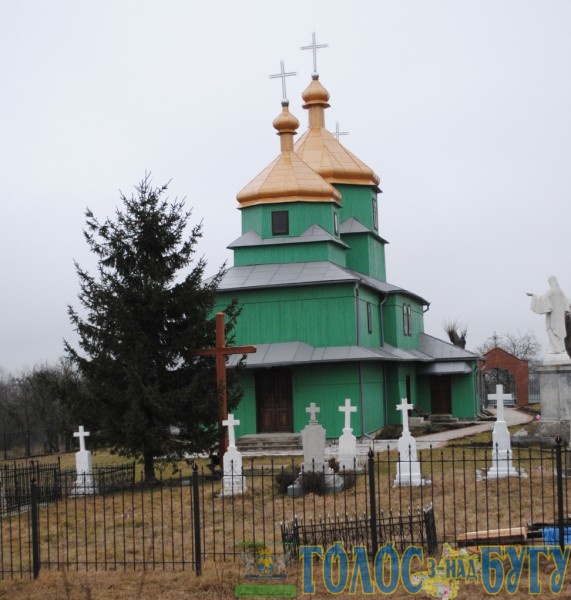
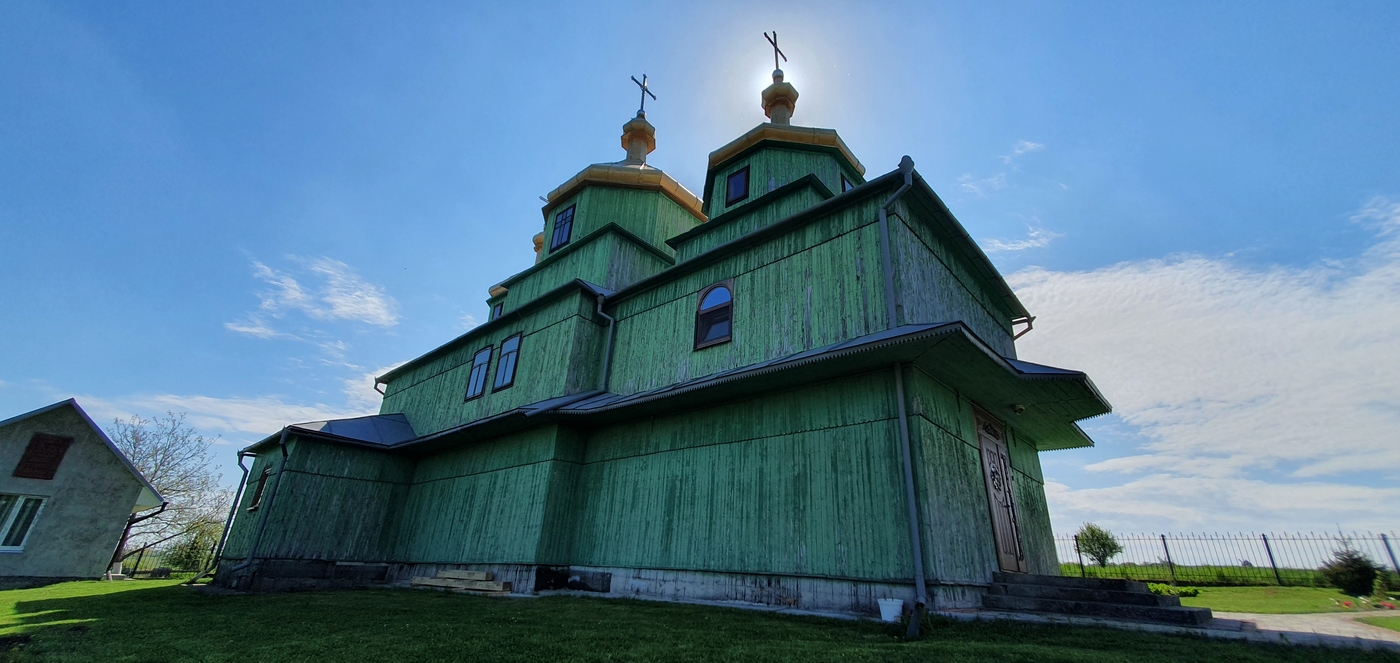
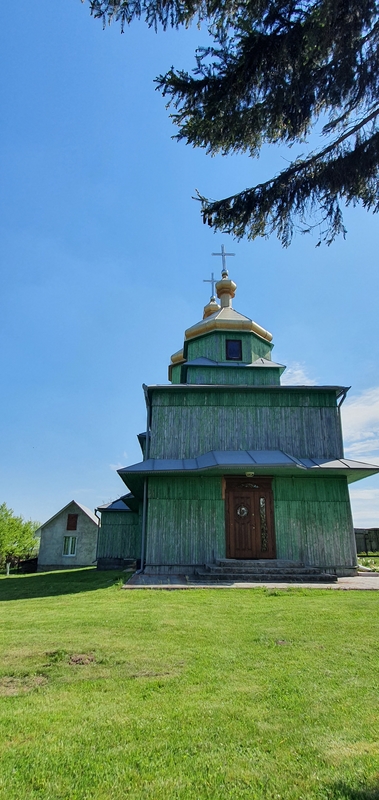
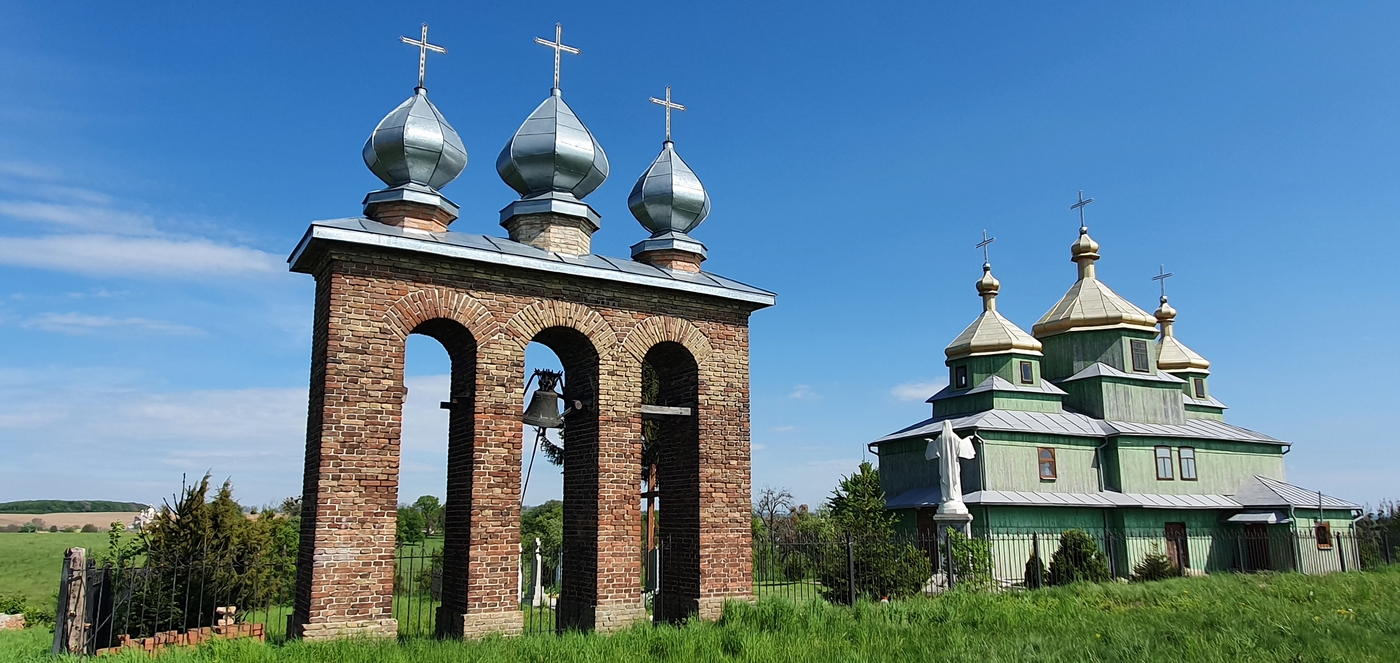
Local residents are proud of their village, willingly tell its history and show its ancient architectural monuments. In particular, the wooden Church of the Intercession of the Most Holy Mother of God. It was a three-log, single-domed church, built in 1755 at the expense of the landowner Toma Polianovskyi from wood. In 1950 it was closed, and in 1987 it collapsed. In 1992 it was rebuilt:

Nearby, on a high pedestal, a figure of the Mother of God was placed, close to which a brick three-arched bell tower has survived:
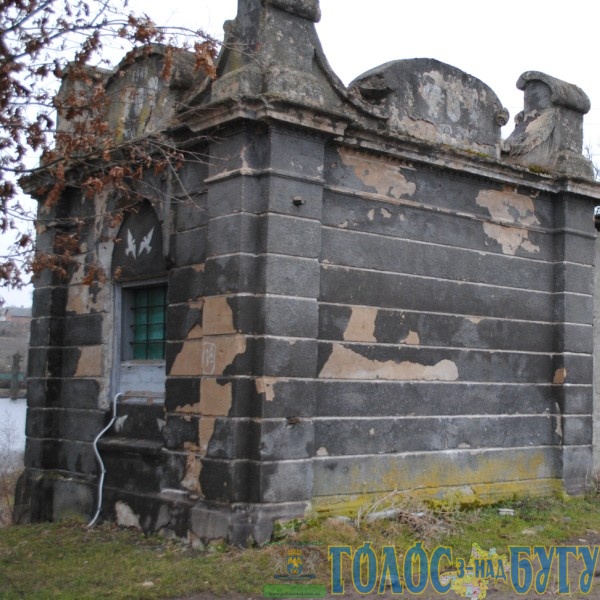
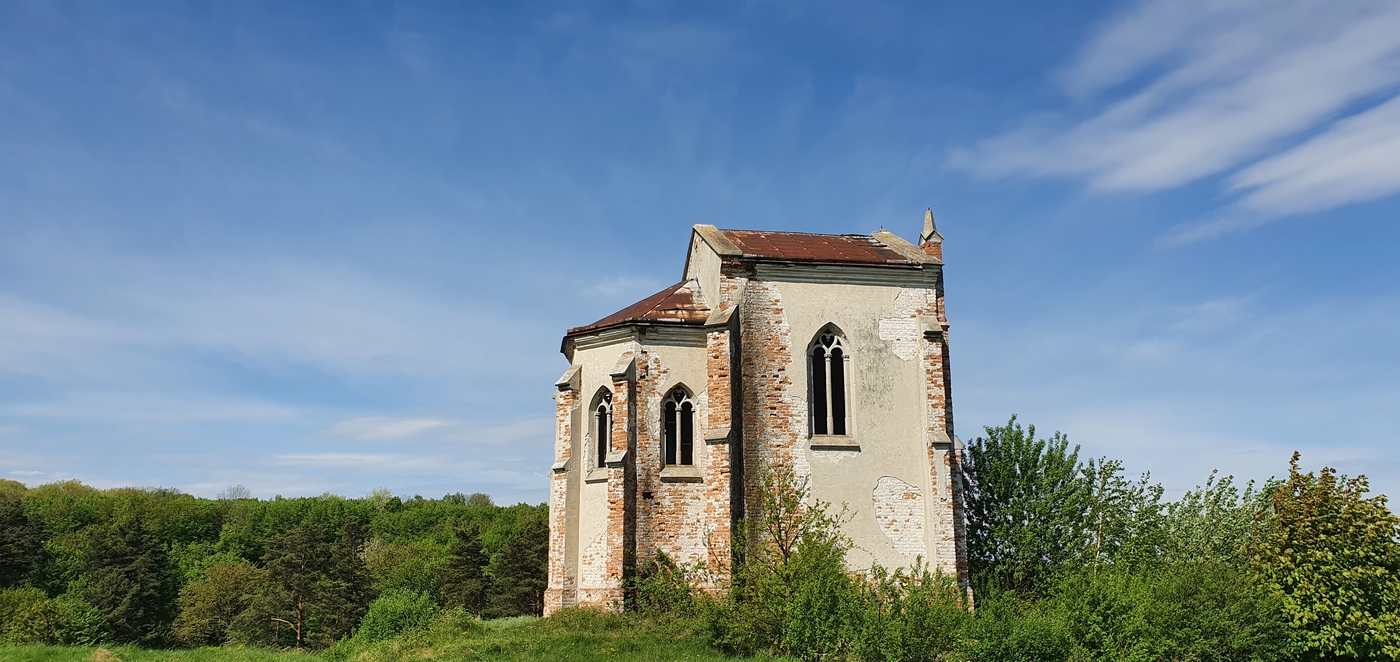
West of the church, on the edge of a steep slope, stands a brick funerary chapel in the neo-Gothic style, visible from all sides
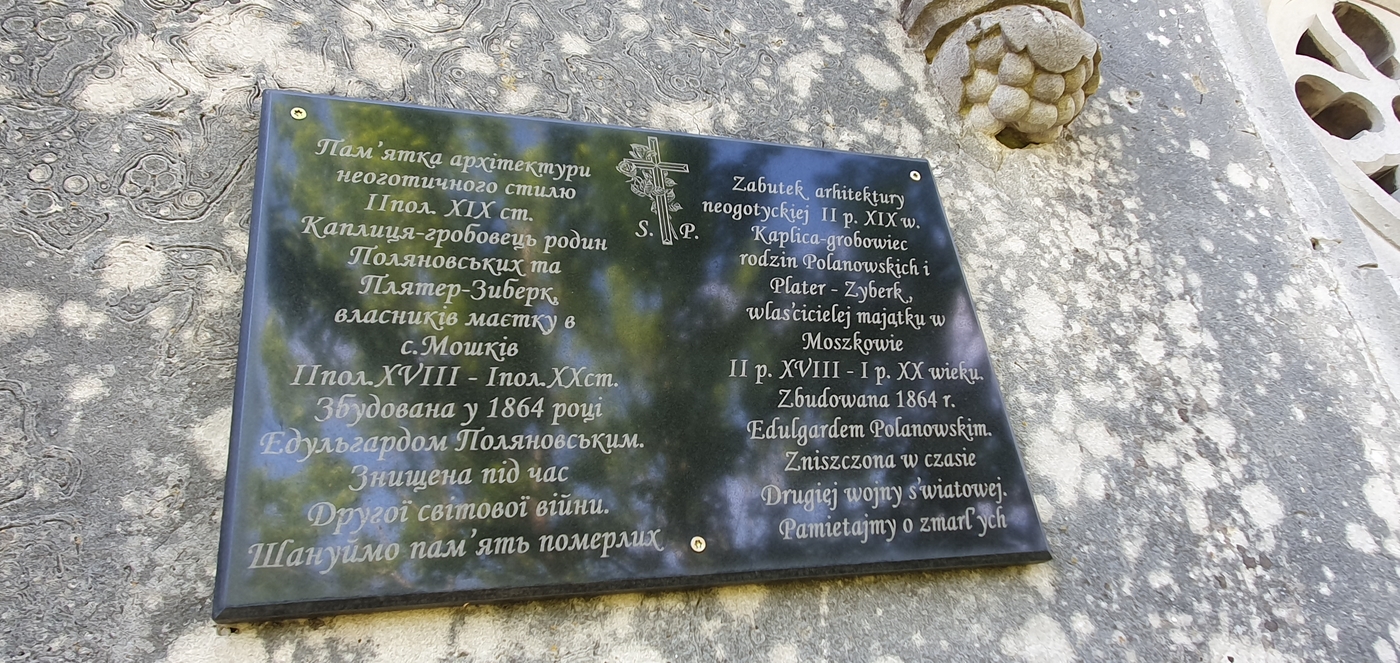
Mr. Polianskyi chose a specific place for it and, for this purpose, partially made an embankment under the chapel’s foundation. On the church side, a brick wall runs near the chapel.
From the west there is a brick retaining wall of the embankment. The chapel is tall, still covered with old sheet metal, and oriented with its altar from north to south:
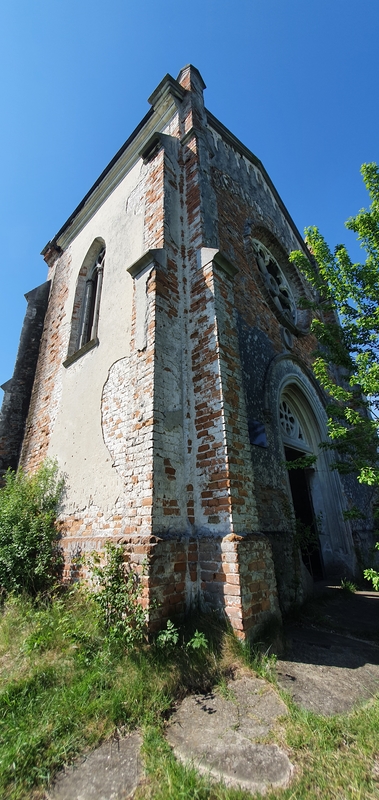
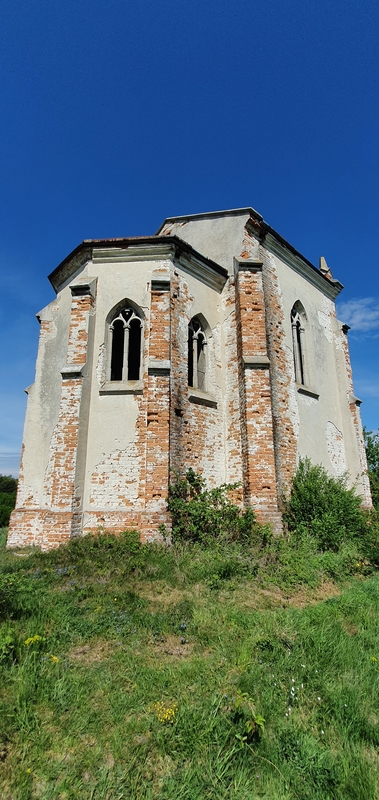
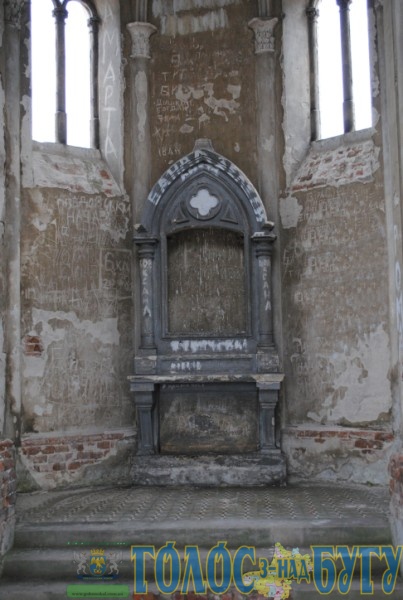
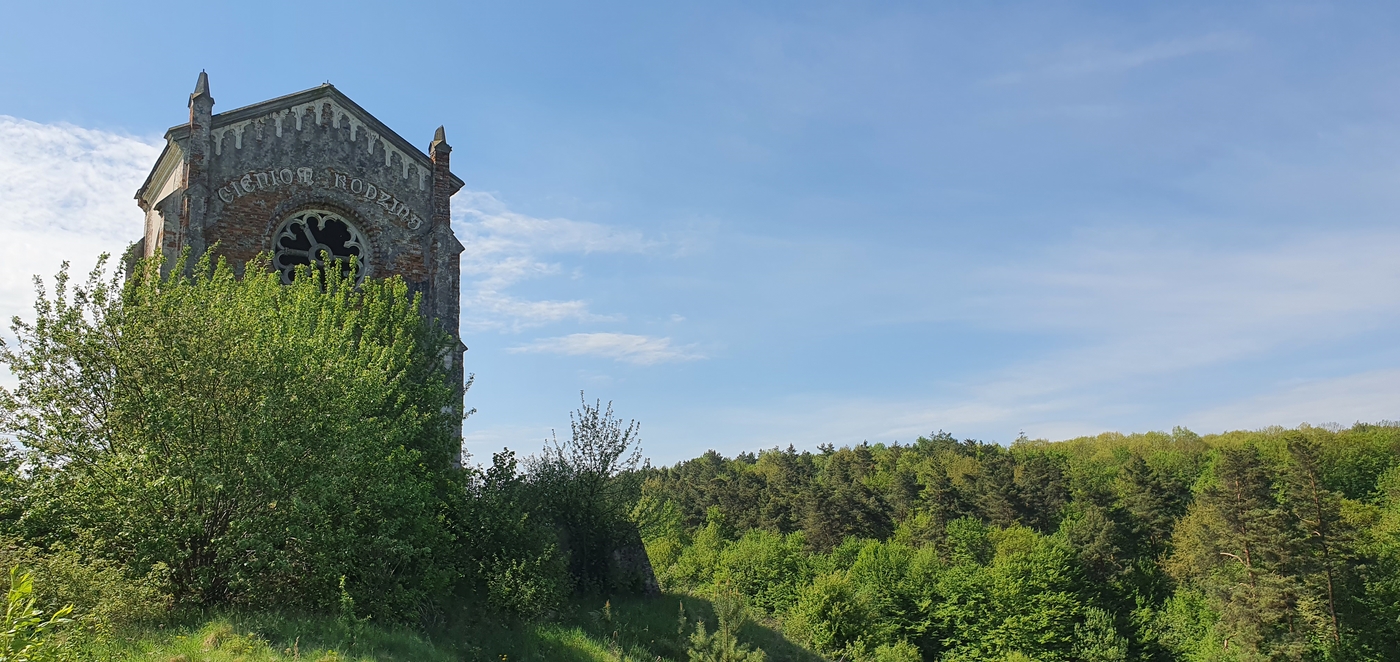
It has no doors; above the entrance is a large rose window, above which is the inscription: “CIENIOM RODZINY” (that is, “To the Shadows of the Family”) (pictured in the center):
In the interior, the altar area is slightly higher, its walls “painted” by the hands of village boys. Outside, from the south, there is an open entrance beneath the altar area, where Stanislav Plater-Zyberk and his wife Maria of the Czartoryski family were once buried. Village residents said that descendants of the count, who live abroad, recently visited here. This was also confirmed by Savchyn village head Vasyl Kalka: “He came from France. He walked around, looked about, and asked to be issued a certificate stating that the Zyberg Plater family had indeed once lived in our village and had an estate. The village council cannot certify this, so we directed him to the archive in Lviv. Later, I received a letter from him in which he thanked us for being able to receive compensation from the Republic of Poland for his great-grandfather’s estate,” the village head said.
Moshkiv and Shmytkiv lay beyond the former Curzon Line and, as in dozens of other villages in these lands, their population was subject to resettlement
How this happened was recalled by Savchyn resident Sofiia Lukianivna Chavs, who turned 100 this year: “They deported us during the Easter holidays. All the village residents were in church then; when they came out, they saw the houses burning. Ours was in flames too. People, just as they were, were put on carts and trucks and taken to the railway station. There they were shoved onto a train that was going in an unknown direction. The passengers were dropped off under the open sky in a forest, left to their fate. Soon a military train approached. The peasants blocked its path and it stopped. The train commander, in military uniform, came out and asked who they were and what they were doing there. The resettlers told him everything. Soon we were picked up and taken to Ternopil region, Zbarazh district, where we lived two or three families in one house. Before long, my husband found an empty Polish house in the village of Rozvoriany, Hlyniany district, where we moved.”
When the Chavs family returned to their native village after 8 years, they found a terrible sight: it had been burned down, and in place of the village houses stood temporary “domyky”. There were few local residents; people from mountain districts had been settled here. Some of them could not settle in and returned to their native lands when the opportunity arose. Today, Huta is also home to descendants of those people who were resettled from the Sambir region.
In 1951, the village of Moshkiv was united with Shmytkiv and renamed Huta
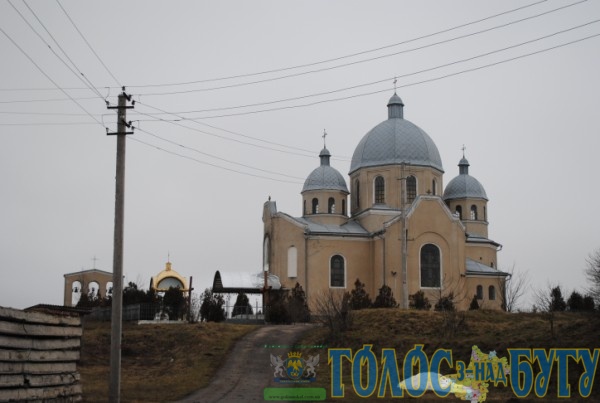
The church that survived after the war (the first mention of it dates to 1578) was closed in 1950 and collapsed in 1987. In 1992, construction began in Huta on a new cross-shaped, single-domed church designed by S. Krupchuk

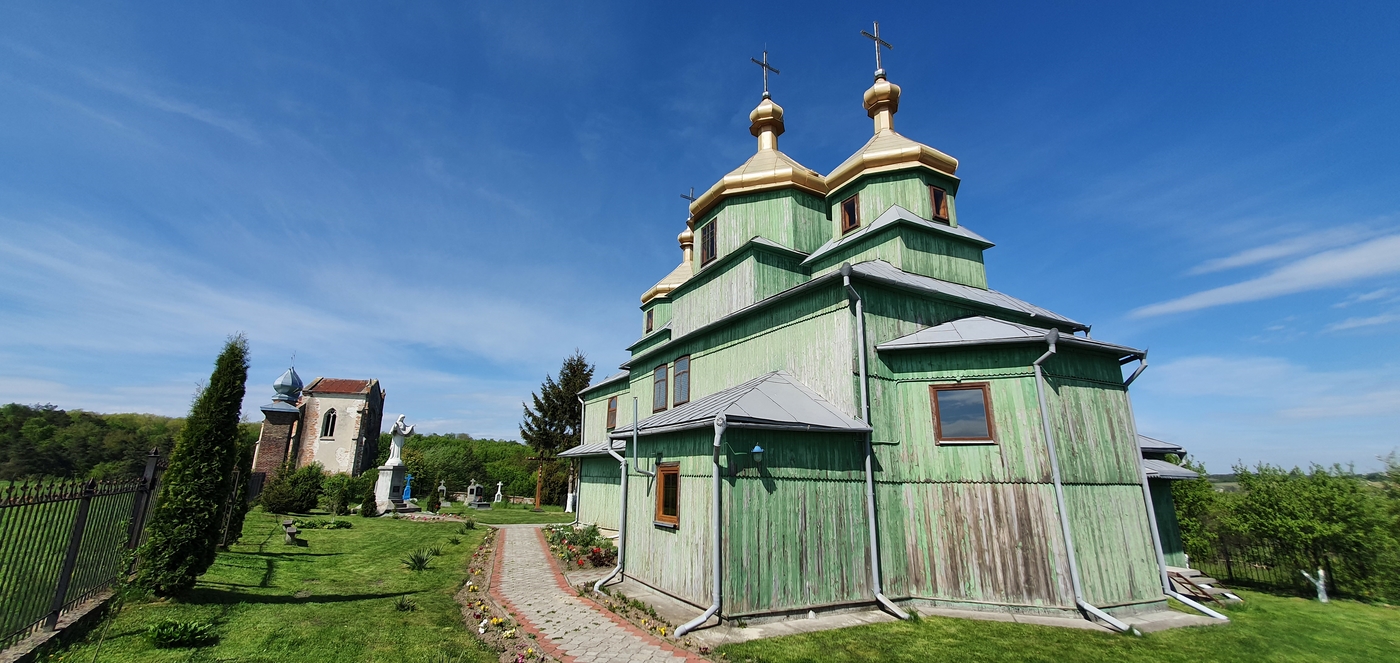
The first stone was laid on July 18, 1992. It was built in 1995. It was consecrated on July 28, 1996. Funds for the construction of the church were collected by the entire community. The first parish priest served for 5 years. Since 2001 and to this day, the local parish priest has been Ivan Makar. In 2007, a new bell for the church in Huta was purchased and consecrated. The money for it was provided by Mykhailo Druk. The bell was named “Denys” in honor of M. Druk’s grandson. Later, at the initiative of the church committee and village activists, the Stations of the Cross were built from the Church of the Intercession of the Most Holy Mother of God; they are prayed during the spring-summer months on every first Sunday. One of the stations is on the site of the museum-bunker of UPA soldiers, opened on October 14, 2007, and near the memorial cross honoring the heroes of the UPA. Here, eleven Ukrainian insurgents led by squad leader “Dibrova” stood to the death. Among them were residents of Shmytkiv, Savchyn and Moshkiv. Two of the insurgents survived…
Without the past, there is no future
Many trials fell to the lot of the residents of Shmytkiv, Moshkiv and Savchyn, but they endured, returned and rebuilt their villages. Despite all the hardship and the pain of losses, they preserved their faith, Ukrainian customs and traditions, and try to tell their children and grandchildren about the history of the villages of Huta and Savchyn, instilling in them love for their native land.
Our village was once cheerful and full of song, says Halyna Hofryk, head of the People’s House in the village of Huta. Before there was a reading room, people would gather in someone’s house, sing Ukrainian songs, dance, joke… Before the Easter holidays, everyone cleaned the village streets together, and on Jordan they decorated the well where water was blessed. But the most beautiful time was in spring, when the orchards bloomed and the village seemed to bathe in a white fragrant sea.
Savchyn village head Vasyl Kalka and village council land surveyor Vasyl Panchenko have many interesting ideas on how to make the villages of Savchyn and Huta attractive to tourists. In particular, they want to pave some village roads with brick cobblestones, as it was under the lord. However, the community needs patrons to implement its plans and ideas.
The history of our villages and towns is rich and interesting. And it is painful when, living in one town or village from birth, we have no idea what happened here just 100 years ago, not to mention more ancient times. After all, without the past, as the sages said, there is no future. So what kind of patriots of the land are we if we do not know the history of our own village?
Liubov PUZYCH.
Photos by the author.