

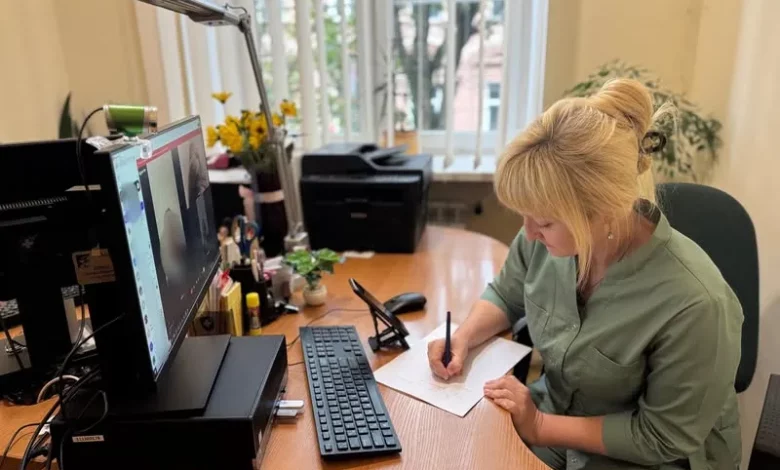
Over several months of operation, more than 100 remote consultations have been carried out in the Telemedicine Office of the Danylo Halytskyi LNMU University Hospital for patients who cannot receive medical care at their place of residence because of the war, security risks or a lack of specialist doctors. This was reported by the University Hospital.
The majority of requests come from residents of Kherson, Mykolaiv, Sumy regions and other frontline areas. Doctors consult patients online, which makes it possible to continue monitoring and treatment without an in-person visit to a medical facility.
Among the patients of the Telemedicine Office is a 65-year-old woman from the Kherson region who, due to the situation in the area, is unable to attend a face-to-face appointment. She has type 2 diabetes, chronic kidney disease and cardiovascular conditions, and her previous treatment had not delivered the desired result.
During the telemedicine consultation, University Hospital endocrinologist Orysia Hera ordered additional laboratory tests. The results showed elevated creatinine levels and signs of kidney damage. Taking these findings and the accompanying conditions into account, the doctor adjusted the treatment regimen, setting out a further treatment plan and the necessary follow-up.
Telemedicine consultations involve specialists from various fields: rheumatologists, gastroenterologists, endocrinologists, pulmonologists, neurologists, ophthalmologists and other experts. Academic and teaching staff from different university departments are also involved in the work of the office. All consultations are recorded in a dedicated telemedicine logbook.
Nurses play an important role in this process, especially those working with patients in frontline areas.
“In telemedicine, the nurse at the patient’s side effectively becomes the eyes and hands of the doctor at the other end of the line: they help perform the examination, understand and follow the doctor’s instructions,” explains Head of the Telemedicine Office Oksana Drebot.
The hospital emphasises that telemedicine cannot fully replace in-person medical care. At the same time, for people who, due to hostilities or other circumstances, are unable to travel to see a doctor, it is a real way to receive a specialist consultation, undergo the necessary examinations, adjust treatment and plan further medical follow-up.