

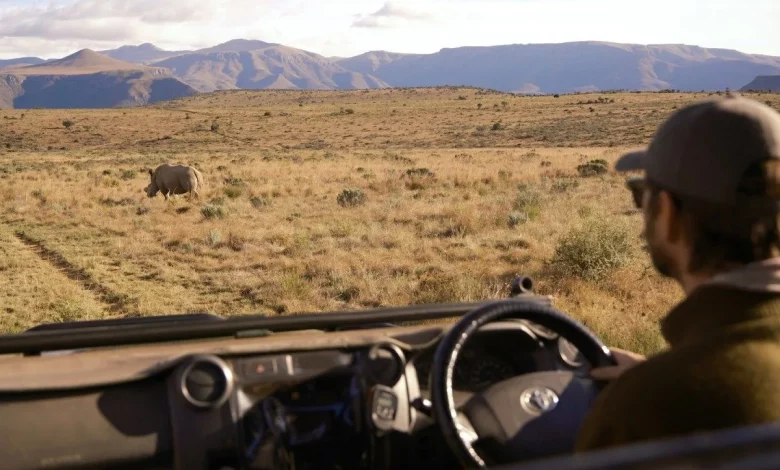
Married couple Sean and Clare Galloway spent a month driving around South Africa, covering more than 4,000 miles from Cape Town to reserves in the Greater Kruger system. Their journey combined a holiday, a postponed honeymoon, family visits and safari, with key stops mapped out on the basis of advice from locals.
The travellers deliberately chose to drive themselves. They suggest bearing in mind a few particular features of South African roads: at petrol stations there are attendants who fill the car, check the fluids and clean the windows, so it is worth having cash for tips. Another important point is the so-called “yellow line rule” on roads with hard shoulders: slower drivers often move over into the lane beyond the yellow line to allow others to overtake, and those overtaking briefly put on their hazard lights as a thank you. This mutual etiquette makes driving considerably smoother.
The couple's itinerary consisted of several major stages. First, they spent five days in Cape Town, then headed for three days on the Garden Route along the south coast. From there the journey continued through the semi-desert of the Karoo to the Drakensberg mountains, with peaks of around 11,000 feet, with stopovers in the bush and a few days in Johannesburg. It all finished with a week in the area around Kruger National Park and a walking safari in the private Klaserie reserve.
One of the most striking discoveries was the private Mount Camdeboo reserve. On friends' advice they turned off the popular coastal route and drove into the country's interior. There they stayed in a separate pod – a compact little lodge with a terrace, hot tub and firepit. Over a few days they saw white rhinos, giraffes, zebras, elephants, antelopes and birds of prey, and on the final morning watched lions walk literally past their accommodation.
In the Drakensberg, the couple climbed Sentinel Peak, where they were extraordinarily lucky to spot a bearded vulture – a rare raptor whose population in Lesotho and South Africa numbers only about fifty pairs. They also hiked the trail to the top of Tugela Falls, one of the highest waterfalls in the world with a drop of more than 3,000 feet, and partially retraced routes once walked by Clare's parents.
The final part of the journey was spent in the Klaserie Private Nature Reserve, which borders Kruger National Park and forms part of Greater Kruger. There, at Gary Freeman Safaris camp, which has been running walking safaris along the Klaserie River since 1993, the couple were woken daily at 5:00am for walks with camp owner Gary Freeman and tracker Dominic. Over several days they saw elephants, a black rhino and numerous birds, studied animal tracks around the camp, and on the last day watched a full food chain unfolding: a wild dog bringing down an impala, followed by hyenas and vultures.
Sean notes that in almost 20 years of travelling across the African continent, it is always the people who make the deepest impression – warm, open and fond of light-hearted, good-natured conversation. Despite hundreds of hours on the road, encounters with wild animals and more than two hundred bird species recorded, the fondest memories are still of family conversations and shared journeys with loved ones.
The author advises anyone planning a similar trip around South Africa not to limit themselves to the standard tourist routes, to hire a car, listen to local recommendations and not be afraid of long stretches on the roads of a country often described as the “Rainbow Nation”.