

Power cuts caused by bad weather, faults or planned maintenance complicate daily life, and a dead phone at such moments can leave you without communication and access to vital information. At the same time, there are several safe ways to top up your battery without plugging into the mains.
Below are five of the most practical options to help keep your phone operational during a blackout.
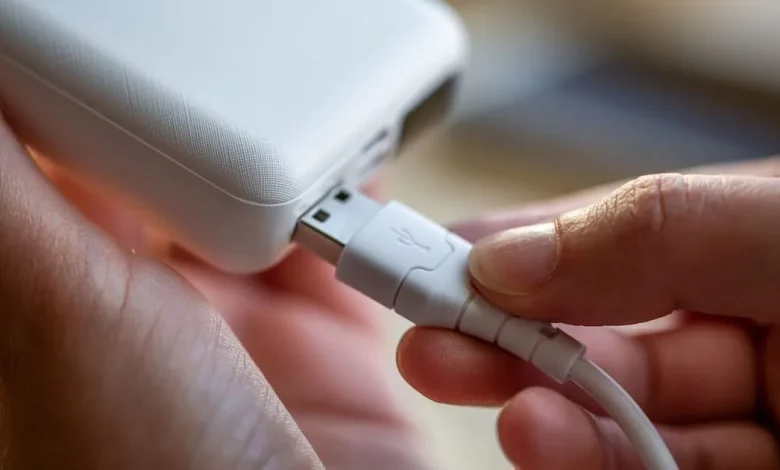
A power bank – the simplest and fastest option
External batteries allow you to store energy in advance and then charge your phone several times, depending on their capacity. Some models provide up to three full charges of a smartphone.
For a power bank to truly become a “lifesaver” in a critical moment, you need to charge it in good time, keep it somewhere accessible and periodically check its charge level, for example once a week.
Charging from a car
If you have a car, you can charge your phone via the USB port or with an adaptor for the 12 V socket. It is important to start the engine while charging so as not to drain the car battery.
Experts advise using this method only when necessary and not leaving the smartphone plugged in for too long, so as not to place unnecessary load on the car’s electrical system.
A laptop as a temporary power source
A laptop with its own charged battery can temporarily replace a charger: simply connect your phone using a compatible USB cable. Charging will be slower than from the mains, but it is usually enough to “bring a smartphone back to life” at an important moment.
In this case, it is better to aim for a partial rather than a full charge, in order to preserve the laptop battery’s capacity until the power supply is restored.
Portable solar chargers
Compact solar panels make it possible to charge a phone and other small gadgets without connecting to the grid, using only solar energy. This option is particularly convenient for outdoor use or when travelling.
Bear in mind that on cloudy days the process can be significantly slower, so it is better to think of solar chargers as a supplement to other power sources.
The main advantages of portable solar chargers:
- they do not depend on the power grid;
- they are compact and easy to transport;
- they run on renewable, environmentally friendly energy.
Other useful devices: solar lamps and hand-crank generators
During power cuts, solar lamps with built-in batteries can also come in handy. They store energy during the day and can then not only light up a room but also partially charge a phone.
Another option is hand-powered (mechanical) chargers with a dynamo mechanism. They do not require electricity: the charge is generated by turning a handle or through other physical effort. Such devices are useful in emergencies or in remote locations where there is no access to other power sources.
How to look after your smartphone battery
To make your battery last longer and work more efficiently, it is worth following a few simple recommendations:
- avoid regularly running the battery down to 0%;
- use original or certified chargers and cables;
- where possible, combine different charging methods, choosing the least demanding option for your devices;
- make sure that backup power sources (power banks, solar chargers, torches with USB output) are always charged.
Following this advice will help keep your smartphone in working order even during prolonged power cuts and ensure you stay connected at crucial moments.