

In Lviv, 31 museums took part in marking the International Museum Days, holding more than 70 events over four days. During this time, the city’s museums were visited by over 10,000 people.
The programme included themed tours, concerts, exhibitions, lectures and a museum quest. The theme of the 2026 International Museum Day, set by the International Council of Museums (ICOM), is “Museums for a divided world”. In Lviv’s museums, people spoke about history, the experience of war, memory, culture and human stories.
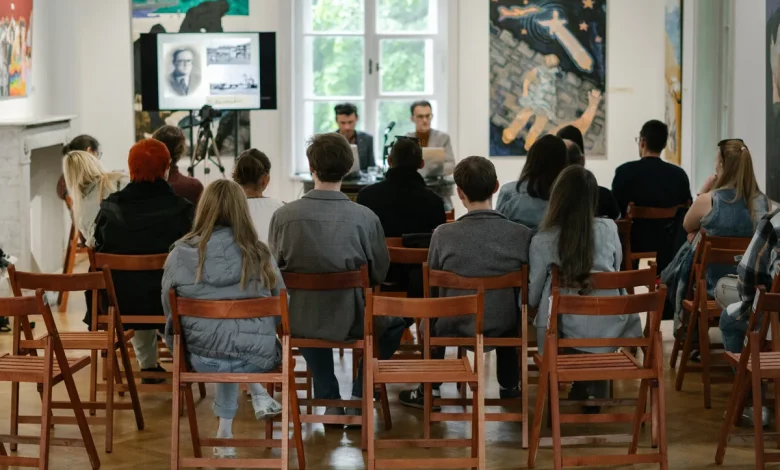
At the Franko House there were discussions about museums currently under occupation, in particular the Chasiv Yar Local History Museum and the Lesia Ukrainka Museum in Crimea. Staff from these institutions shared memories of their work and spoke about the struggle to preserve Ukrainian culture.
“The Ukrainian school that began to take shape on the grounds of our museum (editor’s note: the Lesia Ukrainka Museum). Our great pride is our Sunday school, which later grew into a Ukrainian school that we fought very hard to establish. But we did everything we could — we gathered these children and held lessons for them in the museum on Sundays. And I realised it was not in vain. Yes, everything has changed and it is very painful. But our work was not in vain. And I felt this once again when Russian rule was effectively proclaimed in Crimea. Because the last graduating class of the Ukrainian school — and you obviously know well the footage of them singing the Ukrainian anthem on the ship. They were being given Russian diplomas, but when the Russian anthem began to play, the graduates sang ‘Ukraine has not yet perished’, and I sang along with them,” said Svitlana Kocherha, writer and director of the Lesia Ukrainka Museum in Yalta.
Valerii Bohunenko, director of the Chasiv Yar Local History Museum, called on people to visit museums and talk to researchers and guides, as well as to create their own museums and archives.
At the National Memorial Museum “Prison on Lontskoho”, an exhibition of embroidery created by Ukrainians in prisons and camps was presented. Among the exhibits is a large kerchief on which around 40 prisoners worked from November 1945 to March 1946, as well as napkins and shirts made by Ukrainian dissidents.
The Museum of Human Diseases traditionally attracted considerable attention from visitors; its collection numbers more than 2,000 exhibits and dates back to 1896. Other popular venues included the “Territory of Terror” museum, the Museum of the History of Religion, the City Museum and exhibitions at the Ukrainian Catholic University.
Participants shared their impressions of the spaces they had visited. One visitor, Anna, noted that she was particularly struck by the “Territory of Terror” museum and the Museum of the History of Religion, which she would like to visit again. Another participant, Tetiana, highlighted the City Museum and the interactive formats at UCU, which prompted reflection.
As part of a project by the Tourism Department of Lviv City Council, a museum quest was organised for the second time. Seven Lviv museums took part, including the Franko House, the Hrushevskyi Museum, “Territory of Terror”, the Museum of the History of Religion and “D.S. Secret Pharmacy”. Participants had to visit all the museums, complete tasks, collect stamps and take part in a prize draw from partners. Around 50 participants managed to complete the quest in full.
Mrs Anastasiia, who took part in the quest, said she was most impressed by the Franko House, the Hrushevskyi Museum and the Museum of the History of Religion because of their authenticity. Visitors to the city also responded positively to the format of the celebrations. Anna, a visitor from Poltava, noted that she and her boyfriend visited seven museums in two days and gained a wealth of impressions, although at first they had only planned to collect stamps as a souvenir.