

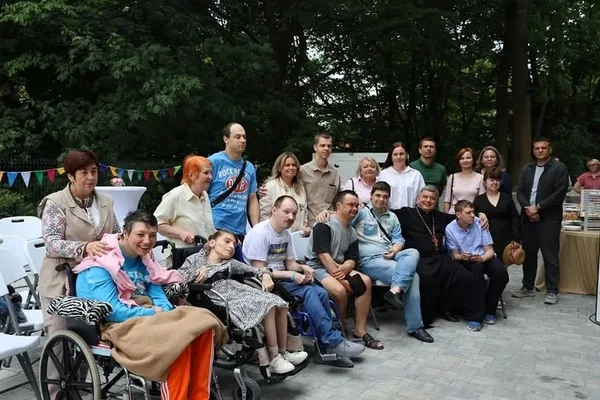
A new Supported Living House for people with disabilities has begun operating in Lviv. The facility is located at 39 Pasichna Street and has been established to provide social services for adults with disabilities.
The opening was attended by Deputy Head of the Lviv Regional State Administration Khrystyna Zamula, representatives of the regional council, international partners, civil society organisations, families of people with disabilities and future residents of the House. According to Khrystyna Zamula, the creation of such a space became possible thanks to the joint efforts of the community, state institutions and foreign donors.
“The creation of such spaces is an example of how the community, the state and international partners can join forces for the sake of a dignified life for people. The Supported Living House not only provides essential social services, but also helps people with disabilities to be more independent, realise their potential and feel themselves a fully-fledged part of society,” said Khrystyna Zamula.
The total cost of the project was around UAH 41.8 million. Of this amount, UAH 24 million came from the city and regional budgets, with the remainder provided by international donors and charitable organisations.
Financial support was provided in particular by the Mental Health for Ukraine (MH4U) programme, the Canada-Ukraine Foundation, Caritas Germany, the Zachkevych Family Foundation, the VPLYV Foundation and other partners. The Lviv Regional Military Administration also played an important role in establishing the facility.
In May 2025, the Dzherelo Centre won the regional competition to establish supported living houses. Following the results of the competition, the facility received UAH 2 million in financial support from the regional budget on a co-funding basis, which made it possible to complete the project.
At present, the House provides two key social services. The first is supported living for people with disabilities who have lost or may lose the care of their parents or legal guardians. The second is a short break service for families who have been caring for their relatives for a long time and need respite from their caring responsibilities.