

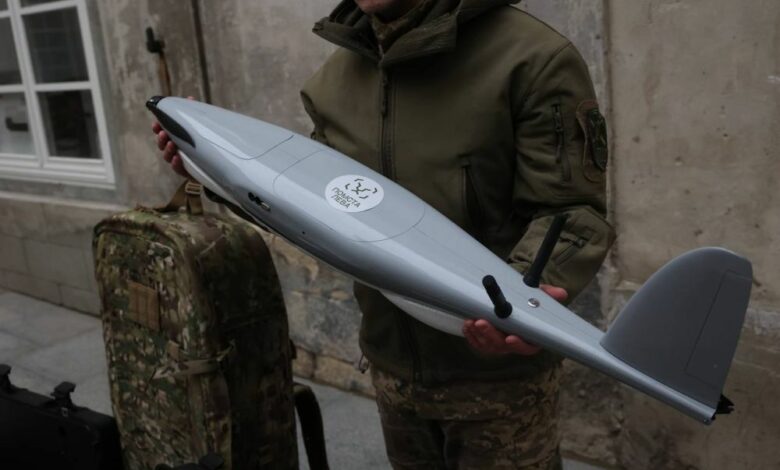
Ukraine is launching a separate program called “Logistics Lockdown”, aimed at scaling up middle strike capabilities and systematically targeting Russian military assets at operational depth. The key goal of the initiative is to increase pressure on the rear positions of the Russian army and reduce its ability to conduct active assault operations on the front line.
Recently, Ukrainian forces have been gradually seizing the initiative on the battlefield. For Russian troops, the cost of every advance continues to rise. While in October the enemy lost 67 soldiers per 1 km² of advance, in April this figure increased to 179 soldiers.
Russia continues to suffer record losses. Each month, more than 35,000 troops are killed or severely wounded, and Ukraine plans to keep increasing the pace of pressure on the enemy.
Targeting Logistics Affects the Intensity of Russian Assaults
In recent months, Ukrainian forces have quadrupled the number of strikes against enemy targets at operational depth. These include:
- Russian army logistics routes;
- ammunition and supply depots;
- military equipment;
- command posts;
- supply lines leading to forward positions.
According to dashboard data, a clear pattern is already visible: the more Russian logistics are destroyed, the fewer assault operations are recorded along the line of contact.
One of the key factors behind this shift has been strategic decisions to expand Ukraine’s middle strike capabilities. After Starlink was disabled for Russian forces, this became another element of Ukraine’s technological advantage on the battlefield.
UAH 5 Billion Allocated for the Purchase of Middle Strike Systems
Following the President’s task, Ukraine now aims to scale up middle strike capabilities as much as possible and, in coordination with the military, create a full logistics lockdown for the Russian army.
As part of the first stage of the program, the Ministry of Defense together with the General Staff allocated an additional UAH 5 billion directly to military units for the purchase of modern middle strike systems.
The funding will go to the most effective brigades and units under the eBaly system. These are teams that specialize in striking the enemy at operational depth and show the best results in this area.
The first units have already received funds, and direct procurement of the necessary systems has already begun.
Centralized Tenders Are Expected to Increase Production Scale
At the same time, the second stage of the program is being launched. It includes centralized tenders for the purchase of a large batch of middle strike systems.
Open competitions are expected to deliver several important results:
- faster procurement;
- scaled-up production;
- competition among manufacturers;
- reduced corruption risks;
- transparent and efficient use of public funds.
The results of centralized middle strike procurement are expected to become noticeable on the front line as early as this summer. The enemy will no longer feel safe even at a considerable distance from the line of combat operations.