

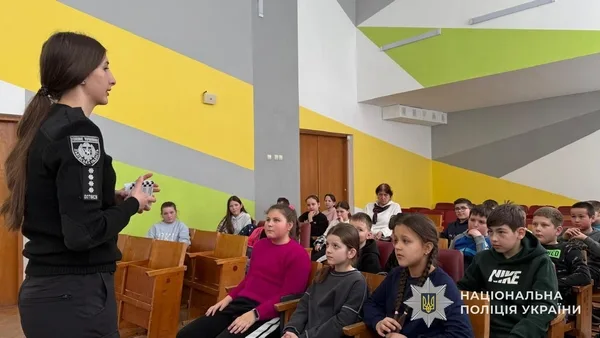
The juvenile police of Lviv Oblast are stepping up preventive work in the region’s educational establishments. Inspectors are explaining safe online behaviour to pupils and teaching them to recognise attempts by hostile agents to draw them into unlawful activity.
According to Major Olha Kovalchuk, head of the juvenile prevention unit of Lviv Oblast Police, Russian intelligence services are deliberately using children and teenagers to destabilise the situation in Ukraine. Recruitment takes place predominantly through social media: “handlers” analyse posts and comments, build a psychological profile of a potential target, and gradually gain their trust.
“The first tasks might include writing a post, painting graffiti, or putting up leaflets that discredit the Armed Forces of Ukraine… A small reward may be offered for this. If the teenager proves susceptible, the tasks become more demanding and the reward increases” — Olha Kovalchuk.
The recruitment scheme unfolds in stages. Initially, there are minor errands and token payments. This progresses to photographing and filming military installations and critical infrastructure. Next comes arson attacks on the vehicles of servicemen or volunteers, and damage to post offices. At the most dangerous stage, teenagers are asked to assemble an explosive device and deliver it to a designated location. The recruiter may remotely detonate the device with the operative still present — the handler has no concern for the teenager’s death or serious injury.
Participation in such activities carries criminal liability of up to life imprisonment — including under articles covering high treason (Art. 111 of the Criminal Code of Ukraine), sabotage under martial law (Art. 113 CCU), terrorist acts (Art. 258 CCU), and wilful destruction of property (Art. 194(2) CCU). At the same time, individuals who have not carried out any actions and who voluntarily inform the authorities of their contact with a foreign state are exempt from criminal liability under Art. 111(3) CCU.
The police offer the following guidance:
- Parents — inform children about the dangers of recruitment, monitor their online activity and internet contacts, and ensure compliance with the curfew.
- Teenagers — exercise caution with strangers online, do not share personal information, and avoid dubious internet resources.
- If you receive information about recruitment — call the police immediately on 102 or leave a report on the cyber police website.