

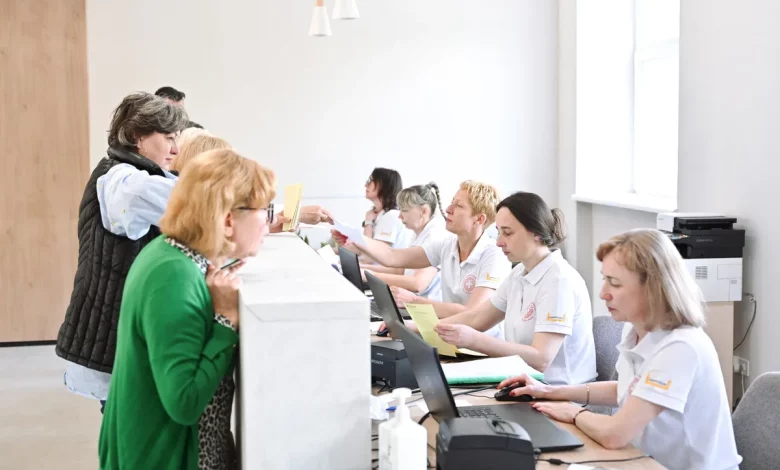
From 1 May, Lviv municipal polyclinics have officially been operating as treatment and diagnostic centres within two medical associations. The facilities have kept their usual addresses, but received new names, some new appointment phone numbers, and have moved to a single healthcare system, where consultations, examinations, treatment and rehabilitation are combined into one medical pathway.
The city council explains: the aim of the reform is for a patient, after visiting their family doctor, to clearly understand the next steps within a single system and not waste time looking for where to turn next.
Previously, polyclinics, hospitals, diagnostic and rehabilitation units operated as separate institutions. Now they are gradually being merged into two structures – the First and Second Territorial Medical Associations of Lviv. The former municipal polyclinics have become treatment and diagnostic centres (TDCs) within these associations, which should shorten waiting times, simplify the patient pathway and improve coordination between different levels of care.
According to Volodymyr Fedorov, Director of the “Treatment and Diagnostic Centres” branch of the First Medical Association, these centres aim to concentrate most services in one place: diagnostics, treatment and minor surgical procedures that do not require an overnight stay in hospital.
The following treatment and diagnostic centres have joined the First Medical Association:
- TDC “Pivdennyi” (formerly Municipal Polyclinic No. 2) — at 4 Symonenka St and 61 Stryiska St;
- TDC “Sykhiv” (formerly Municipal Polyclinic No. 4) — at 68 and 57 Chervonoi Kalyny Ave, and 16 Dnisterska St;
- TDC “Pohulianka” (formerly Municipal Polyclinic No. 6) — at 1 Medovoi Pechery St, 119 Lychakivska St, 2 Rymlianyna St, 20 Ruska St, 154 Hlynianskyi Trakt St, as well as locations in the town of Vynnyky (15 Halytska St; 30 Vynna Hora St), the village of Lysynychi (1A Lvivska St) and the village of Pidbirtsi (120A Mytropolyta Yakhymovycha St);
- TDC “Mazepy” — at 25 Hetmana Mazepy St, 358B and 366 Shevchenka St, and in the village of Riasne-Ruske at 1 Nezalezhnosti Sq.
The following have joined the Second Medical Association:
- TDC “Levandivka” (formerly Municipal Polyclinic No. 3) — 99 Povitriana St;
- TDC “Vyhovskoho” (formerly Municipal Polyclinic No. 5) — at 32 and 41 Ivana Vyhovskoho St, 94 Liubinska St, and in the village of Rudno at 64 Shevchenka St.
Residents can make an appointment with a doctor in four ways: via the call centre, at the reception of the treatment and diagnostic centre, through the HELSI system, or via the official website of the medical association. The city also operates a medical hotline 15−80, which provides advice on the patient pathway and accepts enquiries.
The treatment and diagnostic centres of the First Medical Association have introduced a single medical pathway without unnecessary referrals and duplicate examinations. Some consultative and diagnostic services have been shifted from inpatient to outpatient level, which has helped to ease the burden on hospitals and make care more accessible. Particular emphasis has been placed on rehabilitation: physiotherapy departments have been upgraded, and outpatient and inpatient rehabilitation is being developed.
More than 30 expert-level doctors from inpatient units of St Panteleimon and St Luke hospitals are now providing outpatient consultations at the TDCs. A day surgery unit has been opened at TDC “Pivdennyi”, and TDC “Pohulianka” is developing dermatosurgery and oncological dermatosurgery.
Facilities within the Second Medical Association have additionally opened on-call doctors’ rooms, expanded ultrasound and other diagnostic services, and increased the number of in-person appointments on a walk-in basis. In particular, the last hour of specialists’ surgeries is reserved for walk-in patients, additional Saturday surgery hours have been introduced, extra ultrasound rooms have been opened, and day hospitals now operate until 20:00.
The transition to the new system has significantly increased the workload on call centres. In the First Medical Association, the number of phone enquiries rose from around 20,000 per month at the beginning of the year to over 54,000 after the TDCs joined. In May alone, the single call centre handled almost 31,500 calls, while a further 19,500-plus were dealt with directly at the centres’ locations.
To ensure ease of access to appointments, the number of call centre operators was increased from 3 to 21, a voice message system and automatic processing of missed calls were introduced, and online booking with specialists was launched. In the Second Medical Association, between 69,000 and 86,000 calls are handled each month. It operates 25 telephone lines and 40 coordinators who work in the call centre and at receptions, and missed calls are additionally followed up by facility staff.
Lviv has also introduced the “Lviv Polyclinic. Medicine within 24 hours” service standard, in place since March. Its essence is that a patient should receive a professional consultation or an appointment booking within 24 hours, instead of waiting for a long time.
In the Second Medical Association, in the first months after the new standard was introduced, the number of family doctor consultations increased by 5.6%, specialist doctor consultations by 10.5%, instrumental examinations by 31.8%, and laboratory diagnostics by 29%.
In the treatment and diagnostic centres of the First Medical Association, more than 63,000 family doctor consultations, over 60,000 consultations with narrow specialists, almost 25,000 instrumental examinations and more than 11,000 laboratory tests were carried out in May alone. These centres employ over 1,500 staff, including 608 doctors. Almost 329,000 declarations have been signed with patients, and more than 230,000 residents have already received care.
The development of treatment and diagnostic centres is ongoing. TDC “Pivdennyi” has been equipped with modern rehabilitation equipment worth over UAH 2 million, and TDC “Pohulianka” has also received new equipment. All centres are updating medical equipment, furniture, laboratories and diagnostic units, completing repairs to entrance areas and lobbies, and have installed five new lifts, taking into account accessibility and barrier-free requirements.
Within the Second Medical Association, patient areas are being modernised, Mental Health Centres, rehabilitation services, prevention programmes and modern diagnostics are being developed. The city council stresses that the key goal of the transformation is to create a modern outpatient care system in which patients quickly receive the services they need and healthcare becomes more accessible.