

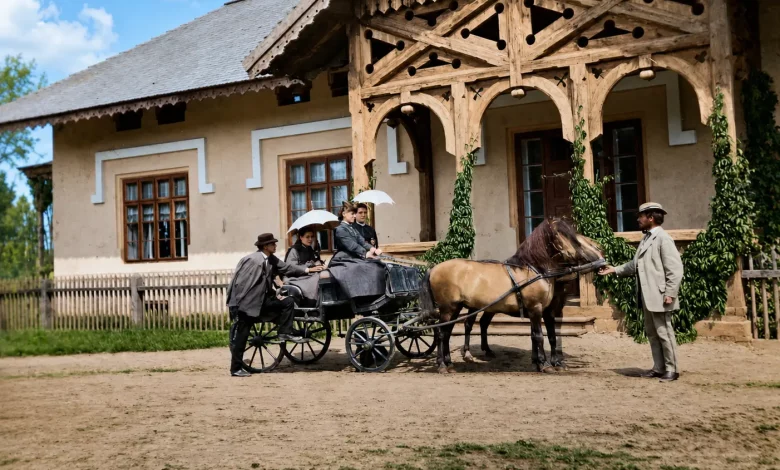
The village of Potorytsia on the right bank of the Western Bug, two kilometers south of Sokal, is a place inseparably linked with the name of one of the most prominent patrons of Galicia in the 19th century. It was here, on the Dzieduszycki family estate, that ideas were born which changed the cultural landscape of the entire region.
After the First Partition of Poland in 1772, Potorytsia passed to Austria. In 1778, the Austrian government requisitioned from the Potocki family the lands of the Sokal starostwo, including Potorytsia, Zavyshen, Bendiuga, Pozdymyr, Radvantsi and other villages, which were purchased by Józef Dzieduszycki — the father of the future patron. The beginning of Dzieduszycki rule in Potorytsia is recalled by a building erected by Józef for his estate manager, on the cellar vault of which “1778” was engraved. Today, this building houses a school.
The Potorytsia Library — a Treasury of the Nadbuzhzhia Region
In 1815, Józef Kalasanty Dzieduszycki founded a library in Potorytsia, which over time grew to enormous proportions — from 30 to 50 thousand volumes of books, early printed works, manuscripts, parchment and iconographic collections. This “Potorytsia Library” was open for public use and became one of the largest private book collections in Galicia at that time. In the late 1850s, Włodzimierz Dzieduszycki moved the library from Potorytsia to Lviv, where it became a highlight of his Natural History Museum. Today, the library collection originating from the Potorytsia collection numbers about 70 thousand volumes of natural science literature dating back to the 16th century.
Włodzimierz Dzieduszycki: from Potorytsia to Lviv and Vienna
Włodzimierz Ksawery Tadeusz Dzieduszycki (22 June 1825 — 18 September 1899) was born in the village of Yaryshiv in the Vinnytsia region, but immediately after his birth his parents took him to the main estate in Potorytsia near Sokal. Here, amid the landscapes along the Bug River, his childhood passed. His mother, Paulina Dzieduszycka, instilled in the boy a love of nature; she herself collected shells and dried plants. During walks together around Potorytsia, young Włodzimierz assembled his first natural history collection.
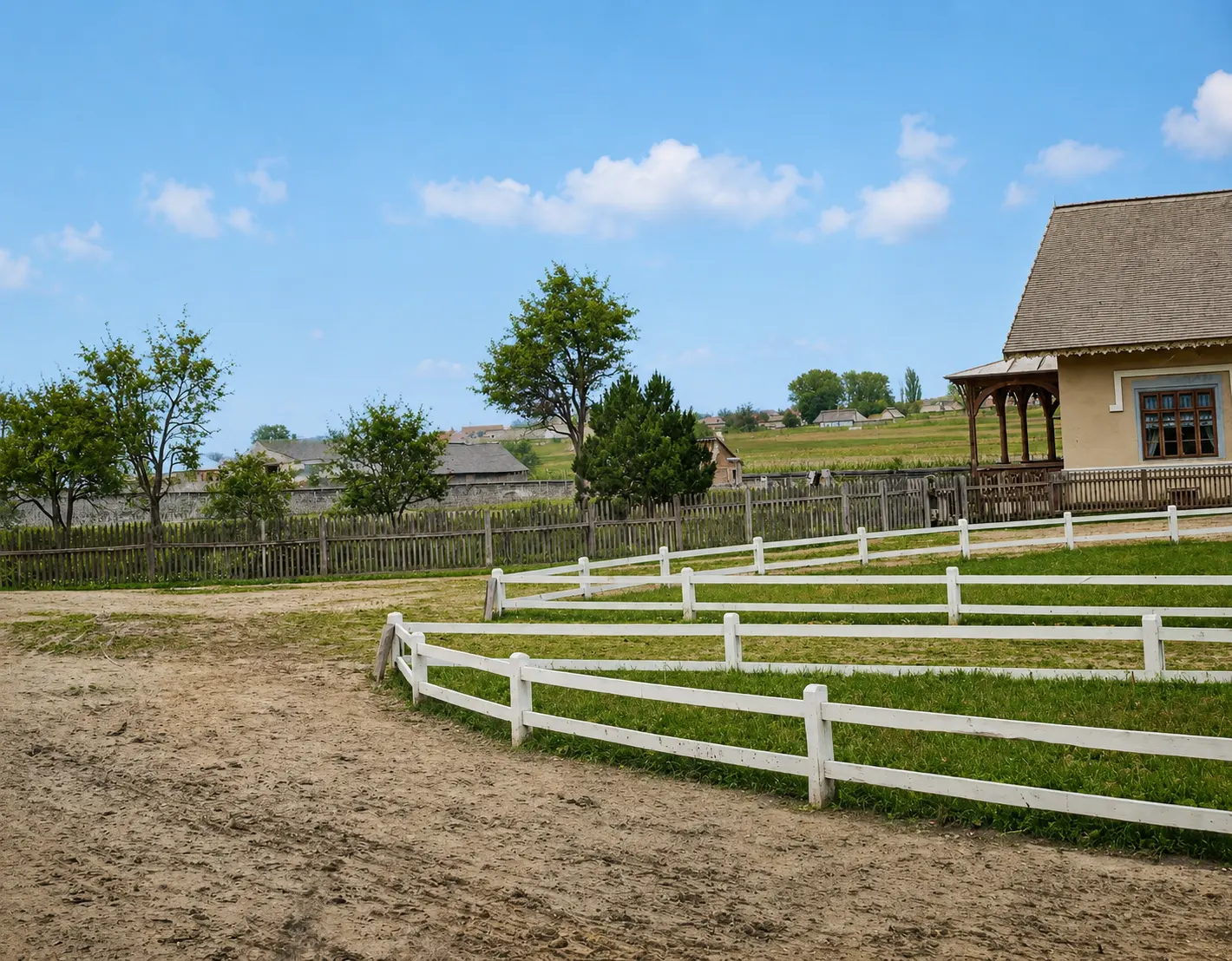
Count Dzieduszycki did not study at any educational institution — his education was handled by the finest professors from Lviv universities. Among his home tutors were the poet and local historian Wincenty Pol, the botanist Hiacynt Łobarzewski (founder of the botanical garden of Lviv University), and the zoologist Eduard Schauer, a student of Alfred Brehm, who taught the young count ornithology and taxidermy.
The Dzieduszycki counts traced their genealogy to the Ruthenian boyars Didushychi, who from the 15th century held large estates in the vicinity of Stryi. Conscious of his Ruthenian origin, Włodzimierz Dzieduszycki would sometimes say: “I am a Didukh!” In 1848, he even appealed to Bishop Hryhorii Yakhymovych to change from the Latin to the Greek rite.
The Potorytsia Ordination — the Museum’s Financial Foundation
Dzieduszycki brought his first natural history collections, gathered mainly around the estates in the Sokal region (Potorytsia) and the Brody region (Peniaky), to Lviv in 1857. In 1868, he purchased a building at 18 Teatralna Street, and in 1870 opened the Natural History Museum there to visitors; contemporaries compared its scientific value to that of the National Museum in London of the British Academy of Sciences.
In 1880, Dzieduszycki donated the museum together with the palace to the city of Lviv. To ensure the museum’s financial stability for centuries to come, the count established the so-called “Potorytsia Ordination” — a legal act concerning indivisible inheritance tied to the Potorytsia estate. Under this document, approved by the parliament in Vienna on 20 December 1893, the museum received the official name “Dzieduszycki Natural History Museum,” while its maintenance — 12 thousand crowns per year — was secured by revenues specifically from the Potorytsia-Zarichchia estates. Thus, the village of Potorytsia in the Sokal region became the financial foundation of one of Europe’s largest natural history museums.
Patron and Public Figure
As one of the wealthiest landowners in Galicia (in 1885, the Dzieduszycki family owned more than 78 thousand morgens of land and real estate with a total value of nearly 8 million golden rhenish guilders across the territories of three empires), Włodzimierz directed a significant share of his fortune toward patronage. He was among the initiators of the establishment of the Higher Agricultural School in Dubliany, the first curator of the Regional School of Forestry, and the founder of several industrial schools, including a pottery school in Kolomyia. He funded scholarships for talented young people from his own resources. He organized the Regional Exhibitions in Lviv in 1877 and 1894, the exhibition in Kraków in 1887, and the agricultural exhibition in Vienna in 1890. For his active participation in organizing the Lviv Exhibition of 1877, he received honorary citizenship of the city of Lviv.
Dzieduszycki also cared for his native region. He provided significant assistance for the construction of a brick church in Potorytsia. It was at the count’s expense that Bronisław Sokalski’s fundamental local history monograph “Sokal County from the Geographical, Ethnographic, Historical and Economic Perspective” (Lviv, 1899) was published, for which Dzieduszycki wrote the foreword.
This work remains one of the most important sources on the history of the Sokal region.
The 1887 Regional Ethnographic Exhibition in Ternopil
In July 1887, the second Regional Ethnographic Exhibition was held in Ternopil, in the city’s Municipal (Old) Park. The immediate reason was news of a visit to Galicia by Crown Prince Rudolf Habsburg — the son of Emperor Franz Joseph I and Elisabeth of Bavaria. Among the initiators of the exhibition was Ternopil mayor and writer Volodymyr Luchakivskyi.
An organizing committee was created to prepare the event; on the Ukrainian side it included Oleksandr Barvinskyi — a teacher, historian, and deputy of the Ternopil County Council (serving as committee secretary) — and Władysław Fedorowicz, a landowner from the village of Vikno.
The Visit of Crown Prince Rudolf
Rudolf Habsburg arrived in Ternopil by train on 5 July 1887 — two days before the exhibition’s official opening. On the occasion of the visit, the city saw electric lighting for the first time: 20 electric lamps were installed along the street from the railway station, and the station was illuminated by a powerful searchlight.
At the railway station, the crown prince was greeted by representatives of the authorities, clergy, military, and the city’s population. A combined peasant choir conducted by Father Yosyp Vitoshynskyi, a priest from the village of Denysiv, performed. The combined choir included singers from Denysiv, Nastasiv, Bilivka and other villages — more than one hundred voices in total. The choristers performed the national anthem and a ceremonial cantata written for the occasion by the young composer Anatol Vakhnianyn.
The Exhibition: Five Sections of Folk Culture
The entrance to the park was decorated with a triumphal arch. The crown prince viewed the entire exhibition, which consisted of five thematic sections: tools and utensils; food and beverages; clothing and footwear; objects of folk rituals and customs; and folk art.
Most of the exhibits were placed in the Swiss Pavilion — a wooden building erected in the park back in 1881. In addition, examples of authentic houses from Podillia, Nadbuzhzhia, Hutsulshchyna and Podnistrovia were built on the park grounds — one of the first experiences in Galicia of displaying ethnographic exhibits in the open air. After the exhibition ended, the houses were dismantled. In the park, 25 young couples from the villages of Berezovytsia and Ostriv performed harvest songs and danced in circles.
Sokal County at the Exhibition: a Photograph from Potorytsia
A special highlight of the Ternopil exhibition was the participation of live peasant groups in traditional dress from various parts of Eastern Galicia. Ivan Franko, who covered the event in the article “Ethnographic Exhibition in Ternopil,” noted the readiness of county councils to ensure the arrival of representatives wearing clothing characteristic of each locality. Ultimately, peasants from several dozen counties of Galicia were represented at the exhibition.
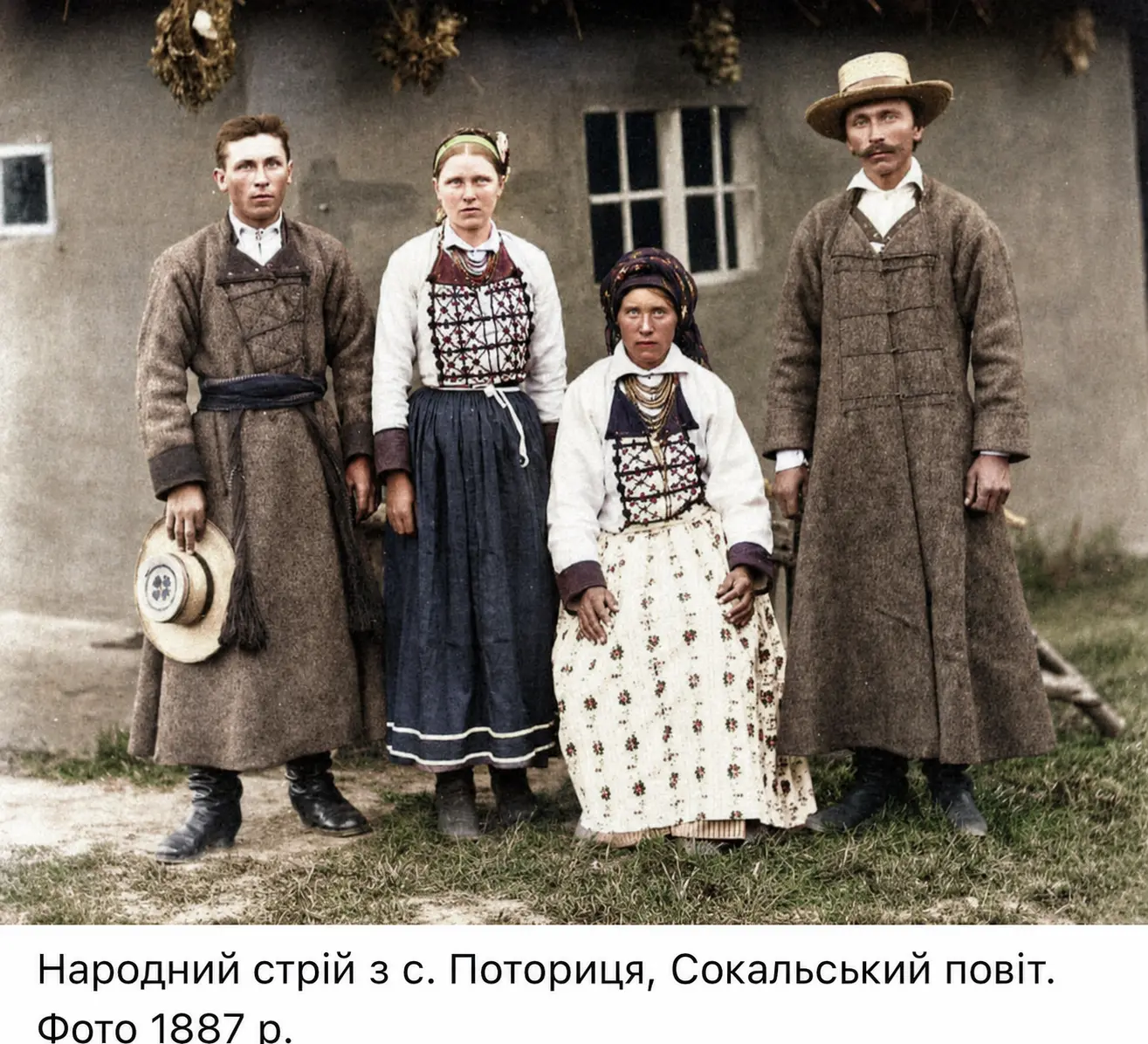
The participants were photographed by Ternopil master Alfred (Anton) Silkevych (1855–1902/03) — one of the best-known photographers in Galicia and the author of famous portraits of the young Solomiya Krushelnytska. He created an album of about 50 photographs — portraits of peasants in festive attire from different regions.
Among these images, a photograph of residents of the village of Potorytsia, Sokal County, has survived — one of the earliest photographic records of the traditional Nadbuzhzhia clothing of the Sokal region. The photo, captioned “Potorytsia. Sokal County. 1887,” shows peasants in festive dress characteristic of the Nadbuzhzhia region. This photograph is an invaluable source for researchers of Nadbuzhzhia (so-called “Sokal”) embroidery and traditional costume, about which the ethnographer Bronisław Sokalski later wrote in detail – adapted photograph – colors added:
Some of Silkevych’s photographs are preserved in the collections of the Ternopil Regional Museum of Local Lore (20 originals), while the rest are held in the Vasyl Stefanyk Lviv Scientific Library. The museum acquired the photographs in the late 1980s from Ternopil resident Bohdan Kril.
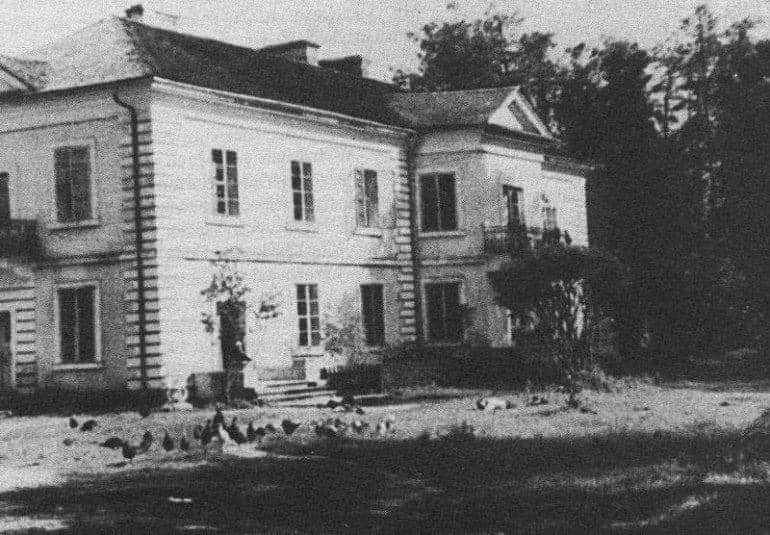
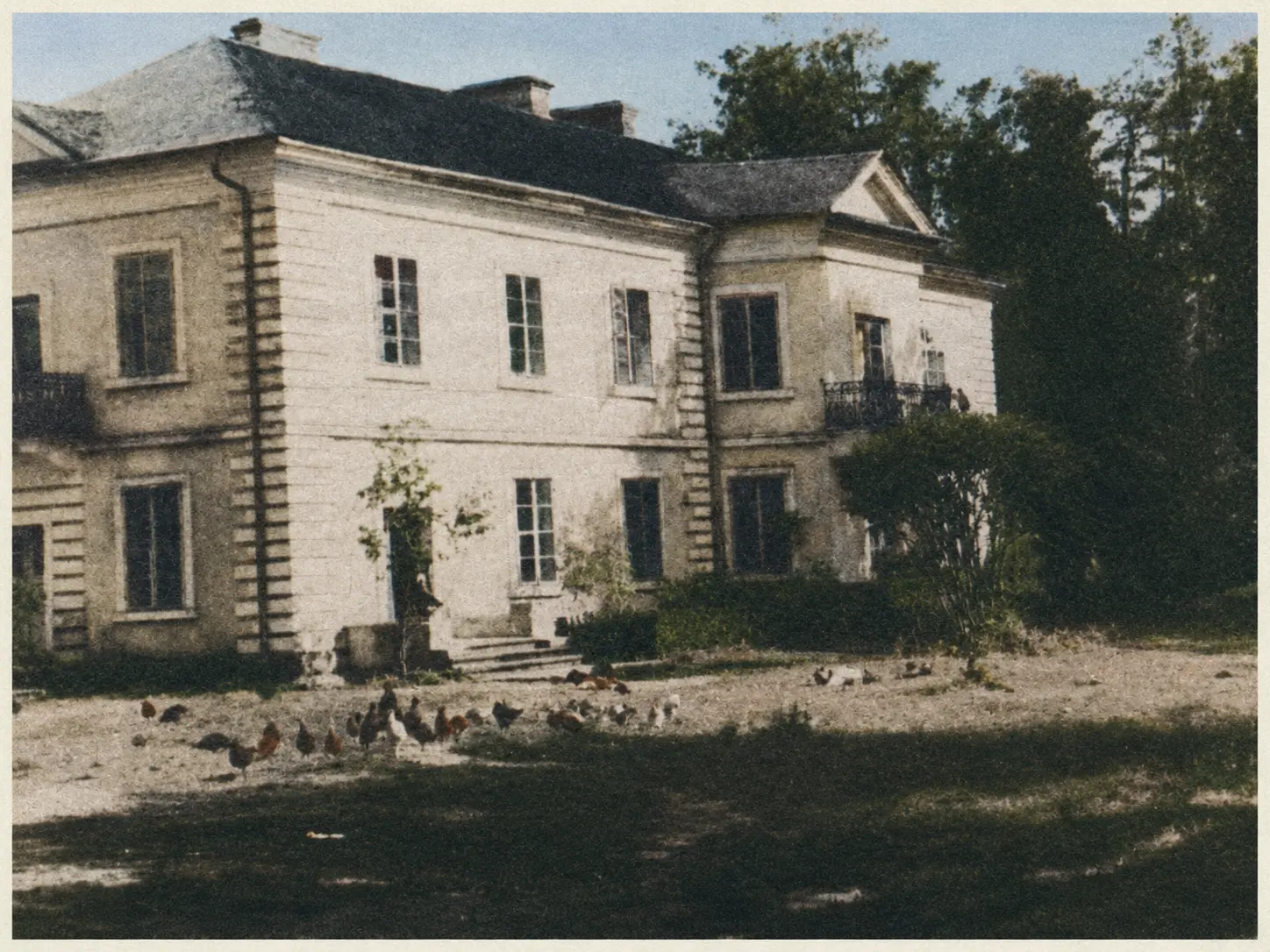
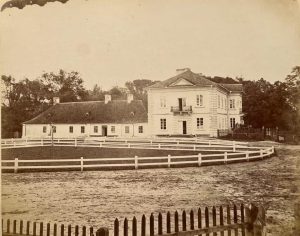
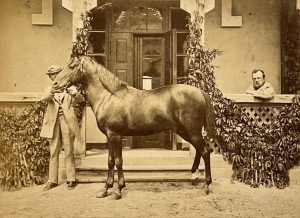
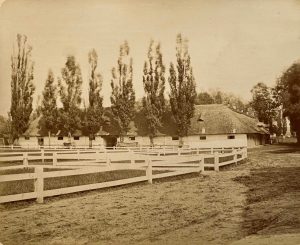
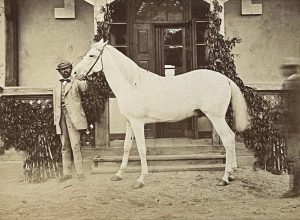
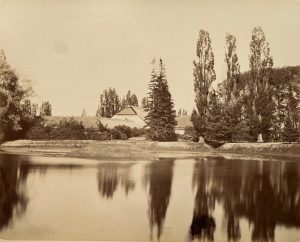
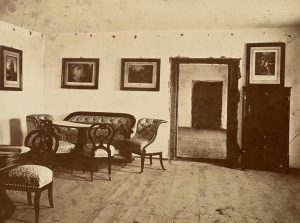
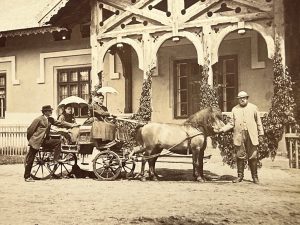
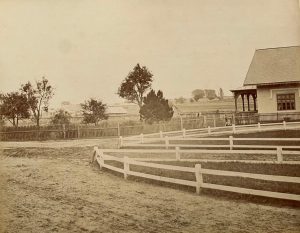
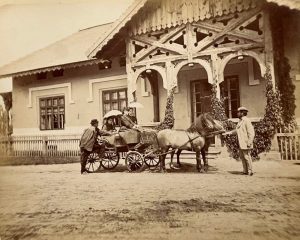
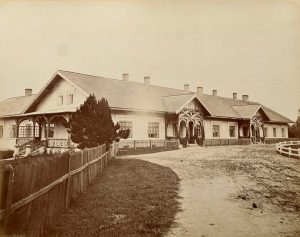
Photographs from a private collection were also shared by Sokal resident Yurii Korin – the estate of Count Włodzimierz Dzieduszycki in the village of Potorytsia. Photographs from 1911:
Carpets and Franko
Ivan Franko described in detail the Podillian carpets presented at the exhibition. Thanks to his publication, carpets from the village of Vikno (now in the Husiatyn district) attracted interest in Vienna, Kraków, Prague and even Sweden.
The Final Years in Potorytsia
In the summer of 1895, Count Dzieduszycki, feeling his strength leaving him, asked to be taken from Lviv to Potorytsia — to the family estate where his childhood had passed. Even while seriously ill, he continued to take an interest in the affairs of his museum, summoned staff members to him and gave them instructions.
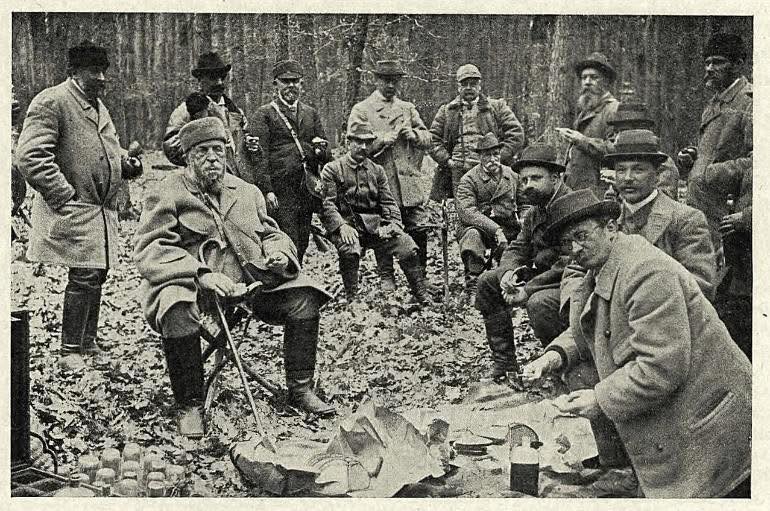
Włodzimierz Dzieduszycki died on 18 September 1899 in Potorytsia at the age of 74. In accordance with his last will, the coffin was taken by train to another estate — to Zarzecze near Jarosław (now Podkarpackie Voivodeship, Poland), where the count was buried in the family tomb of the Church of the Archangel Michael beside his mother. At five transit stations, the train stopped, and on the platforms people with priests bade farewell to the count, singing memorial prayers.
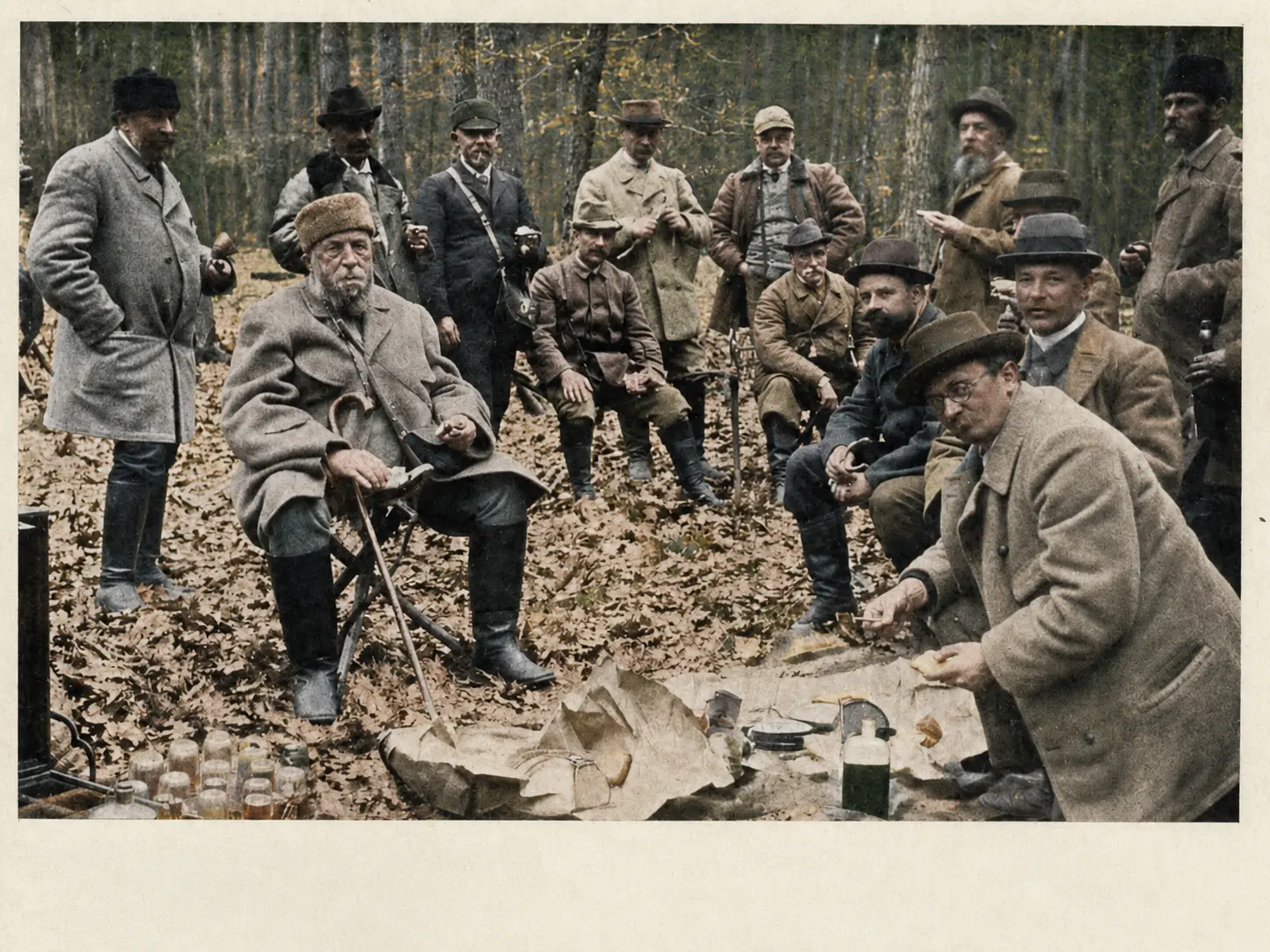
In Poland, 2025 has been declared the “Year of Włodzimierz Dzieduszycki.” In the village of Zarzecze, a Dzieduszycki museum has operated since 2008, while in Lviv there is the State Museum of Natural History of the National Academy of Sciences of Ukraine, founded by him — one of the largest natural history collections in Europe, which traces its origins to collections gathered around Potorytsia in the Sokal region.
Significance for the Sokal Region
The figure of Włodzimierz Dzieduszycki is one of the clearest examples of how the Sokal region influenced the cultural development of all Galicia and Ukraine. The Potorytsia Library, the Potorytsia Ordination, the natural history collections gathered in the forests along the Bug, the photographic documentation of Nadbuzhzhia clothing at the 1887 exhibition, and the monograph on Sokal County — all these are threads connecting a small village on the Bug with a great European cultural tradition.
Sources: Wikipedia — “Włodzimierz Dzieduszycki,” “Potorytsia,” “Michał Sokalski”; State Museum of Natural History of the National Academy of Sciences of Ukraine (smnh.org.ua); “The Dzieduszyckis. The History of a Noble Family”; I. Franko, “Ethnographic Exhibition in Ternopil” (1887); Ternopil Encyclopedia (irp.te.ua) — “Alfred Silkevych,” “Father Yosyp Vitoshynskyi,” “Habsburgs”; Holos z-nad Buhu — “Chornotsvit: Cut and Ornaments of Nadbuzhzhia Shirts”; Radio Svoboda — “Between Ukrainian and Polish Cultures”;